

A culture of solving political differences with conflict has led to persistent disagreements about the Ethiopian state.
Articles on Addis Ababa
Displaying 1 - 20 of 32 articles
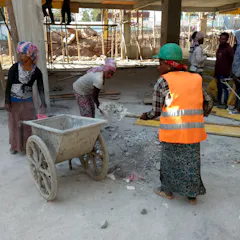
Ethnicity can be consciously adjusted in response to the risks women face in public spaces.
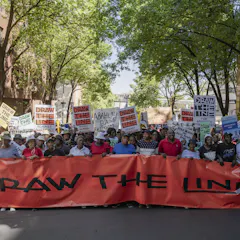
For the first time, countries now have a shared way to understand whether the world is actually improving at adapting to climate impacts.
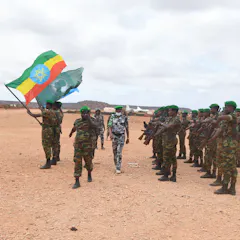
Addis Ababa’s willingness to work with regional rivals in the Middle East shows its practical approach to foreign relations.

Ethiopia’s upcoming election provides an opportunity to allow for greater political representation.
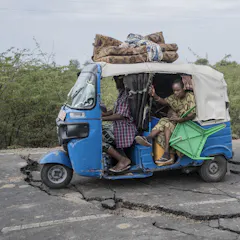
Volcanoes and earthquakes are both natural phenomena driven by the dynamic processes that shape Earth’s interior and surface.
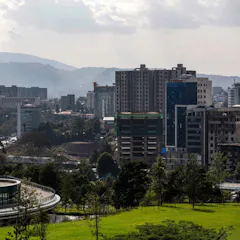
Demolitions in Addis Ababa have become common as the state seeks to attract private and foreign capital to modernise the city.

Ethiopia’s urban projects are often portrayed as beneficial to all residents – but this glosses over their highly uneven impact.
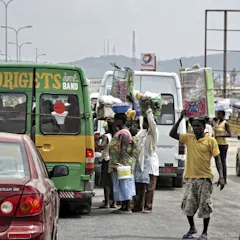
Walking is a common way of getting around in most African cities
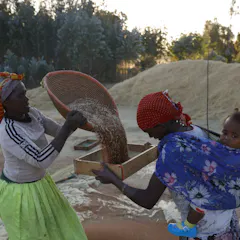
Oromia is a cultural, economic and political powerhouse. It significantly shapes Ethiopia’s identity and trajectory.

Through his poetically eloquent protest songs, the young singer-songwriter came to represent the Oromo struggle.

News coverage of Ethiopia’s ethnic conflicts has overshadowed the growing tensions and polarisation between religious communities.
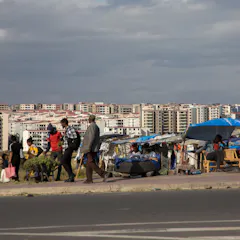
Ethiopia’s mass housing project has built and transferred half-a-million houses in two decades – but it’s damaging the social fabric of communities.
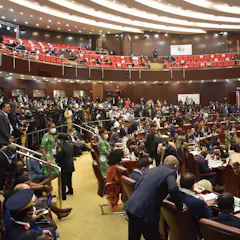
Member states need to arrive at binding, transparent and enforceable priorities to see progress.
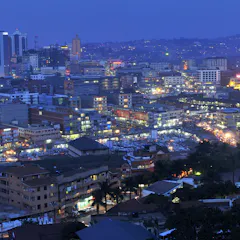
East Africa is one of the fastest urbanising regions in the world, but it’s still in the early phases. There’s a big opportunity to get the region’s cities right.
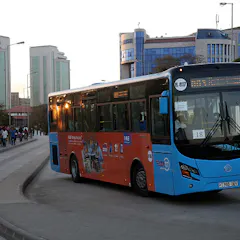
Local realities shape the transport system, making it less directly applicable as a model elsewhere.
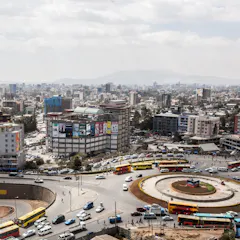
Addis may be shaping up to look like the modern city that the government wants, but it is yet to meet the needs of most residents.
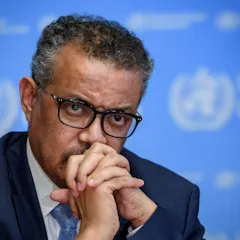
Humanitarians are stuck in a dilemma: challenging practices that cause suffering could risk access to the vulnerable people they serve.
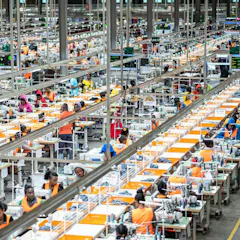
The new conflict in Ethiopia’s Tigray region could be the tipping point for foreign investors in the garment industry.
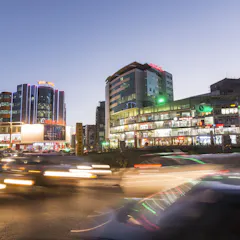
Abiy Ahmed has a vision to upgrade Ethiopia’s capital city but his ambitious megaprojects do not take the majority of Addis Ababa’s residents into account
Top contributors
-
Ph.D Candidate and Public Scholar, Concordia University
-
Assistant Professor, Acadia University
-
Research Fellow, University of Manchester
-
Lecturer in Comparative Politics, Queen's University Belfast
-
Lecturer, Bayreuth University
-
Professor of Sociology and Global and Africana Studies, University of Tennessee
-
Extraordinary Professor, Department of Political Sciences, University of Pretoria
-
Adjunct Research Fellow, The University of Queensland
-
Reader in Earth Sciences, University of Bristol
-
Research fellow, University of Pretoria
-
Professor Emeritus in Global Health & Humanitarian Affairs, University of Manchester
-
Research Active Lecturer, Discipline of Psychology, Charles Darwin University, Charles Darwin University
-
Professor of Atmospheric Sciences, University of Birmingham
-
Senior Lecturer, University of Environment and Sustainable Development
-
Associate Professor in Childhood Studies, Norwegian University of Science and Technology


