

In Canada, language is not just about communication — it touches on identity, power and recognition. But how does linguistic identity shape perceptions of languages and those who speak them?
Articles on Francophone
Displaying 1 - 20 of 48 articles
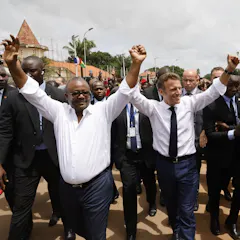
There’s a deep-seated interdependence between France and its former African colonies.
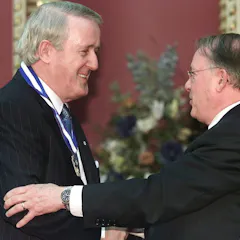
As we celebrate the 26th International Day of La Francophonie, the most fitting tribute would be to remember the involvement of the late Brian Mulroney.

The almost complete absence of French at the Public Order Emergency Commission does not come from a subservient reflex on the part of French speakers so much as their fear of being scorned.
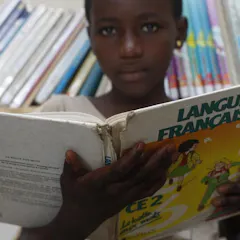
As a language of instruction, French has long held a prominent place in Senegal’s institutions and media. But Wolof, the most spoken national language, has regained its lost places.
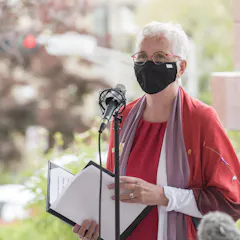
The federal government must appeal this ruling — not because it disagrees with it, but because such a consequential decision requires greater appreciation of the Crown and its constitutional nuances.
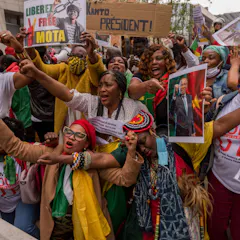
Anglophone grievances run deep and have remained unaddressed for a long time.

Macron’s approach to Africa policy emulates the 1950’s strategies. Why? A big part of the answer can be found in the fact that today’s global circumstances are similar to those of post-World War II.

There are few visible results on the ground after eight years of war in Mali.

Pitting the representation of historically marginalized groups on the Supreme Court against another constitutionally protected minority — Canada’s francophones — is a misguided race to the bottom.

A recent survey reveals a general uneasiness about using French among both francophone and anglophone public servants in administrative regions where bilingualism is required.

Whether kids are from French-language
communities outside Québec in Canada, or are learning French as a second language, ongoing exposure to French is key to maintaining it. Some resources to help.

On the month of the Francophonie’s 50th anniversary, it’s time to think about the untold story of French connections across the Canada-U.S. border
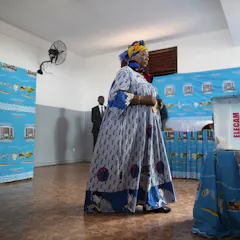
Many believe that it is only a return to the country’s two-state federation that will end the conflict and break the impasse.
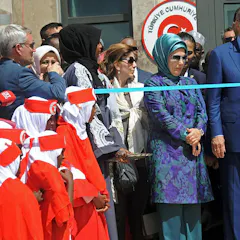
Turkey harbours strong national ambitions, and a willingness to grow and use its military muscle alongside economic instruments.
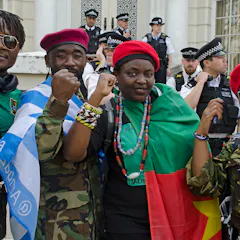
In many instances, social media appears to be amplifying violence, creating a culture of impunity when perpetrators are not held accountable, and increasing insecurity and suspicion.
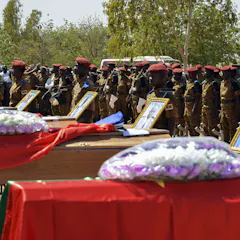
A weakened central power makes it easier for violent groups - like highway bandits, local militias and armed bands of jihadists - to emerge and thrive.

The influence of digital technology is most significant in how we experience culture and identity. Think about the use of streaming media.
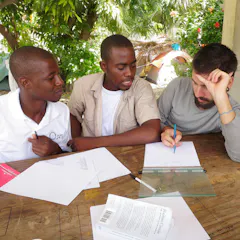
Scholars such as Alfred Sauvy, Jean-Pierre Olivier de Sardan and Frantz Fanon wrote in French, but their work greatly contributed to our understanding of democracy and social change in all contexts.
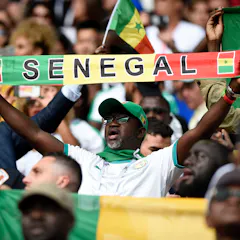
Senegal is important for Africa because it’s a country that shifts the narrative of the continent as an “arc of instability.”
Top contributors
-
Professor, Canadian and Cultural Studies, Stockholm University
-
Senior Lecturer in French and Francophone Studies, University of the Witwatersrand
-
Associate Lecturer in Development Studies, Birkbeck, University of London
-
Head of Research Programme, Council for the Development of Social Science Research in Africa
-
Graduate Student (Ph.D), Korea University
-
Associate Professor of Strategy & IB, University of Bath
-
Professor of History, Université de Yaounde 1
-
Postdoctoral Research Associate, King's College London
-
PhD Candidate, Art History, Concordia University
-
Associate Professor, History and Politics, University of New Brunswick
-
Professor of Migration Studies, Maastricht University, Head of Migration Studies at Maastricht Economic and Social Research Institute on Innovation and Technology (UNU-MERIT), United Nations University
-
PhD Student in Politics and International Studies, University of Warwick
-
Lecturer of Theoretical and Applied Linguistics, University of Cambridge
-
Professor of Psychology, University of the Witwatersrand
-
Professor of Strategy and Entrepreneurship, ESSCA School of Management


