

Algorithms began as simple mathematical procedures, but today they shape what we see, buy and believe.
Articles on Linguistics
Displaying 1 - 20 of 457 articles

AI is helping communities own and build vital tools for their minority languages – all without external funding.

Language loss is often a reluctant choice made to escape violence, not a willing choice made to gain benefits.
As AI-generated text becomes harder to identify, the real clues lie in how online conversations are being manipulated.
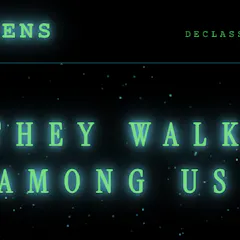
The White House’s controversial Aliens.gov portal dehumanises undocumented non-US citizens by blurring the boundaries between the term “illegal aliens”, or unauthorised residents, and extraterrestrials.
Why AI companies are so fond of the prefix ‘co’.

Maybe think of small talk as a technology: a human invention for accomplishing social goals.

Listen to the The Conversation’s Curious Kids podcast to hear anthropologist April Nowell explain the origins of language.

The language of burnout turns up in agricultural records from more than 200 years ago, long before the term entered popular use.

Spoonerisms can be silly and make you laugh. But linguists see something more: a rare glimpse of how the mind plans speech before we even open our mouths.

Language that fails to explicitly name women has historically excluded them. And that exclusion is an active, reversible mechanism that’s now resurfacing.

Should language teaching describe how a language is used, or how it should be used?

A linguistic expert explains the techniques Enron traders used to build and retain trust in their criminal strategies.
In 1866, the topic became so controversial that the Société de Linguistique de Paris banned discussions about language origins altogether.

Does a seashell arrangement in the form of the numerals ‘86 47’ amount to a criminal threat to assassinate President Donald Trump, as prosecutors suggest?

Yoda’s word order mirrors the syntax of British Sign Language.

Exaggerating phrases and talking in a sing-song way can actually help, not make it harder, for young children to master speaking a language.

Bubble, hoop, wiggle, bed: Some words bear an uncanny resemblance to the shape of the object or action they describe. And we tend to process them faster.
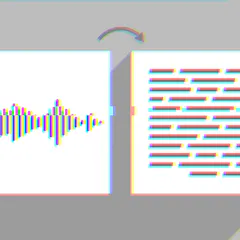
Automated speech recognition is a powerful tool – but it comes with a host of assumptions.

‘Typoglycemia’ is often shared online as a quirky insight into how our brains work. But this viral claim is only part of the story.
Top contributors
-
Professor of Linguistics, Monash University
-
Senior Lecturer in Linguistics, Monash University
-
Roger J. Kreuz is a Friend of The Conversation.
Associate Dean and Feinstone Interdisciplinary Research Professor, University of Memphis
-
Associate Professor in Linguistics, Macquarie University
-
Associate Professor in Sociolinguistics, University of Cambridge
-
Professor of Linguistics, University of York
-
Professor of Linguistics, University of Nevada, Reno
-
Senior Research Fellow of Linguistics, University of Colorado Boulder; Griffith University; University of New England
-
Professor of Linguistics and English, Florida International University
-
Associate Professor of Linguistics and Director of Language Lab, The University of Western Australia
-
Professor of English Language and Literature, University of Oxford
-
Francesco Perono Cacciafoco is a Friend of The Conversation.
Associate Professor in Linguistics, Xi'an Jiaotong-Liverpool University
-
Professor of Psychology, Cornell University
-
Maïa Ponsonnet is a Friend of The Conversation.
Researcher, Linguistics, Centre national de la recherche scientifique (CNRS)
-
Honorary Associate Professor in Writing, The University of Queensland


