
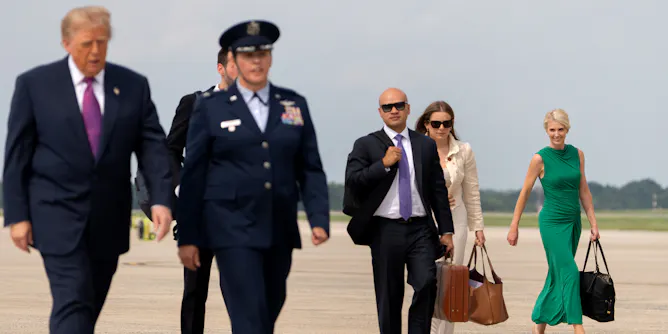
A report that one of Trump’s aides went a year without routine vetting raises a question a former CIA executive knows well: What is that process for?
Articles on National Security Agency
Displaying 1 - 20 of 27 articles
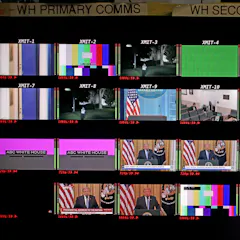
An international affairs professor with nearly 30 years of experience in the US intelligence community – including at the CIA and NSA – explains how to evaluate the newly released election documents
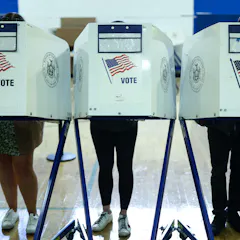
The federal task force that defends US elections has been largely absent this election cycle, and the threat-sharing hub it relied on has been defunded.
An International Relations specialist looks at how cooperation between intel agencies on both sides of the Atlantic is holding up under Trump 2.0 and unprecedented geopolitical turbulence.

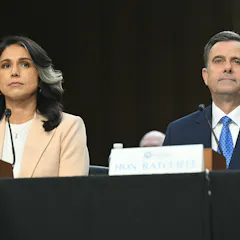
The director of national intelligence is the president’s principal adviser on intelligence. A former White House intelligence official explains the role and how the person in it serves the nation.

Privacy advocates lost out when Congress reauthorized Section 702 of the Foreign Intelligence Surveillance Act without major reforms. But the renewal fight returns in 2 years.

A tool made for tracking criminals and terrorists has potentially been used against politicians, dissidents and journalists. Here’s how the spyware works.

Researchers tried several times to have the document declassified, including in 1992, 2004 and 2016. It was initially written to help American NSA agents crack difficult coded messages.

Warnings about major disease outbreaks are supposed to come from national and international medical intelligence and surveillance agencies that most Americans have never heard of.

In many instances, whistleblowers find the abusive power they have revealed turned against them, both ending their careers and harming their personal lives.
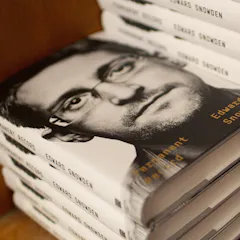
The US government wants to seize all the proceeds from Snowden’s new memoir.

Ransomware has crippled governments and companies around the world, encrypting data and demanding payment for the decryption key – though that’s no guarantee of recovering the information.

The FBI and police officials say they need to decrypt secure communications to fight crime. But they have other options, and modern threats make clear the importance of strong encryption.
What’s the best way for spy agencies to protect the public: secretly exploit software flaws to gather intelligence, or warn the world and avert malicious cyberattacks?
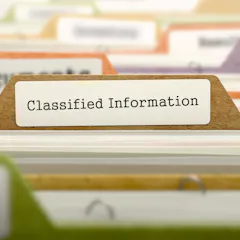
A professor who once held top secret clearance explains how levels of classification work and where handling sensitive information gets tricky.

Whispering secrets is a sign of a lack of trust.
The technical consensus is clear: Adding ‘backdoors’ to encryption algorithms weakens everyone’s security. So what are the police and intelligence agencies to do?

The latest release from WikiLeaks, of information about CIA hacking efforts, is yet another reminder of how Americans and our government must better protect our secret information.
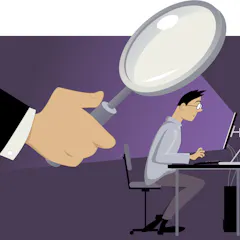
Government agencies and contractors are now less trusting of their workers, and keeping a much closer eye on them, both on and off the job.

The public must prepare to stand up for a free press, and against online censorship and surveillance.
Top contributors
-
Professor of Management, University of North Carolina – Greensboro
-
Teaching Professor of Computer Science and Electrical Engineering, and Associate Director, UMBC Cybersecurity Institute, University of Maryland, Baltimore County
-
Professor of Information Technology Management, University at Albany, State University of New York
-
Professor of Practice, International Affairs, Georgia Institute of Technology
-
Global Scholar at Woodrow Wilson International Center for Scholars, Washington, DC and Hopkins P Breazeale Professor, Manship School of Mass Communications, Louisiana State University
-
Professor of Journalism, Columbia University
-
Professor of Information Technology and Engineering Systems, Massachusetts Institute of Technology (MIT)
-
Senior Research Associate, University of South Africa
-
Professor of the Practice of Political Science and International Relations, USC Dornsife College of Letters, Arts and Sciences
-
Professor of Law, Georgia State University
-
Postdoctoral Fellow, Cyber Security Project, Belfer Center for Science and International Affairs, Harvard University
-
Research Fellow, School of Information Technology and Electrical Engineering, The University of Queensland
-
Professor of Law and Ethics, Georgia Institute of Technology
-
Assistant Professor of Business Law and Ethics, Kelley School of Business, Indiana University
-
Associate Professor of National Security Affairs, Naval Postgraduate School


