
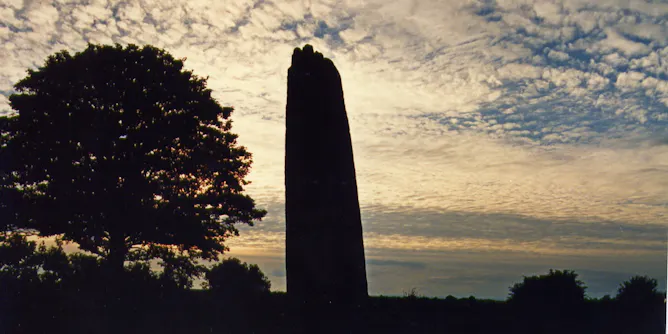
The people who put up these giant stones did not choose the nearest possible source.
Articles on Stone age
Displaying 1 - 20 of 29 articles
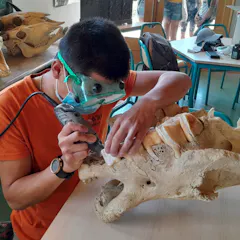
A recent study provides evidence that Neanderthals used rhinoceros teeth as tools.

There is evidence of people who crossed gender boundaries even in ancient civilizations, though the terms naming them have evolved over time.
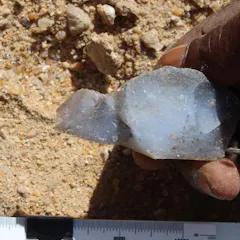
The age of the oldest known Oldowan stone tools from east Turkana has been pushed back by 700,000 years.
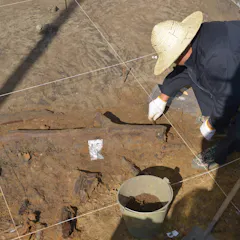
300,000-year-old wooden tools found in southwestern China reveal surprising sophistication from the ancestors of modern humans.

Stone tools from different sites suggest people long ago were connected over a huge region and shared ideas.

New research presents evidence of a wet forest environment 150,000 years ago in Côte d'Ivoire.
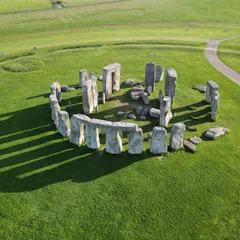
The centre of solstice activities at Stonehenge is the Altar Stone – a large sandstone slab of uncertain origins. Our new work has found a match for it all the way in Scotland.
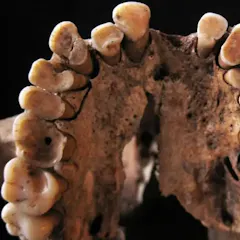
Findings from a new study challenge the traditional view that a heavy reliance on plant-based diets started only with the advent of agriculture.

Out of Darkness attempts at historical accuracy are a welcome surprise, and what’s more, it is fun to watch.
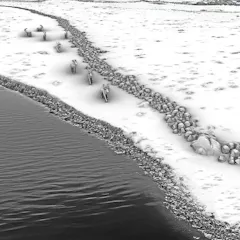
The find represents Europe’s largest human-made megastructure.
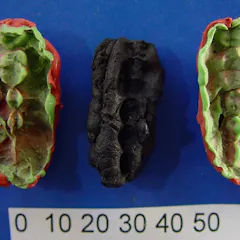
Genetic analysis reveals one of the teenagers probably had advanced gum disease.
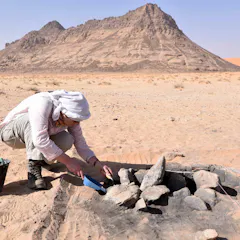
A close look at 7,000-year-old grinding stones left in ancient firepits shows wandering herders in northern Saudi Arabia carried heavy tools for working on bones, plants and rocks.
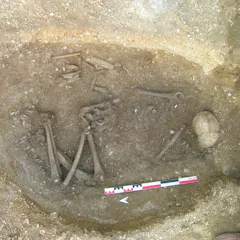
In the largest study of its kind, researchers have used DNA from a 6,700-year-old cemetery in France to reconstruct the lives of everyday Neolithic people.
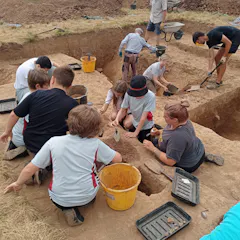
Since 2011, professional and amateur archaeologists in Cardiff have been unearthing prehistoric artefacts. But last summer, they began to discover something even more extraordinary.
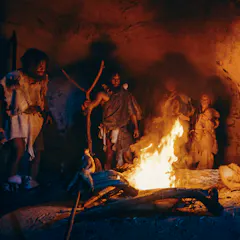
Around 200,000 years ago, people were living who were as intelligent as us.
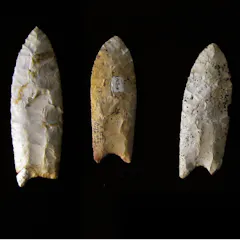
The stone age saw a pattern where technologies like spears, fire and bows were invented once, then spread

Combining evidence from archaeology, geochronology and paleoenvironmental science, researchers identified how ancient humans by Lake Malawi were the first to substantially modify their environment.

Burials seem to have been uncommon in Africa some 80,000 years ago, although they were widespread in Eurasia.

A remarkable set of discoveries has confirmed that parts of Stonehenge first stood 140 miles away at Waun Mawn, west Wales.
Top contributors
-
Anniversary Chair in Landscape Archaeology, University of Bradford
-
Research Fellow, School of Earth and Planetary Sciences, Curtin University
-
Professor of Geochronology, Curtin University
-
Associate Professor, Life Sciences, University of Warwick
-
Professor with Research Focus in Stone Age Archaeology, Palaeo-Research Institute, University of Johannesburg
-
Professor of Scientific and Prehistoric Archaeology, University of Oxford
-
Associate Professor of Osteoarchaeology, Uppsala University
-
Professor in Quaternary Science, Royal Holloway, University of London
-
Paléogénéticienne, Université de Bordeaux
-
Professor of Archaeology, Institute of Archaeology, UCL
-
Director, Australian Research Centre for Human Evolution, Griffith University
-
Lecturer in Archaeology, University of York
-
Assistant Professor of Anthropology, Yale University
-

University of St Andrews
-
Senior Lecturer of Archaeology, Lund University


