
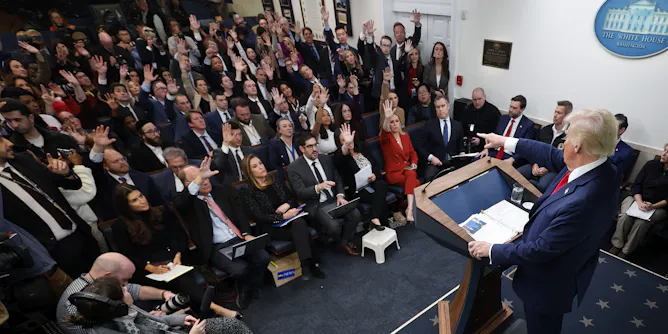
Overwhelming people with a deluge of announcements makes it difficult to easily track and understand what is happening in the White House.
Articles on US media
Displaying 21 - 40 of 158 articles
The Washington Post has won an international reputation for its journalism. But recent changes are threatening its status as an icon.
Legacy newsrooms have lost their audiences. Could a radical transformation in how they practice journalism make the industry relevant again?

How did this lifelong Democrat go full MAGA? A scholar of populism finds some answers in the ‘manosphere’ podcasts credited with helping Trump win, such as those hosted by Theo Von and Joe Rogan.

Americans might have to wait for days, weeks or months to get an accurate determination of the winner of the presidency.
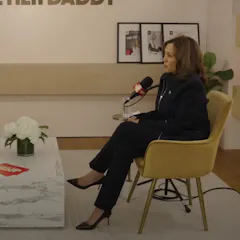
US presidential candidates are hitting the podcast circuit hard. The risk to a politician is the authenticity of podcasting could just as easily work against them.
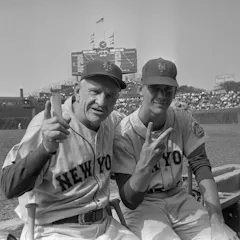
Joan Whitney Payson, the first female owner to buy a baseball team, won over the press in the Mets’ disastrous 1962 season by treating them as partners, not adversaries.
US news outlets perceived as politically centrist could inch rightward or leftward to attract a larger, more partisan readership − but only at the cost of journalistic credibility.
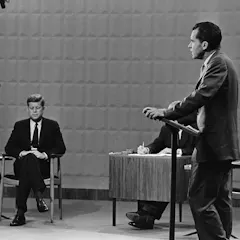
While people now reflect on how or whether Nixon’s sweaty, haggard appearance during the debate cost him the election, the view in 1960 was that the debate was a draw.

Courtroom drama is drawing attention to a broader subject: Donald Trump’s approach to the media.
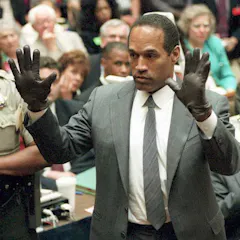
Since the ‘trial of the century,’ the lines between news and entertainment have become increasingly blurred.
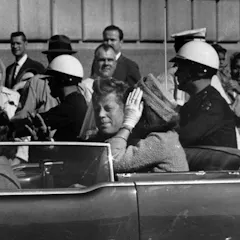
The JFK assassination was a landmark event in TV news history.
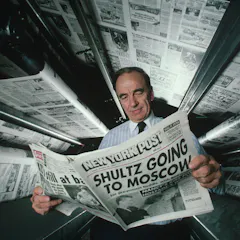
As Rupert Murdoch prepares to hand over the keys to his media empire, what will his legacy be?
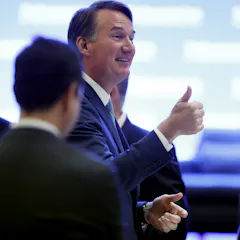
With the balance of political power at stake in the Virginia legislature, voters in this key swing state may reveal clues for the 2024 presidential election.
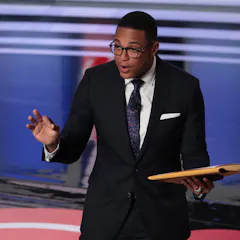
Since the 1980s, cable news networks have focused on hyperpartisan news coverage to attract core audiences in an increasingly fragmented media market.
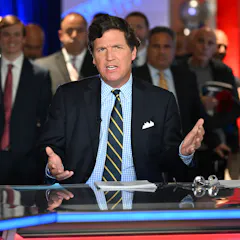
Tucker Carlson and his employer, Fox News, had an incredible understanding of what their audience wants: a kind of authenticity that is not genuine but instead manipulative.

Instead of simply applauding nudges, journalists should critically assess when and why governments use this tool.

Wall Street Journal reporter Evan Gershkovich is far from the first American journalist to be accused of spying, a media historian explains.
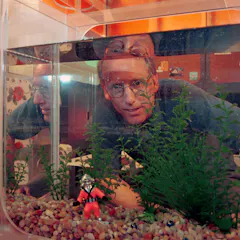
Cartoonists throughout the nation’s history have been jailed, beaten, sued and censored. But Scott Adams’ work is being rejected for what he expressed off the page.

ESPN commentators avoided speculation and struck a compassionate tone.
Top contributors
-
Carolyn S. Chambers Professor in Journalism, University of Oregon
-
Professor of Communication, Radford University
-
Professor of Communication and Journalism, University of Maine
-
Professor of Political Communication; Director CAJ, The University of Melbourne
-
Associate professor emeritus, Journalism, Virginia Commonwealth University
-
Professor of Media Studies, Penn State
-
Full Professor in Journalism, Dublin City University
-
Associate Professor of Communication, University of Utah
-
Associate Professor of Communications, Penn State
-
Professor of Sociology, University at Albany, State University of New York
-
Professor of Journalism, Indiana University
-
Professor of Criminal Justice, University at Albany, State University of New York
-
Senior Lecturer in Critical Digital Media Practice, Lancaster University
-
Knight Chair in Sports Journalism and Society, Penn State
-
Director of Undergraduate Studies, School of Journalism, Media and Cultural Studies, Cardiff University


