

Have you ever seen one of these? Sure you have.

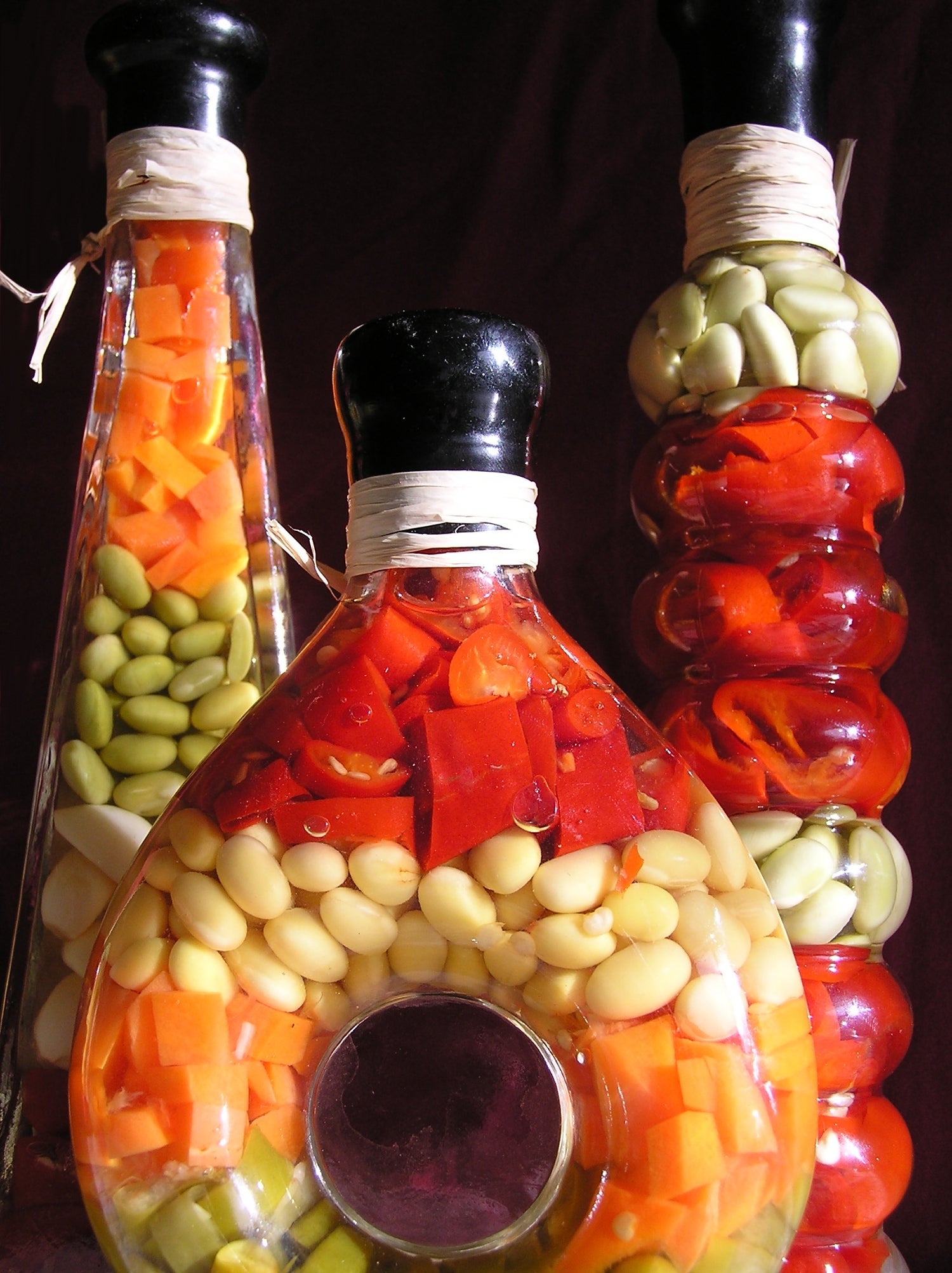
Found haunting every "Tuscan" home kitchen counter, Olive Garden decor shelf, and HomeGoods "food" aisle, these bottles of intricately chopped and arranged vegetables usually sit in vinegar. They're also usually designed for decoration.
That didn't stop one TikToker, though, from cracking one open, shaking the contents into a sauté pan, and having her husband try the vegetables atop bread.

Earlier this month, minassco8 posted the video, which has now been viewed over 4 million times on TikTok. "We were dying to try this," the caption read.
It's worth noting that the page posts "rage bait" food content designed to anger and confound people — and therefore drive engagement on the page. They've also cooked salmon in a coffee maker and a T-bone steak in a toaster (sigh).
The creator shakes the vegetables into a pan, narrating as each new layer of garlic, diced peppers, and corn falls.
Commenters had some thoughts from the start:
The creator says the vinegar smell is rather strong as she's sautéing everything up. Then she and the person behind the camera discuss how the vegetables are meant to be eaten: with pasta? In stew? On toast? "I'm not sure how long these vegetables were in this jar," she says.

She also, for some reason, takes a meat tenderizer to the pan, trying to figure out what one of the vegetables in the bottle is.

Then they slice some bread and top it with the vegetables, which keep rolling off.

Then her husband digs in. And the verdict? "That's delicious!" he exclaims. "Are you serious?" she replies. "Yeah," he says, shrugging. You can watch the whole video here.

So, the vegetables might taste fine, but are they safe to eat? The answer is yes...and no. Jessica Gavin, a culinary scientist based in Southern California, provided BuzzFeed with some answers.

First things first: Figure out what's even in these bottles. Jessica says it varies, as they can include anything from sliced citrus to pearl onions to rosemary and thyme. After the contents are arranged, a liquid is added. "Distilled vinegar is commonly used because it's clear and showcases the contents, while its high acidity preserves the ingredients by preventing bacterial growth. The combinations vary widely based on color schemes or culinary themes," she said.
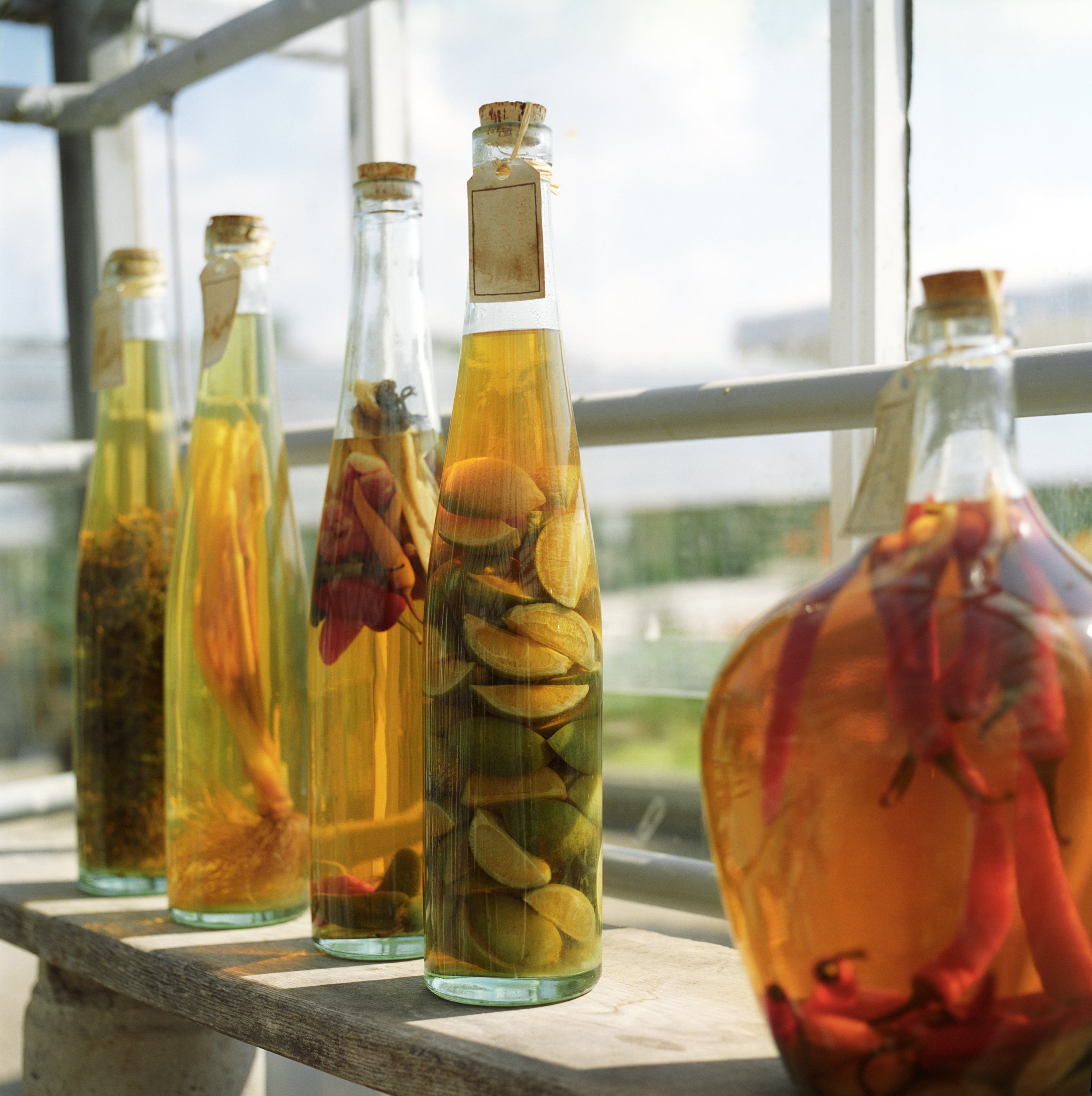
Whether they're safe to consume comes down to a few different factors. First, Jessica recommends checking the label to ensure it was processed by a "reputable food facility and meant for consumption, not just display" and to check that it's not expired.
"Safe flavored vinegars are made with food-grade ingredients, washed and heat-treated produce, high-acidity vinegar (5% or more), and sterilized bottles and lids. These precautions ensure a low-pH environment that inhibits harmful bacteria," Jessica told BuzzFeed. "Improperly prepared vinegar, or one with insufficient acidity, can lead to mold, spoilage, and even contamination with Clostridium botulinum, a toxin-producing bacteria that causes severe illness or death. Discard vinegar immediately if you notice spoilage, such as bubbling, cloudiness, sliminess, or mold."

All in all, these decorative bottles can be safe to eat, but that doesn't necessarily mean you should, and Jessica advises against it. "While cooking vinegar and its contents may kill some spoilage bacteria, I don’t recommend consuming decorative vinegar due to the potential risk of illness. Improper conditions, such as exposure to bright light or storage above 65°F, can create an environment where harmful bacteria like Clostridium botulinum could thrive," she said. "While the toxin can be destroyed by boiling for at least 10 minutes, the risks make it safest to treat decorative vinegar as non-consumable."
The risks don't seem worth it, especially considering one of these could not possibly taste that good...right? I'll stick to my jarred olives.
Comments