


Believe it or not, crab fried rice is the most popular type of fried rice in Thailand! So much so that there are restaurants specializing in only this one dish. It's certainly my favourite fried rice! It can be served as a meal in itself, but it can also be served alongside other dishes such as curries, salads, or stir fries. It's quick, it's unfussy, kid-friendly, and absolutely delicious - it's popular for a reason! No crab? No problem. I provide options for using other protein as well!

Cultural Context: Crab Fried Rice in Thailand
Crab fried rice is called khao pad pu ข้าวผัดปู in Thai, khao pad means rice, and pu means crab. It's part of the "basic fried rice" family in Thai cuisine, which are fried rices that are simply seasoned, has eggs and just the chosen protein, and no vegetables. So instead of crab, you can make another kind of basic Thai fried rice simply by switching the crab out for shrimp, pork, or chicken. More on how to do this under "Don't Have Crab?"
In Thailand, fried rice is generally considered a "one dish meal" or ahaan jaan diew. This means that it can be eaten as a complete meal in itself, as opposed to other Thai dishes such as curries and stir fries, which are meant to be served with plain rice and shared family-style.
However, crab fried rice is unique in that when Thai people get together for a seafood feast (which is a thing we love to do!), crab fried rice is often served as "the rice" of the meal, instead of plain rice.
So in your home, feel free to do either!
Ingredients and Important Notes
Here are all the ingredients you need and important notes about them. For amounts, see the full recipe card below!
- Cooked jasmine rice. Contrary to popular belief, you do not need to have day-old rice to make good fried rice! You can use fresh rice as long as the rice is not too moist. When cooking rice for fried rice, wash the rice several times until the water runs clear, then add a little less water than you normally use. For Thai jasmine rice, I use a 1:1 rice to water ratio (as opposed to 1:1.3 when I'm not making fried rice), but this may vary depending on your particular rice. Might be helpful to read how to cook perfect jasmine rice.
- Crab meat. Do not use canned crab meat. I repeat: do not use canned crab. That stuff is basilly crab mush. Visit a seafood counter and get some nice chunky crab meat, I know it's expensive but you don't need a lot (my local Wholefoods usually has it). In Thailand we use blue crab, with sweet and succulent meat. Here in the Canadian West Coast I use dungeness crab.
- Eggs.
- Soy sauce. While you can use any kind of regular or light soy sauce you have, this is one recipe I will recommend using Thai soy sauce if you can get it. Thai soy sauce tastes different from Chinese or Japanese soy sauce, and in a dish that is simply seasoned like this fried rice, it will make a difference, and your fried rice will taste like how it does in Thailand!
- Fish sauce. Always use good quality fish sauce as it makes a big difference. Squid or Megachef are good options. Also see my post here on How to Choose Good Fish Sauce.
- Sugar. Just a little to balance the saltiness of the soy sauce and fish sauce; it will not make the rice taste sweet.
- White pepper, ground. White pepper is the main pepper we use for Thai cuisine. If you only have black pepper, that's fine too.
- Garlic, chopped
- vegetable oil
- Green onions and/or cilantro, for some greenery and freshness. In Thailand we always use both but you can choose either green onion or cilantro if you want to keep it simple.
- Cucumber slices for serving (optional) If the fried rice is the only thing you're serving, I recommend not skipping it as this is the only vegetable in your dish! Just a few slices on the side as a palate cleanser can make a big difference in balancing the meal.
- Lime wedges for serving, not optional! A squeeze of lime right before you eat will add a little zing that will brighten up the meal! Limes are always served with Thai fried rice!
Prik Nam Pla (optional condiment)
Because the fried rice itself is not strongly seasoned, we often serve it with a spicy, zingy condiment if it's gonna be eaten as a meal by itself. It's called prik nam pla or "chili fish sauce" and you can put on anything that needs a little flavour boost! I have a more detailed post on prik nam pla with a few variations, but for the basic version you'll need:
- Thai chilies, thinly sliced
- Fish sauce.
- Lime juice. A rough ratio of fish sauce to lime juice is 3 to 1.
Tips for Non-Mushy Fried Rice
Before you start cooking, we need to talk about the rice.
MYTH: You need cold day old rice from the fridge in order to make good, non-mushy fried rice. Completely wrong. In all my years working in restaurants I have never seen them use anything but hot rice straight from the rice cooker. What's their secret?
2 things: properly-cooked rice, and an uncrowded pan. That's it. Here are some specifics and a few extra things that might help:
- Wash the rice extra well. Washing rice before cooking gets rid of excess starch which is what makes the rice sticky and difficult to separate. If you rinse until the water runs clear, you will end up with the least sticky rice possible that's easy to stir fry.
- Most important thing: do not add too much water when cooking the rice. If you do this part right, you don't have to do anything else. When I cook regular rice, I like it on the softer side. But softer rice is also stickier and easier to mush, so when I cook rice for fried rice, I add less water. For Thai jasmine rice, my rice to water ratio is usually 1 to 1¼ for plain rice, and for fried rice I reduce the water and use a 1 to 1 ratio. You will need to adjust this to your specific type of rice, but you get the idea.
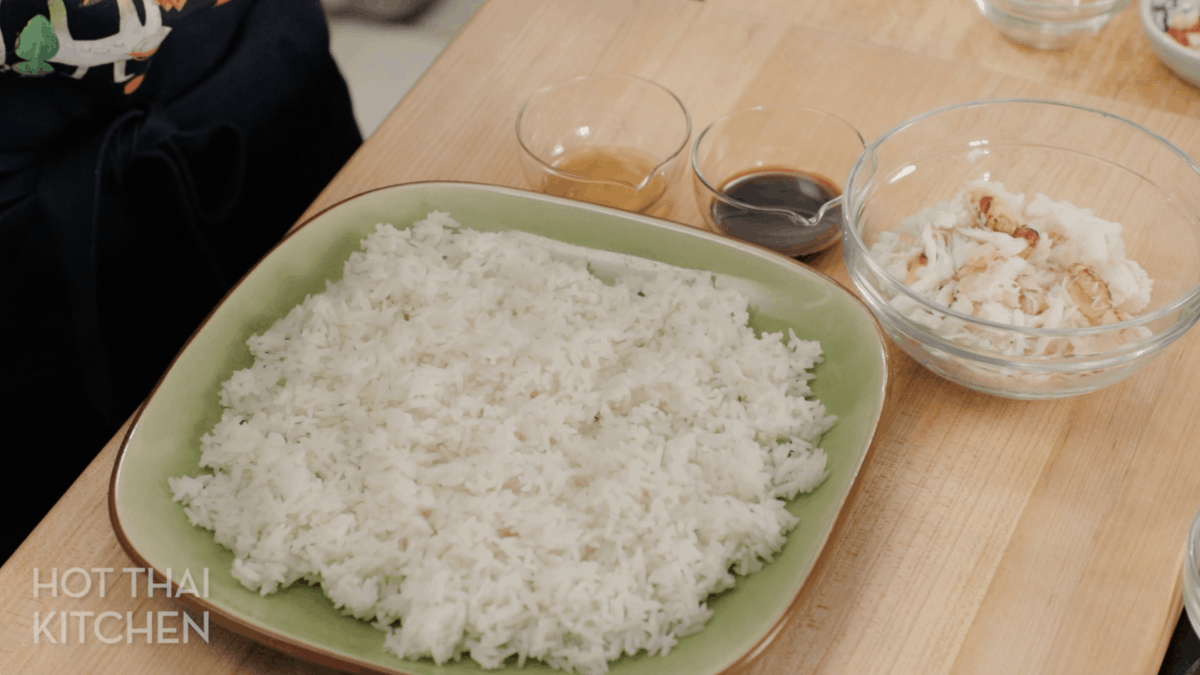
- If your rice is hot, spread it out onto a tray and let it air dry and cool while you prep. This isn't necessary if your rice is already well-cooked, but it does help especially for home stoves which don't get that hot. It gets rid of steam and allows the rice to cool down completely, which makes the grains stick less to each other.
- Cook in batches. Restaurants can cook a lot of fried rice at once because their stove is orders of magnitude hotter than our home stoves. With a typical home stove, it's best not to cook more than 2-3 servings in one batch, otherwise too much steam will get trapped, and it will also be much harder to stir and get rid of lumps. Each batch takes only a few minutes, it's worth doing it twice but better!
Step-By-Step
Here's an overview of all the steps. If it's your first time, I highly recommend watching the full video tutorial to ensure success!

- In a wok, saute garlic over medium heat until the smallest pieces start to turn golden.

- Turn heat up to high and add the eggs and scramble lightly for a "marbled" effect, just until it's halfway cooked.

- Add the rice, soy sauce, fish sauce, sugar and white pepper. If you see any big clumps of rice, pour the liquid seasoning directly over it which will help the clump separate.

- Toss and stir until all the rice grains are evenly coated in the seasoning. Press any lumps of rice with the back of the spatula to break them up. Then, let the rice toast undisturbed for 10-15 seconds to brown slightly, then stir. Repeat the toasting 1-2 more times.

- Add the crab and toss for about 30 seconds or so just to warm it up. Be gentle with the crab so they don't break apart into bits.

- Turn off the heat and add green onions and/or cilantro. Toss just to mix.

- Serve with cucumber slices and a wedge of lime, and if you want, a side of prik nam pla.

- To make the prik nam pla, simply add some sliced Thai chilies and, optionally, chopped garlic. Add just enough fish sauce to fully submerge the chilies, and then add a squeeze of lime.
No Crab? No Problem. How to Sub Other Protein
As mentioned, crab fried rice is part of the "basic Thai fried rice" family. And you can simply switch out the crab for another protein without changing anything else! The key is you want to cook the meat first and separately, and add them in at the end just like we did with the crab. Here are some specific suggestions:
- Shrimp. Shrimp fried rice or khao pad goong is also very popular as Thais loooove our shrimp! In the same wok you will use to fry the rice, sear the shrimp in a bit of oil over high heat until fully cooked, 1-2 minutes per side only. Remove the shrimp but keep the oil in the pan; use the oil the cook the fried rice to keep the shrimp flavour.
- Chicken, pork, or beef. Cut the meat into thin slices and marinate it with a bit of soy sauce while you prep other things. In the same wok you will use to fry the rice, cook the meat off in a bit of oil over high heat until fully cooked. Remove the meat but keep the oil in the pan; use the oil the cook the fried rice.
- Tofu. Cut firm tofu into small cubes and I recommend marinating it with soy sauce for some flavour, though it's not necessary. Pan fry them in oil first to create a bit of a golden skin which will add a chew and prevent them from falling apart in the wok.
Save this recipe!
The Secret to More Flavourful Fried Rice
When most people make fried rice, they toss in everything until it's mixed, and call it done. But that's just "mixed rice." For proper fried rice with more complex flavour, we need to let the rice actually fry!
Well, more accurately, TOAST. This means letting the rice sit in the pan without stirring for a bit (10-15 seconds depending on how hot your stove is) until the rice browns slightly, developing a deeper flavour. Think a sandwich made with untoasted vs toasted bread. That's the difference.
You don't need to toast ALL grains of rice. I usually let the rice toast 2-3 times, tossing in between each time, and it's good to go. You should also hear the rice start to pop if you do it right.
Watch The Full Video Tutorial!
All my recipes come with step-by-step video tutorials with extra tips not mentioned in the blog post, so make sure you watch the video below to ensure success! And if you enjoy the show, please consider subscribing to my YouTube channel. Thank you!
Recipe Card
Print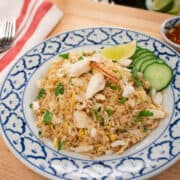
Thai Crab Fried Rice (Khao Pad Pu)
- Prep Time: 15 mins
- Cook Time: 8 mins
- Total Time: 23 minutes
- Yield: 2 servings
Description
Crab fried rice is arguably the most popular kind of fried rice in Thailand. It's easy, quick, and SO satisfying. You can also use any other kinds of protein instead of crab (just cook it first!), as it's a great way to use up any leftover meats you have. Sub gluten free soy sauce to make this dish gluten free.
Ingredients
Save this recipe!
- 3 Tbsp (45 ml) vegetable oil
- 5-6 cloves garlic, chopped
- 2 large eggs
- 375 g (2 ½ cups) cooked jasmine rice (see note)
- 1 Tbsp (15 ml) soy sauce, preferably Thai, or use gluten-free soy sauce if needed
- 2 tsp (10 ml) fish sauce
- 1 tsp (5 ml) sugar
- ¼ tsp (1.25 ml) ground white pepper
- 4.6 oz (130 g) fresh crab meat (not canned!)
- 1 green onion and/or a few sprigs of cilantro, chopped
- Cucumber slices for serving
- Lime wedges for serving
Prik Nam Pla (optional condiment)
- 1 Thai chili, thinly sliced, or to taste
- 1 clove garlic, minced of thinly sliced (optional)
- 1 Tbsp (15 ml) fish sauce, approximately
- 1 tsp (5 ml) lime juice, approximately
- *Measurements for prik nam pla ingredients do not have to be exact. You just need enough fish sauce to cover the chilies and garlic, and you can make it with more or less lime juice to taste.
Instructions
Make Prik Nam Pla (optional)
- Place the sliced chilies and garlic in a small dipping sauce bowl and add enough fish sauce to completely submerge the chilies and garlic. Add the lime juice and let sit until ready to use. This will keep in the fridge for a few weeks.
For the Fried Rice
- Heat the oil and garlic in a wok over medium heat and stir until the smallest pieces of garlic start to turn golden.
- Add eggs, scramble slightly, then let them set about halfway before stirring to break up the pieces so you get a marbled effect of the yolks and whites.
- Turn the heat up to high then add the rice, soy sauce, fish sauce, sugar and white pepper and toss to distribute the sauce evenly, pressing on any lumps of rice with your spatula to break them up.
- Once the rice grains are evenly coated by the seasoning, let the rice sit without stirring for 10-15 seconds so that it can toast and brown slightly, developing a more complex flavour. Toss and repeat the toasting 1-2 more times.
- Add most of the crabmeat (save a bit for garnish), and continue tossing for about 30 seconds to 1 minute just to heat the crab through. Be gentle when tossing so you don’t break up the crab pieces.
- Turn off the heat and toss in most of the green onions and/or cilantro (save some for garnish).
- Plate and top with the remainder of the crab meat and green onions/cilantro.
- Serve with cucumber slices and a lime wedge. Be sure to squeeze a bit of lime onto your rice before enjoying. Serve prik nam pla on the side for a little spicy kick!

Notes
If measuring rice by measuring cups, pack it in gently just so there are no big holes but don't push it in tightly.
You do not need to have old, cold rice to make good fried rice! You can cook it straight from the rice cooker but your rice has to be dry. So if cooking fresh rice, wash the rice well and add a little less water than you normally use. For Thai jasmine rice, I use a 1:1 rice to water ratio for fried rice, but this may vary depending on your particular rice. See this video on how to cook perfect jasmine rice on the stove top.


Hallie says
Ridiculously good! I added mushrooms with the garlic and snap peas and grated carrots with the rice. Could do many variations if you want more veggies. Highly recommend going heavy on the cilantro, green onion, and lime.
Mrunal says
I always follow this recipe whenever my wife wants a crab fried rice.
Jason says
You can never go wrong with this recipe! Tastes a lot better than Thai restaurants in the U.S. (lighter and refreshing) and it tastes exactly like the best crab fried rice places that you can find in Thailand. It’s my go to recipe whenever I need to use up a lot of leftover rice. Thank you, Pai! 😊