


Regional Thai food isn't very well known, but khao soi ข้าวซอย, with egg noodles in an aromatic curry broth is an exception. Because Northern Thailand is such a popular tourist destination, this Northern Thai curry noodle soup has become popular amongst foreigners.
Some might even say if you visit the North of Thailand and didn't eat khao soi, you didn't really make it there! It's a truly unique dish, and with this recipe you can recreate the experience of Northern Thailand at home.
What is Khao Soi and Where Did it Come From?
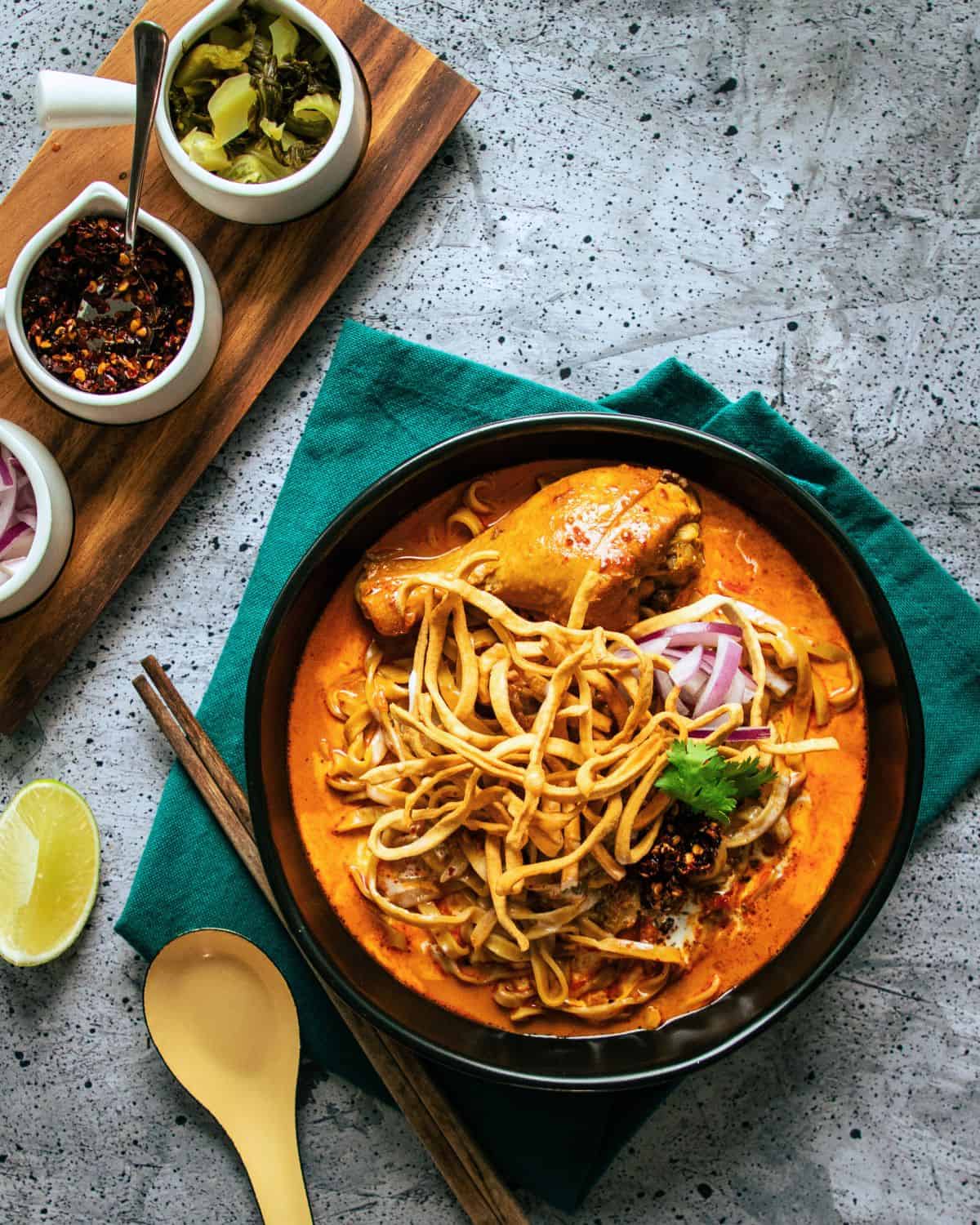
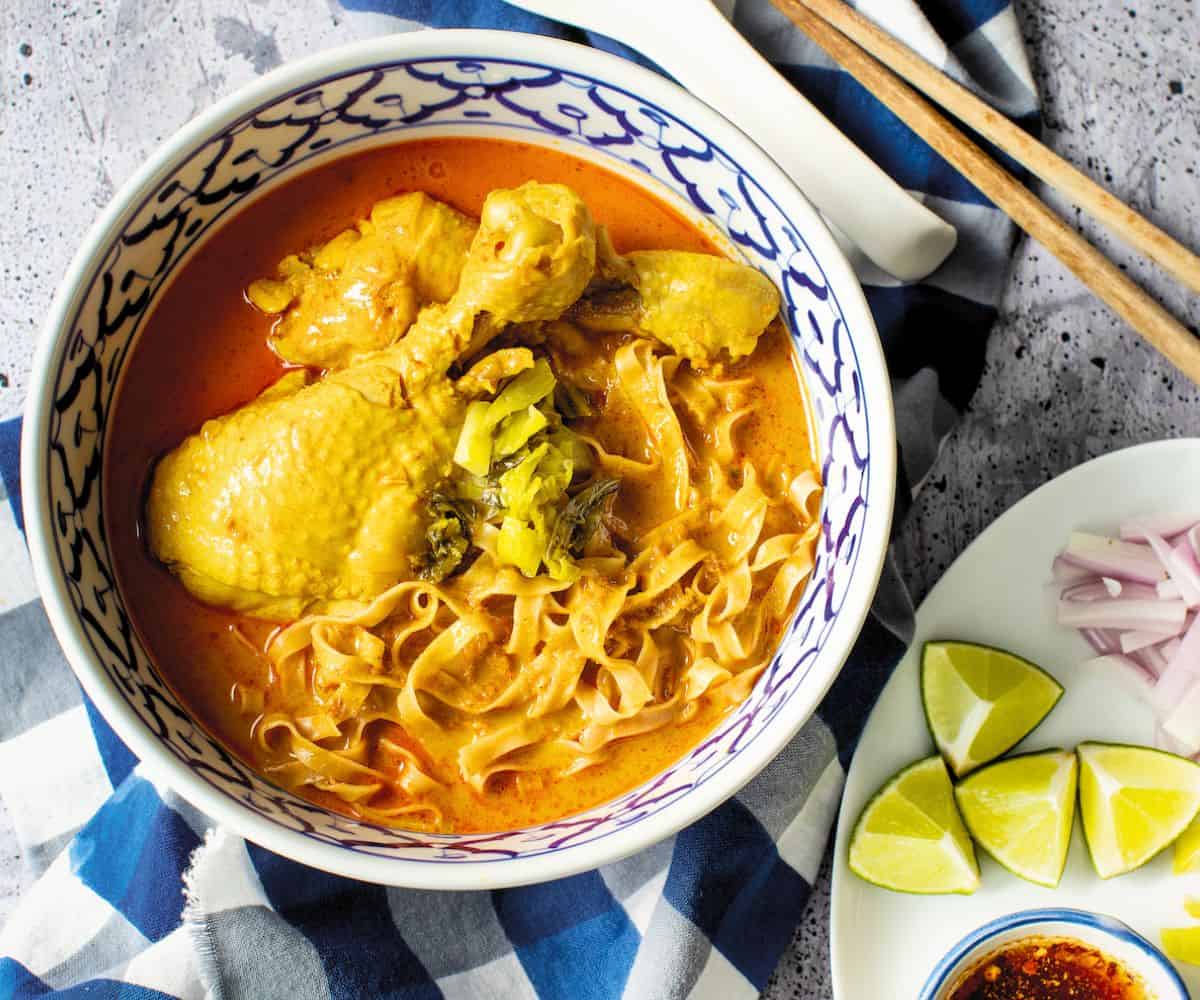
Khao soi ข้าวซอย is a northern Thai noodle soup that uses wheat-based egg noodles and is served in a coconut milk curry broth. It's typically made with chicken or beef, and the bowl is topped with crispy deep fried noodles. Although it is sometimes called "Chiang Mai Noodles" in the West, it is not unique to, nor originated from, Chiang Mai.
Khao means rice and soi means to julienne. It's an interesting name because there is no rice involved in the process. Some say this is because the dish used to use rice noodles made by julienning sheets of dough. Others say khao is short for khao salee which means wheat. Yet some think that the word came from a similar Burmese dish called ohn no khao swe, which I think is more likely because the two dishes are really quite similar.
The exact origin of khao soi is debated, but the prevalent theory seems to be that it came into northern Thailand via Chinese-Muslim immigrants from the Yunnan region, which is why khao soi is not usually made with pork; despite the fact that pork is the most common meat in Thailand.
The Yunnanese, or jeen haw in Thai, would've had to travel through Myanmar in order to get to Northern Thailand, so it is possible that they encountered ohn no khao swe there and brought it with them to Thailand, hence the similarity of the two dishes.
Khao soi in Thailand can vary significantly. This is because after khao soi arrived in Thailand, in whatever form that was originally, Thai people in various places started to modify the dish to suit their own palate. So when you're in Northern Thailand, don't just try one khao soi and think you've "been there done that!"
For example, in northern Thailand you can find something called "Yunnanese khao soi" that bares almost no resemblance to this recipe - the broth has no coconut milk, and the noodles are big fat rice noodles. Aside from the fact that they're both noodles in soup, and a few common ingredients...there is very little else alike. This is possibly as close to the "original" khao soi as it gets.
Ingredients and Notes
Here are all the ingredients and important notes about them. For amounts, see the full recipe card below. There are a number of components to khao soi: the curry paste, the curry, the crispy noodles, and the condiments. Sounds like a lot but many of them are quite simple!
Curry Paste Ingredients
Unfortunately you can't buy store-bought curry paste for khao soi (at least not that I've seen). But the ingredient list for the curry paste isn't long.
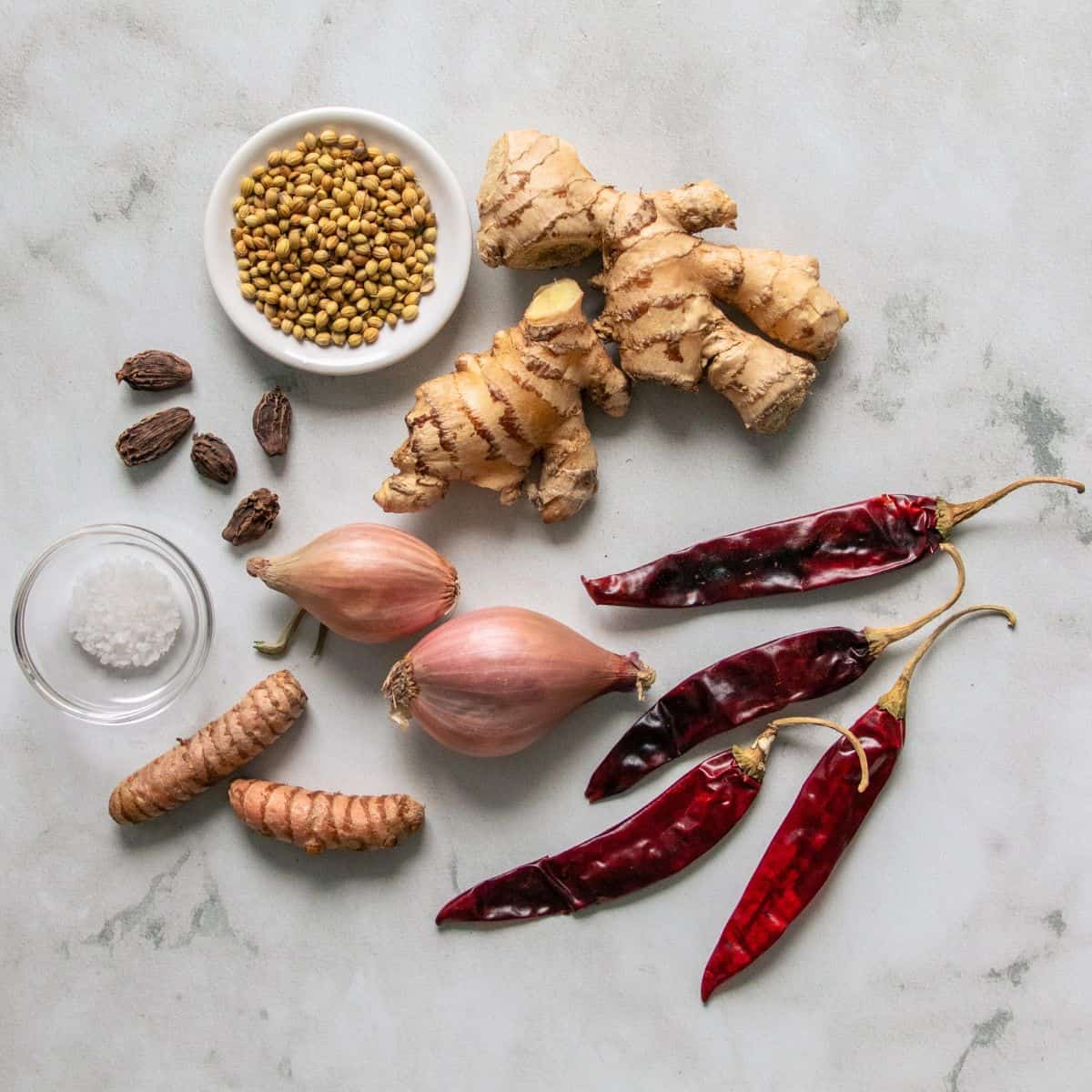
- Dried chilies. Khao soi is not typically very spicy, so I stick with milder dried chilies such as guajillo or puya. If using spicier chilies, remove all of the seeds and pith to reduce the heat.
- Coarse salt, the coarseness of the salt will add friction and helps the curry paste grind more easily.
- Ginger, scrub or scrape any loose bits of skin off and trim the woody ends, but there is no need to peel everything off.
- Fresh turmeric, wash it well and there is no need to peel it. You can substitute ground turmeric, but I do prefer the flavour of fresh turmeric.
- Shallots
- Coriander seeds
- Black cardamom, this is the spice that will make this curry truly unique. It is not used in all variations of khao soi, but I think it does make it stand out from other kinds of Thai curries. Black cardamom (tsaoko) has an aroma that reminds me of leather, smoke, peaty scotch, and menthol. You can find it at Chinese or Indian grocery stores. If you can't find it, you can try using green cardamom, which is NOT similar, but it'll still taste good and it'll be better than nothing.
Noodle Soup Ingredients
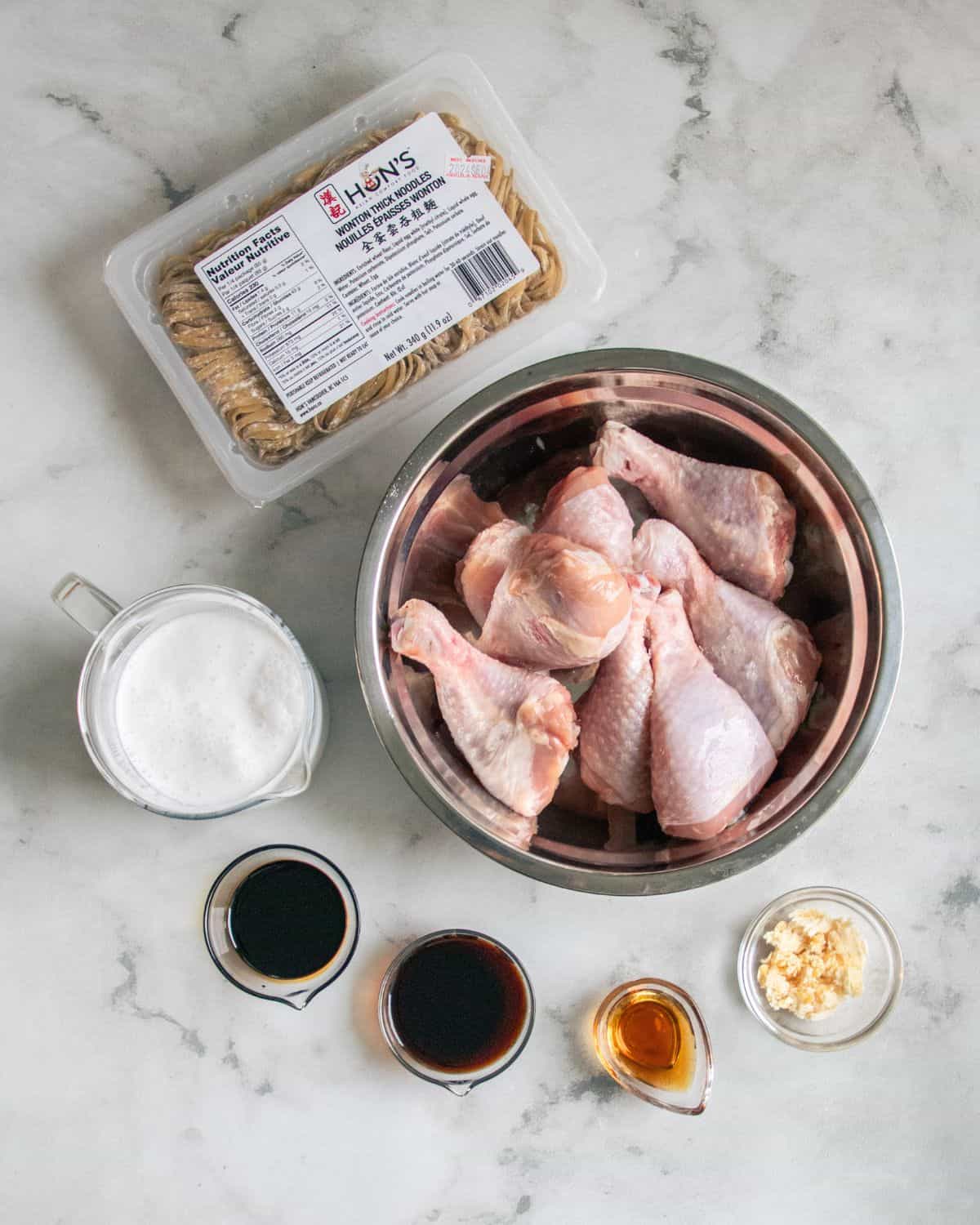
- Coconut milk, read about how to choose good coconut milk here.
- Chicken drumsticks or drumettes. Drumsticks are the most common in Thailand as the bones make the broth rich and flavourful. If you're short on time, use drumettes and they will cook in half the time of drumsticks. You can substitute boneless chicken with some caveats; see more on this in the FAQ below.
- Soy sauce. It might surprise you to see soy sauce used in a Thai curry, but that's because this is a dish of Chinese Muslim origin! See more on the history of khao soi above.
- Fish sauce. Optional, I use fish sauce to do my final seasoning adjustment because I like the flavour, but you can also just use more salt or soy sauce.
- Palm sugar, finely chopped. But brown or granulated is fine also.
- Wheat-based egg noodles, also known as wonton noodles, can be bought fresh in the refrigerated section at Asian markets. Most commonly khao soi uses flat noodles, but sometimes round ones are used, so whatever you prefer is fine. Some of these noodles will be used for frying as crispy noodles on top.
- Chopped cilantro for garnish, optional (not pictured).
Condiments for Khao Soi
These four condiments are iconic, and khao soi is not complete if served without them! However, if you don't eat spicy, you can skip the fried chili flakes.
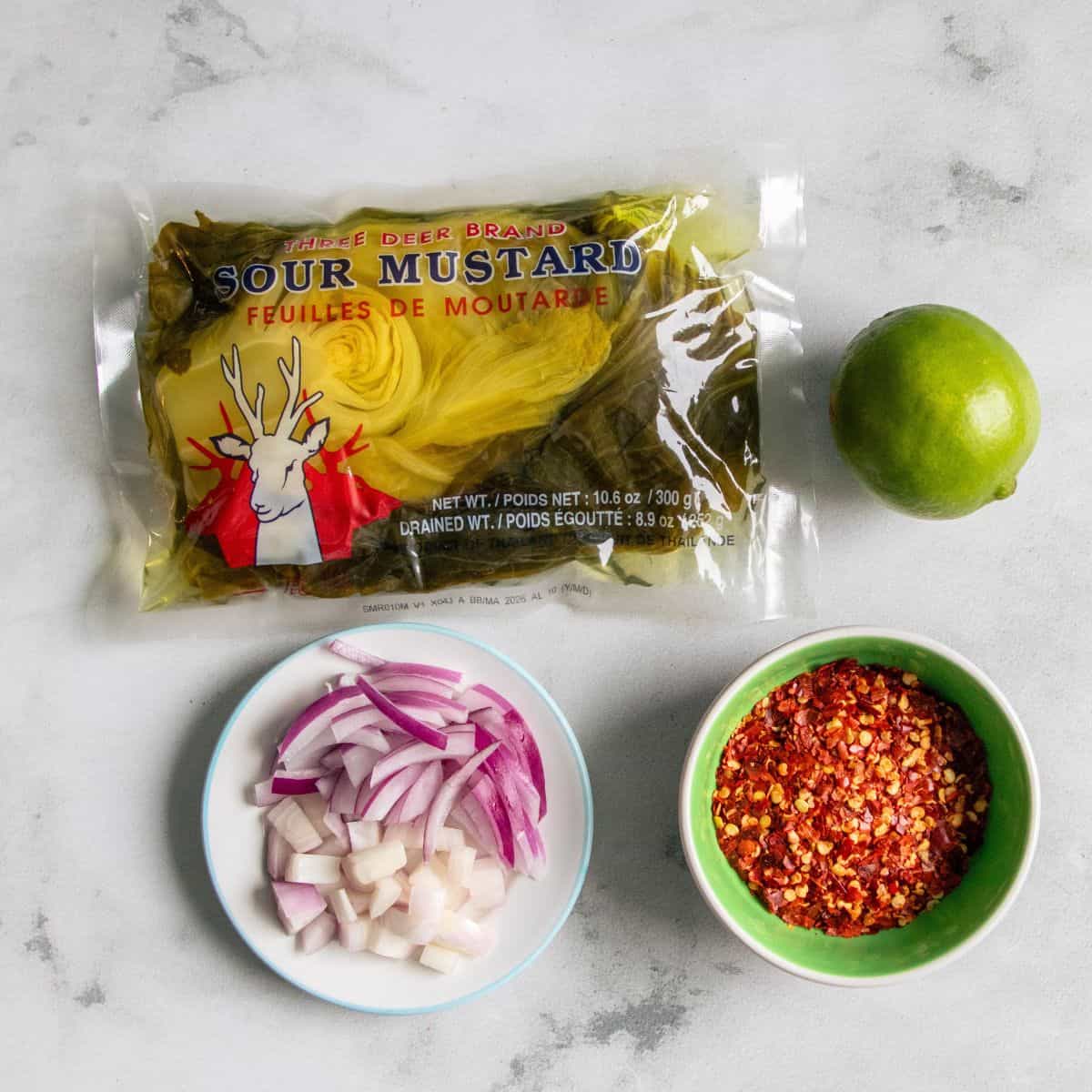
- Lime wedges for a little acidity to help brighten the flavour of the broth.
- Chopped shallots, or red onion for some freshness. I personally prefer red onions as they are sweeter and less pungent, but shallots are also fine.
- Pickled mustard greens. These really make a difference! They are tart and crunchy and help counter the richness of the broth, a component that's very important in Thai cuisine (more on this below). You can buy pickled mustard greens at many Asian grocery stores, just make sure they are a product of Thailand. You can substitute another crunchy sour pickle though such as pickled carrots or cauliflower.
- Fried chili flakes. This is optional for those who want to add some heat to their bowl, and it's made simply by sauteing some chili flakes in oil until dark and smokey.
KHAO SOI SHORTCUT: If you don't have time for a homemade curry paste, in my book SABAI: 100 Weeknight Thai Recipes, I have a "cheat" version that uses modified store-bought red curry paste. Doesn't taste the same, but it'll do in a pinch.
How to Make Khao Soi Step-By-Step
Here's a bird's eye view of the process. Since all the components can be made in advance, I recommend you spread the work out over two days to make it easier. See more on advance prep below. Also if this is your first time, I highly recommend watching the video tutorial to ensure success.
For khao soi curry paste
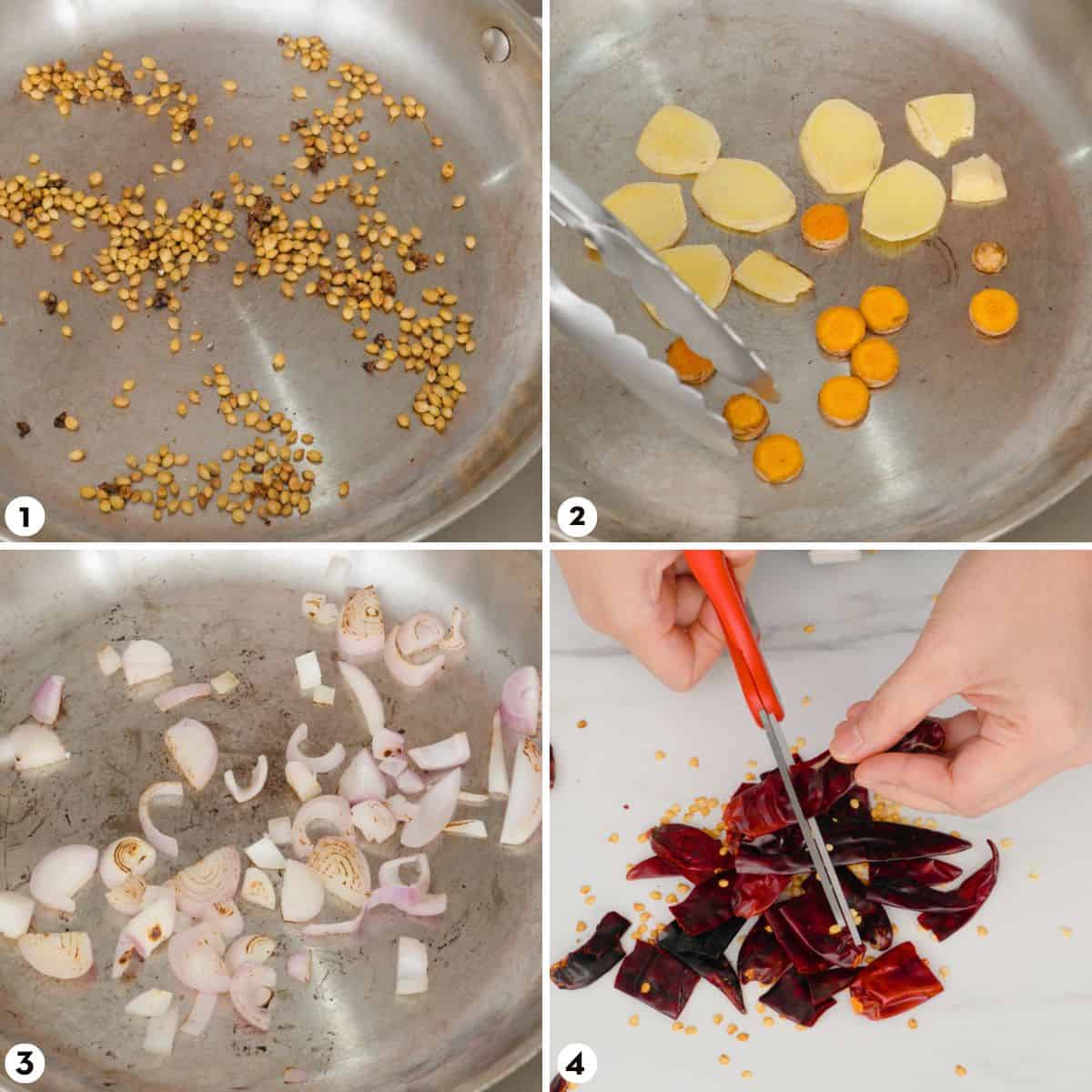
- Remove the seeds from the black cardamom pods and place the seeds into a medium dry skillet along with the coriander seeds. Toast over medium high heat, moving them constantly, until the coriander seeds darken slightly. Set aside.
- In the same skillet over high heat, place the ginger and turmeric slices down and let them sear until they're slightly charred. Then flip and char the other side and remove from the pan.
- In the same skillet, add the shallots and let them char; stirring them around to char them more evenly. Remove from the pan.
- Cut the chilies into chunks and pour out most of the seeds.
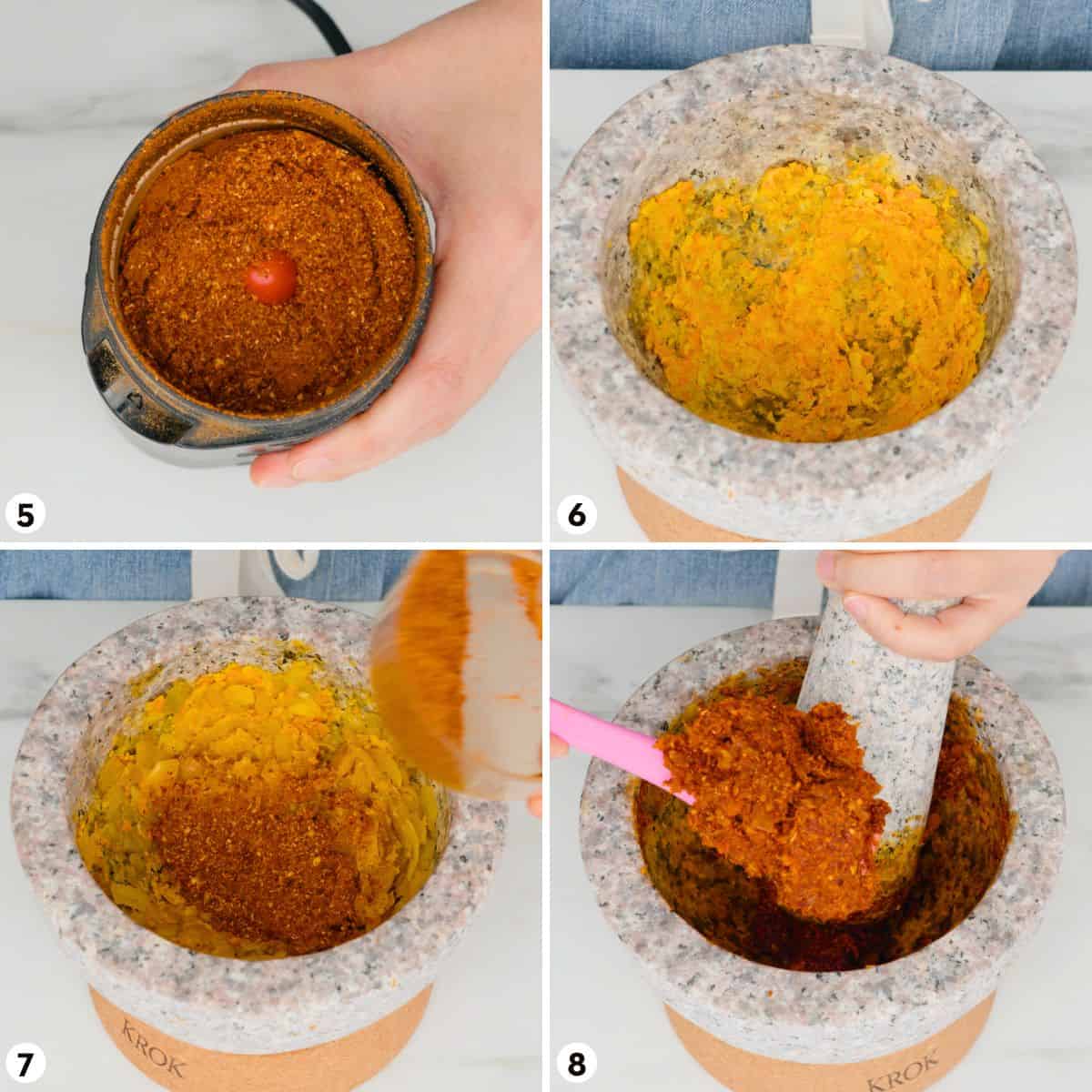
- In a coffee/spice grinder, grind the chilies, black cardamom and coriander seeds into a powder, remove and set aside.
- In a heavy-duty mortar and pestle, pound the ginger and turmeric into a fine paste. (*You can also double the recipe to get more volume and use an immersion blender, as shown in my red curry paste recipe.)
- Add the shallots and the coarse salt and pound; and once it starts to get wet and slippery, add some of the ground spices to help absorb moisture and add friction.
- Pound into a fine paste, then add any remaining dried spices and pound to mix.
For khao soi broth
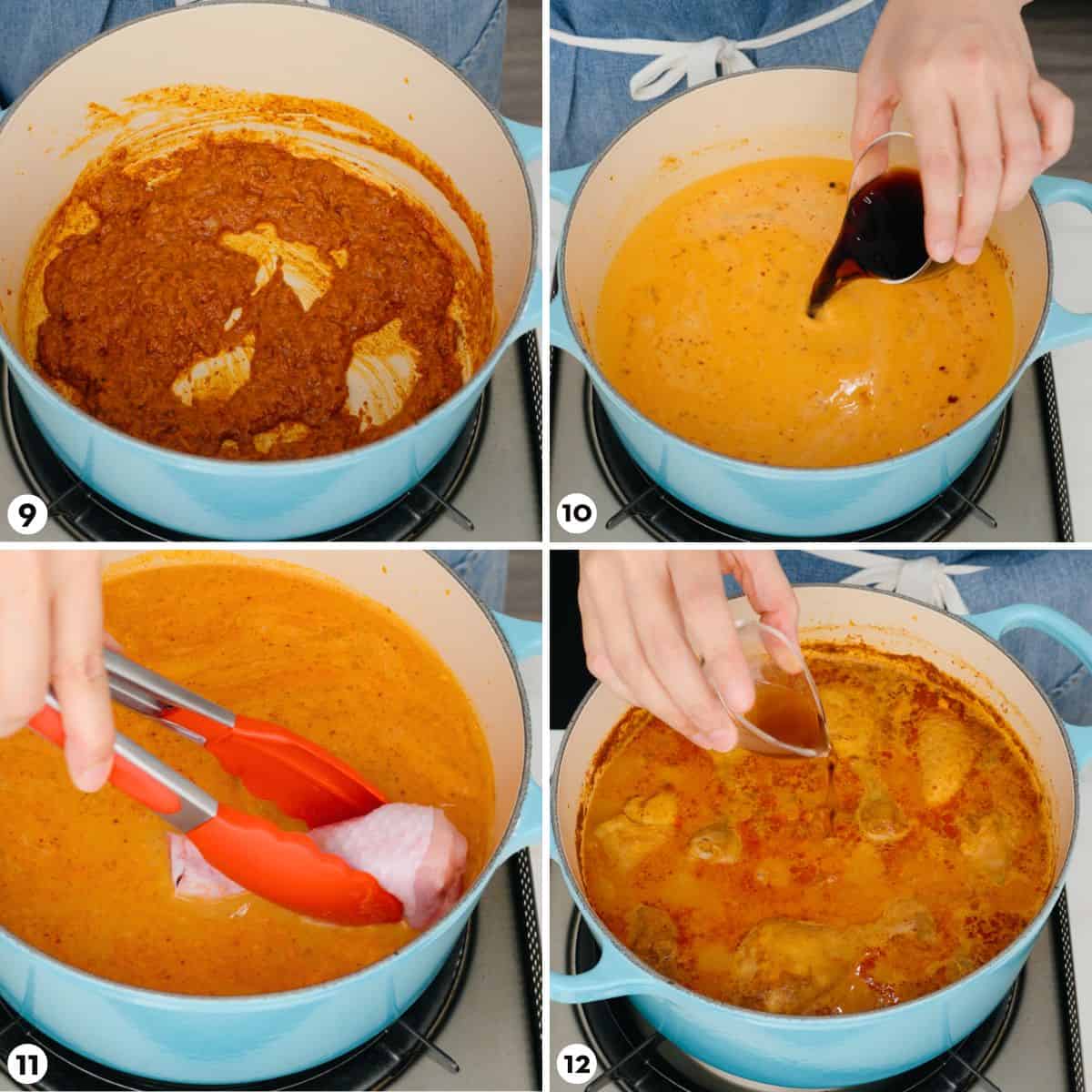
- Add ½ cup (120 ml) of the coconut milk and bring to a boil over medium heat. Add the curry paste and stir for a few minutes until the mixture is very thick and coconut oil starts to sizzle around the edges of the paste.
- Add the remaining coconut milk and stir to dissolve the paste. Then add water, soy sauce, black soy sauce, and sugar.
- Add the chicken drumsticks and bring to a simmer. Simmer gently for 40 minutes or until the drumsticks are fork tender. (Now's a good time to prep condiments and fry the noodles.)
- Taste and adjust seasoning, adding more fish sauce if it needs a little more salt.
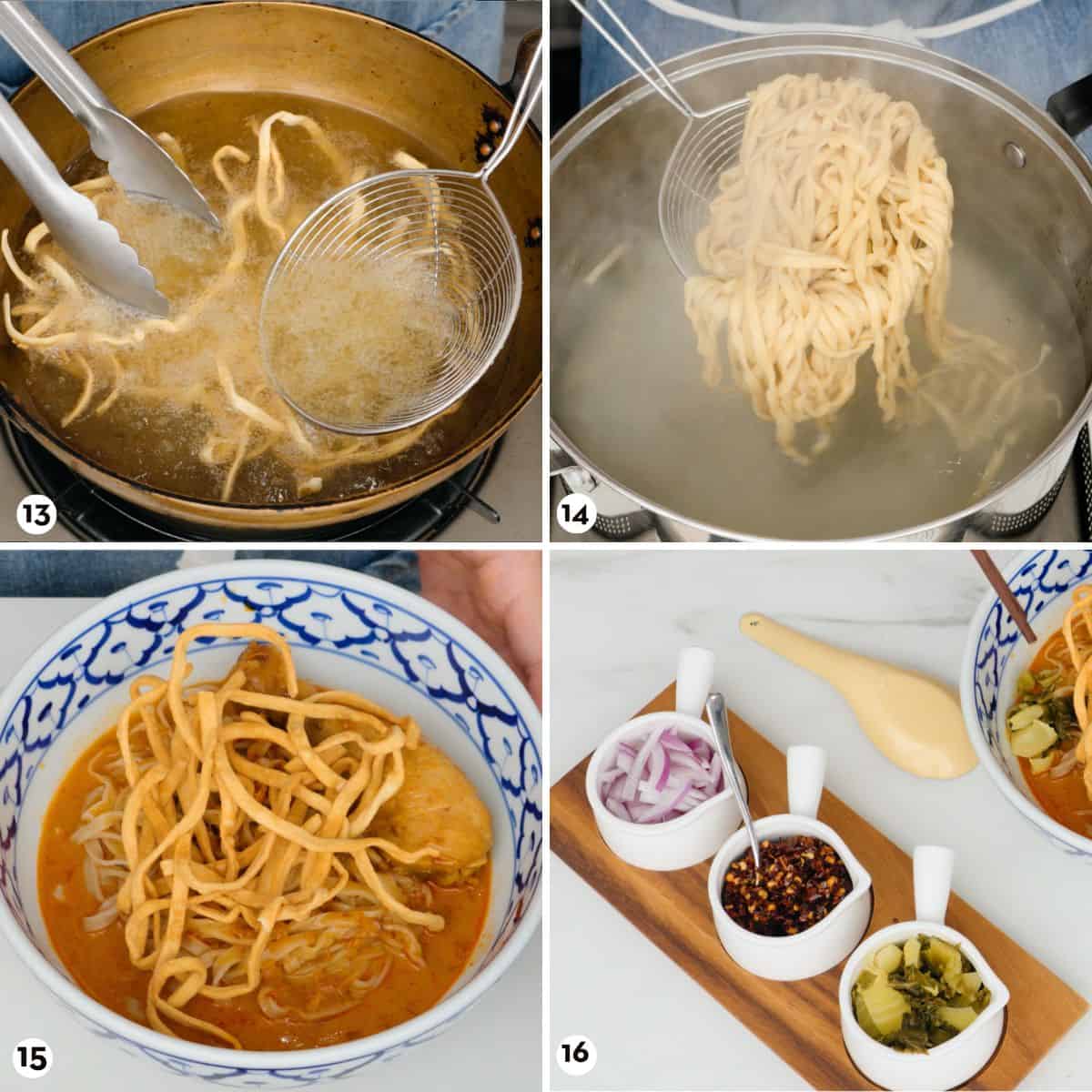
- For crispy noodles: Cut the noodles for frying to about 4 inches, then fry them in a 350°F oil, pressing them down to keep them submerged. Once they are golden brown and the bubbling has almost completely stopped, remove from the oil and drain on a paper towel.
- When ready to eat: Boil the noodles until they are fully cooked - timing will vary between brands and noodle sizes. Mine take 3 minutes. Drain and divide into serving bowls.
- Place 1 or 2 drumsticks into the bowl and ladle the curry on top.
- Serve immediately with the condiments.
For The Fried Chili Flakes (optional)
Of the 4 khao soi condiments, this is the only one that needs to be prepped beyond chopping, but it's a snap. It is also optional and only needed if you want to let your guests to make it spicier.
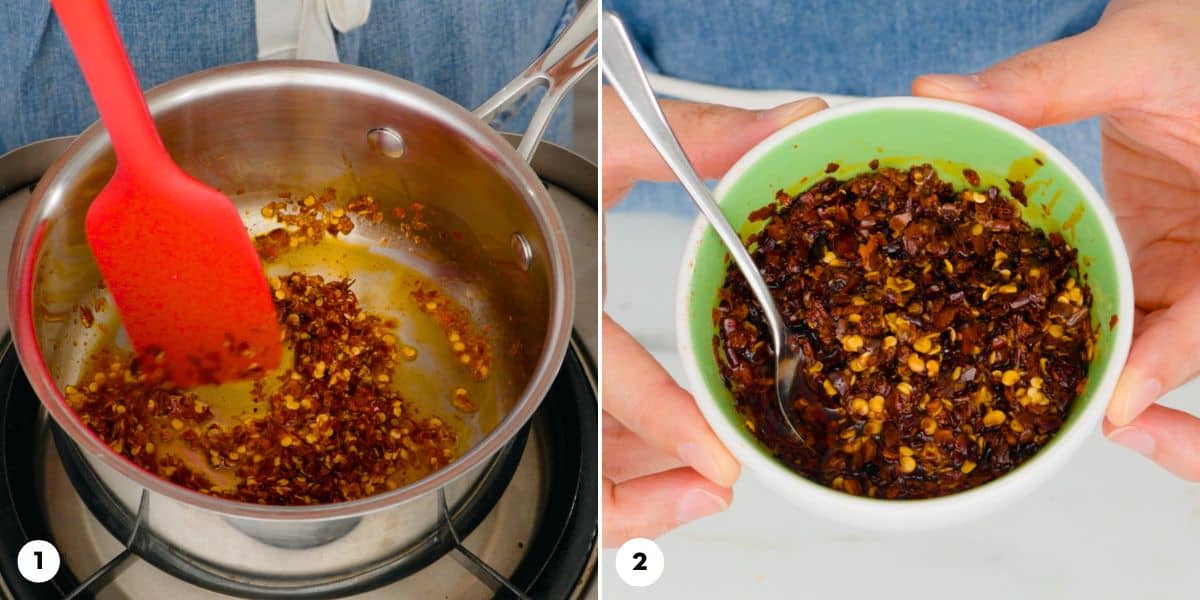
- Add the chili flakes and oil to a small pot or skillet - you can make as much as you want here, it keeps indefinitely in the fridge. Then add just enough oil so that the chili flakes look like wet sand.
- Turn the heat on medium low and keep stirring until the chilies start to darken and smell smoky. Transfer into a small bowl immediately to stop the cooking.
"Gae Lien" - The Importance of The Condiments
I admit that on my laziest of days I have had khao soi without the condiments, BUT... it's also not as good. The condiments serve a purpose that we call gae lien, a very important concept in Thai cuisine.
Gae lien can be loosely translated as "to counter the richness." Thai cuisine places great importance in having well balanced flavours in a meal, so when we serve something that is rich and fatty, we always make sure there's something tart, light and crunchy to "counter the richness," and prevent things from becoming cloying and reducing your appetite.
This is why we usually include salads or dip platters in a multi-dish meal, as I explained in this video. But since khao soi is meant to be a meal in itself, the pickled mustard greens, shallots, and lime are necessary for gae lien.
Save this recipe!
Advance Prep Tips
There are several components to khao soi, so unless you're doing this as a weekend project, I suggest you break the work up over a couple of days. Here are the things you can do ahead of time and how to store them.
- Make the curry paste in advance. If you do one thing in advance, this should be it. Make the curry paste, and then if you'll be cooking the curry in the next day or two, keep it refrigerated. Beyond that amount of time, you should freeze the curry paste. It can be frozen for a few months so you can make a big batch and freeze the remainder.
- Make the curry broth in advance. The broth will keep well in the fridge for up to a week. You can even freeze it in smaller portions if you want to save it for a rainy day. It will actually taste better once it's had time to sit.
- Fry the noodles in advance. The noodles can be fried and kept in an airtight container for up to a week. If you're frying them a few days ahead, fry them until all the bubbles are completely gone to make sure there is no moisture left in them. This will ensure they stay crispy for a long time.
- Prep the condiments. Getting the condiments together is the kind of fiddly thing that I hate dealing with on the day I'm busy serving guests. So I prep the condiments the day before and put them in little bowls/ramekins, put them on a plate, then wrap the whole thing and refrigerate. Then you just bring the whole plate out when ready to serve.
Frequently Asked Questions
Yes. I recommend you to use dark meat, cut into chunky pieces, then let them braise in the broth until they are fork tender. I would then use unsalted or low sodium chicken stock instead of water to make up for the lack of bones. I don't recommend using chicken breast for this.
You can substitute the chicken with any other meats that can be braised. Stew-friendly beef cuts such as beef shank or chuck would work, cut in smaller pieces, but you will need to extend the cooking time accordingly. You can also use pork butt, though khao soi pork is less common in Thailand.
Yes. I would substitute the water with a good vegetable stock, then use mushrooms of your choice and tofu and simmer for 15-20 minutes. Frozen tofu would be excellent in this as it can absorb more flavour.
Khao Soi: Northern Thai Curry Noodle Soup
Equipment
- mortar and pestle see note 1
Save this recipe!
This recipe may contain affiliate links.
Ingredients
For the Curry Paste
- 2 pods black cardamom
- 1.5 tablespoon coriander seeds
- 0.75 oz ginger, thinly sliced
- 1.5 inch fresh turmeric (about 5 g) , thinly sliced, or sub 1 teaspoon ground turmeric
- ½ cup shallots, sliced ¼-inch thick
- 0.75 oz mild dried chilies , such as guajillo or puya
- 1 teaspoon coarse salt
For the Noodle Soup
- 1 batch khao soi curry paste , from above
- 1 ½ cups coconut milk, plus extra for drizzling, if desired (see note 2)
- 8 pieces chicken drumsticks
- 3 cups water
- 3 tablespoons soy sauce
- 1 tablespoon black soy sauce
- 2-3 teaspoons fish sauce, optional, as needed
- 1 tablespoon palm sugar, finely chopped, packed, or sub brown sugar
- 12 oz flat fresh egg noodles (also known as wonton noodles), divided
- Chopped cilantro and/or green onions for garnish, optional
Condiments
- 1 lime, cut into wedges
- ¼ cup chopped shallots or red onion
- ½ cup chopped pickled mustard greens
- Fried chili flakes, to taste (instructions below)
Notes
- You can also use an immersion blender to make the curry paste as shown in my red curry paste recipe, but you will need to double the recipe to make it blend properly. Extra curry paste can be frozen for months.
- Some people prefer a richer khao soi, and an easy way to do this is to drizzle a little extra coconut milk for on top (1-2 tablespoon per serving). The extra drizzle also makes for a prettier presentation!
FULL VIDEO TUTORIAL
All my recipes come with step-by-step video tutorials with extra tips not mentioned in the blog post, so make sure you watch the video to ensure success. If you enjoy them, consider subscribing to the YouTube Channel to not miss an episode. Thank you!
Subscribe to my YouTube ChannelInstructions
For the Curry Paste
- Smash the cardamom pods with a pestle or something heavy and take out the seeds; place the seeds into a medium dry skillet. Add the coriander seeds and toast over high heat, moving them constantly, until the coriander seeds darken slightly. Remove and set aside.2 pods black cardamom, 1.5 Tbsp coriander seeds
- In the same skillet over high heat, place the ginger and turmeric slices down and let them sear until they're slightly charred, this will take 2-3 minutes. Then flip and char the other side and remove from the pan. (See video for what all this charring should look like.)0.75 oz ginger, 1.5 inch fresh turmeric (about 5 g)
- In the same skillet over high heat, place the sliced shallots and let them sear until charred spots form; this will take just a few seconds. Then stir the shallots and let them char a bit more, then remove from the pan.½ cup shallots
- Remove the stems from dried chilies and use scissors to cut them into chunks, pouring out the seeds as you cut them, but no need to get every seed out. Add the chilies to a coffee/spice grinder along with the black cardamom and coriander seeds and grind into a powder, remove and set aside.0.75 oz mild dried chilies
- In a mortar and pestle, pound the ginger and turmeric slices into a fine paste. Then add the shallots and the coarse salt and pound into a fine paste. Once the mixture starts to get wet and slippery, add some of the ground spices to help absorb moisture, which will make it easier to grind.Once you've got a fine paste, add any remaining dried spices and pound just to mix.1 tsp coarse salt
For the Curry Broth
- In a medium pot, add ½ cup (120 ml) of the coconut milk and bring to a boil over medium heat. Add the curry paste and stir to dissolve, then keep stirring for a few minutes until the mixture is very thick and coconut oil starts to sizzle around the edges of the paste. (If the paste is very thick and the coconut oil has not sizzled, this is okay, you can move on.)1 ½ cups coconut milk, 1 batch khao soi curry paste
- Add the remaining coconut milk and stir to dissolve the curry paste. Then add water, soy sauce, black soy sauce, sugar, and the chicken drumsticks. Bring to a simmer, then turn the heat to low and let simmer gently for about 40 minutes or until the drumsticks are fork tender. While the chicken is simmering, make the crispy noodles and prep the condiments.*Keep the simmer gentle as we do not want the soup to reduce too much.3 cups water, 3 tablespoons soy sauce, 1 tablespoon black soy sauce, 1 tablespoon palm sugar, 8 pieces chicken drumsticks
- Once the chicken is done, taste and adjust seasoning with more fish sauce or salt if needed (I love adding fish sauce). Remember to make the broth strongly seasoned as it will be diluted slightly once noodles are added. If it has become salty from reducing too much, you can simply add more water.2-3 teaspoons fish sauce
For the Crispy Fried Noodles
- Take 3 oz (85 g) of the noodles for frying. Loosen them and shake off excess flour, then use scissors to cut them a few times so they are about 4 inches long.
- Heat about 2" of frying oil in a wide pot or wok to 350°F (175 °C).
- Turn the heat down to medium-low and add a SMALL handful of noodles (they will expand A LOT) into the oil and press the noodles down as they fry to submerge them. Fry until the noodles are golden brown AND the bubbling is almost gone. Remove and drain on a paper towel and repeat with the remaining noodles. Tip: If you've put in too many noodles and they cannot be submerged, you'll need to flip them halfway through to fry the top. *No bubbling means noodles are crispy so you want to wait until the bubbles are almost gone before you take them out. If the noodles are browning faster than the bubbles can slow down, your heat is too high.12 oz flat fresh egg noodles (also known as wonton noodles)
For the Fried Chili Flakes (if using)
- Add any amount of spicy chili flakes to a small pot and add just enough neutral flavoured oil so the chili flakes look like wet sand.
- Turn the heat on medium low and keep stirring until the chilies start to darken and smell smoky - just a few minutes. Transfer into a small bowl immediately to stop the cooking.
Assembly
- Bring a large pot of water to a full boil on high heat. Meanwhile, loosen the noodles and shake off any excess flour.
- Once the water is boiling, add the noodles and cook until they are done - this will vary from brand to brand so if you're not sure, keep checking them every minute or so. (As a reference, the flat wonton noodles shown in the video take 3 minutes.)
- While the noodles are cooking, and if you're cooking multiple servings, prepare a mixing bowl for the cooked noodles to go into, and add about a tablespoon of oil into the bowl to help noodles separate. (If you have garlic oil, this is a great place to use it!)
- Use a slotted skimmer to fish the noodles out, shake off excess water, and add them into your bowl with oil. Toss the noodles in the oil, then divide the noodles into serving bowls.
- Place 1 to 2 chicken drumsticks into each bowl, then ladle the hot curry broth over them - the broth is quite rich so you don't need much broth. For an extra flare, drizzle 1-2 tablespoons of coconut milk on top which will make it look prettier and adds a little more richness. Top with a handful of the crunchy noodles and some chopped cilantro if desired, then serve immediately with all the condiments.Chopped cilantro and/or green onions for garnish, 1 lime, ¼ cup chopped shallots or red onion, Fried chili flakes, ½ cup chopped pickled mustard greens


Some English bloke says
I’ve made the paste ready to cook tomorrow, and something just hit me, no gapi? Is it worth adding? Or does it not work for khao soi? I’d love anyone’s opinion on this before I cook the paste tomorrow
Tom says
I'm a bit confused about the black cardamom, as there are two distinct spices that are called that, and you name both. One is Indian black cardamom, which is dried over an open fire and has a strong smokey flavour. This one is used in Indian and Nepalese cuisine. The other one is Chinese black cardamom (tsaoko)and is less smokey, more fruity/floral. I'm not sure which of both is more common in Thailand and is meant to go in this dish (you do say tsaoko, but you also say you can find it at Indian and asian shops; where I live, tsaoko is very difficult to find - I have to order it online - but every Indian or asian supermarket has the Indian black cardamom).
David E. Waterbury says
Maesri makes khao soi curry paste. The carry it at my local Asian market in Northeast Pennsylvania. I just bought some.
Bruce Weller says
Awesome love this and so do my Thai friends thanks to Auntie Palin