


During a trip to Thailand, I visited an iconic restaurant called Jeh O Chula to try a viral instant noodle dish, which I then recreated. But while I was there, I tried another one of their signature dishes which blew me away; their raw salmon salad, which instantly became my favourite salmon dish ever. It's like a Thai ceviche; fresh salmon tossed in a spicy, garlicky, tart dressing with lots of lime juice and cilantro. This is one of my go-to appetizers when I have guests because I know it's 100% going to be a hit!
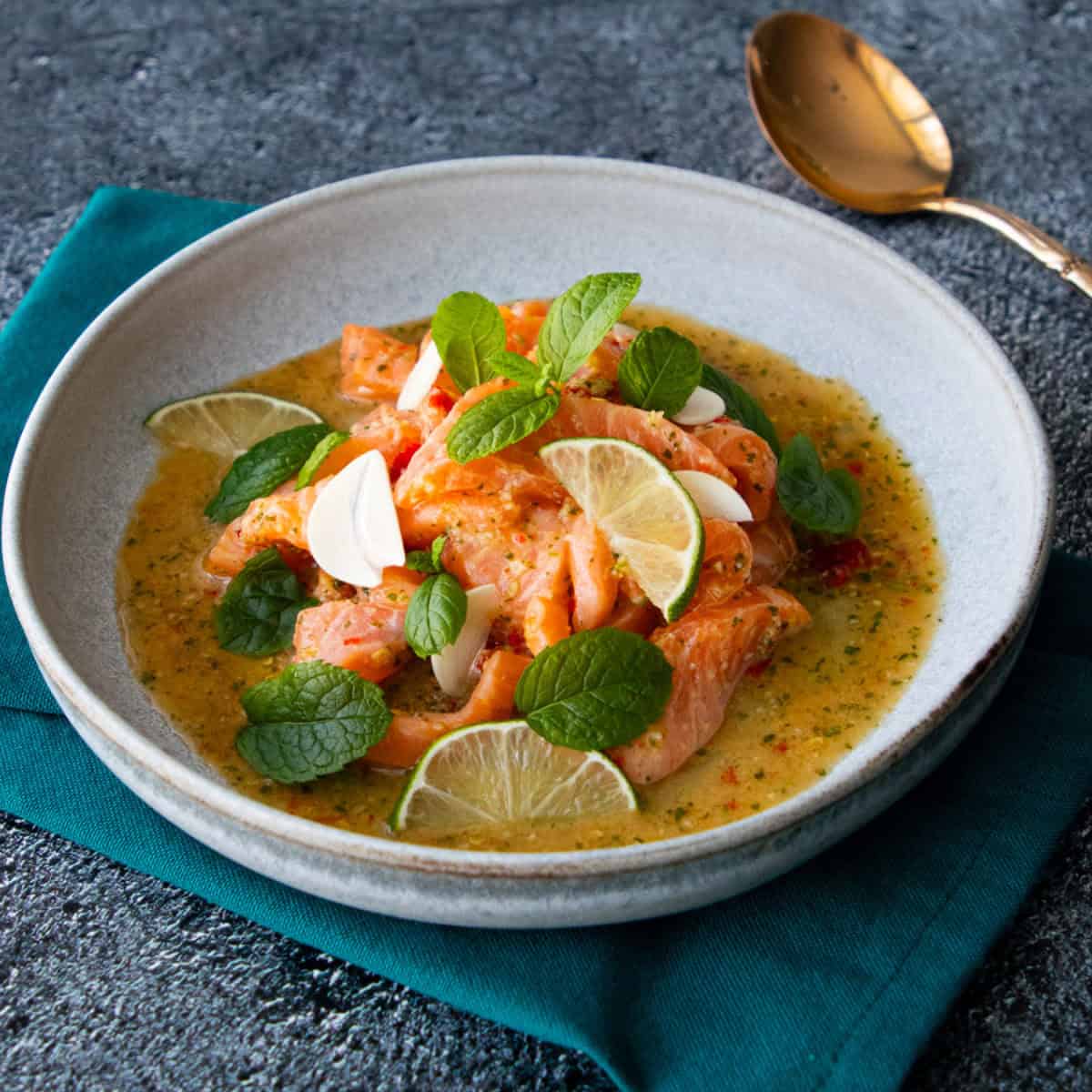
What is a Thai Salmon Salad?
In Thai this dish is called yum pla salmon sod (lit.: raw salmon salad), but to be clear this is not a traditional Thai dish (and salmon is not a Thai ingredient!). It's a dish that Jeh O came up with, and this is what they call it on the menu.
"Yum" is a type of Thai salad, so in theory a dish with this name can be any kind of yum that uses salmon as a main ingredient, but in this particular version, salmon is the ONLY main ingredient, and the salad dressing is the classic Thai seafood dipping sauce, nam jim seafood.
The Most Important Component: Nam Jim Seafood
There are really only 2 components to this dish, salmon and dressing, and the success of this dish relies entirely on the dressing (assuming your salmon is fresh). The dressing is in fact a sauce that's extremely important within Thai cuisine called nam jim seafood.
"Nam jim" means dipping sauce, and seafood, well, is seafood. It is the sauce that Thai people dip all kinds of seafood in. In fact, Thai people never do seafood without it, and sometimes we dip non-seafood in it as well (try it with crispy pork belly!)
I have shared a recipe for nam jim seafood before that was an all-purpose dipping sauce, but this recipe is slightly different as it was developed specifically to work in this application. You can, however, use this recipe as an all-purpose seafood sauce as well.
Ingredients and Notes
Here are all the ingredients you'll need and important notes about them. For amounts, see the the full recipe card below.

- Salmon. You want to buy salmon that is safe for eating raw, so when shopping, ask your fishmonger if it's okay for sashimi. I buy mine (from Sungiven for folks in Vancouver) frozen and specifically labelled as "sashimi salmon." More on this in the Safety Notes below.
Want to use another fish? You absolutely can, or even another seafood, as long as you ensure that it is safe to eat raw. I can see this sauce being fantastic with raw scallops, hamachi, spot prawns, or even tuna. The dressing will work well with any kind of seafood because, after all, it is a nam jim seafood! - Garlic, you'll need some for the sauce, and if you want, some for garnish. Yes! Garlic for garnish! At Jeh O they put thinly sliced raw garlic on top and I was surprised to find that it actually tastes great together with the salmon. Just make sure you slice it really thin otherwise it'll be overpowering.
- Chilies, I use red Thai chilies for this, and feel free to reduce or increase the amount depending on your heat preference.
- Cilantro, stems and leaves all together.
- Lime juice, fresh only for this recipe!
- Fish sauce, read more about choosing good fish sauce here.
- Palm sugar, or light brown sugar. Learn more about palm sugar here.
- Salt, this is to replace some of the fish sauce to reduce the overall amount of liquid so that the sauce isn't too runny.
Step-By-Step:
Here's a bird's eye view of the process. The full instructions are in the recipe card below, and if this is your first time, I highly recommend watching the video tutorial to ensure success!
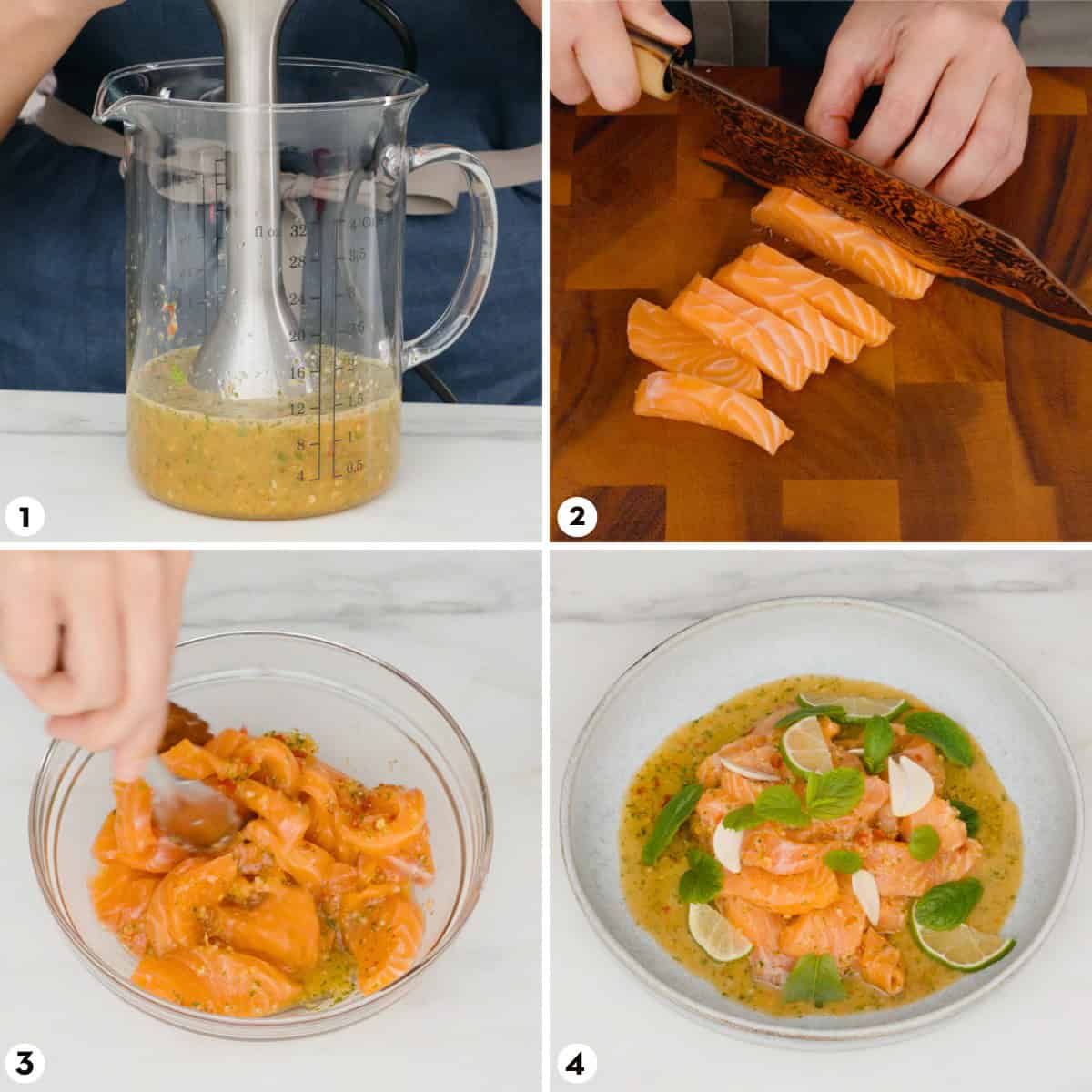
- Blend all sauce ingredients until there are no more big chunks, but there are still some small bits. The amount in the recipe will likely be too small for a jug blender, so a bullet or immersion blender is great for this. Instructions for using a mortar and pestle is also provided in the recipe card.
- Cut the salmon first so the pieces are about 2-inches wide, then slice them into ¼-inch thick strips.
- Toss the salmon with the dressing.
- plate and top with garlic slices, mint leaves, and lime slices for garnish, if desired. Eat it soon or it'll turn into ceviche!
Safety Notes on Working with Raw Salmon
In the video I mentioned that you want "sashimi grade" salmon, but actually, that is not a real grade as determined by any governing body. But I said this to make sure that you stop to question the safety, that you don't just buy any old fish at the supermarket without first checking that it is safe to eat raw. You can read more about raw fish safety in this Serious Eats article, but here's my summary for you.
Fish can be made safe for eating raw by freezing at a very low temperature (much lower than your home freezer so don't try to DIY this) so that any parasites are killed. Farmed salmon is usually free of parasites, but parasites aside, it can still be contaminated with pathogens during the handling and butchering of the fish. So it's important to buy from a supplier who will handle your fish with care and cleanliness, here are some tips for deciding where to buy your raw fish from.
- If possible, buy from a vendor who specializes in seafood, rather than a generic grocery store. Not only do fish tend to be fresher from these places, you can talk to the vendors directly to ensure that the fish you're buying is safe for eating raw.
- Look around the shop for clues of cleanliness: the vendor should have a shop that is clean, doesn't smell fishy, and staff should practice safe handling practices such as wearing gloves and cleaning work surfaces regularly.
- One easy option is to buy sashimi from your trusted Japanese restaurant. It'll be more expensive than buying from a fishmonger, but you'll at least be sure it's safe, and you don't have to cut anything!
And once you bring the fish home, now it's YOUR turn to make sure you handle it with cleanliness and care! Here are some tipes:
- Make sure you wash your hands properly, with soap, before handling the fish.
- Use a fresh, clean cutting board and knife to cut the fish.
- Keep your fish in the fridge until ready to use, and eat it soon after preparing.
- To thaw frozen salmon, wrap it in paper towel and allow it to thaw in the fridge overnight. Thawing in the fridge ensures that the fish never reaches "dangerous" temperature (room temp) as it thaws, and the paper towel will help absorb the excess liquid that comes out.
Save this recipe!
Advance Prep Tips
You can make the dressing up to a day in advance and keep it in the fridge, but longer than that and the colour will start to dull and the flavour of the lime juice will not be as good.
But don't toss the fish and the sauce together until ready to eat, because once you mix the salmon with the dressing, the acid in the dressing will slowly "cook" the salmon and turn it into ceviche, which will change the texture and colour of the salmon. So ideally, you should eat this dish right away, or at least within 20 minutes of it being made.
Storing Leftovers
Try not to make more than you can eat as it's not gonna be the same the next day. If you do have leftovers, you can keep it in the fridge and eat it the next day, but you will discover that the salmon looks like it's been cooked; because it has been "cooked" by the acid in the sauce. It will actually still taste fine, but the texture will have firmed up significantly.




Before you start, if this is your first time, be sure to watch the video tutorial to ensure success!
Spicy Salmon Sashimi Salad
Equipment
- Small blender such as immersion or bullet blender (see note 1)
Save this recipe!
This recipe may contain affiliate links.
Ingredients
Nam Jim Seafood
- 6 sprigs cilantro
- 3 red Thai chilies, or more/less to taste (3 chilies is about medium spicy)
- 4 cloves garlic, smashed until broken
- 2 tablespoons fish sauce
- 3 tablespoons lime juice
- 1 ½ tablespoons palm sugar, finely chopped, packed
- ⅛ teaspoon fine grain salt
The Rest
- 12 oz sashimi grade salmon
- 10-15 mint leaves
- 2 cloves garlic, very thinly sliced (optional)
- ½ a lime, thinly sliced for garnish (optional)
Notes
- I prefer using a blender for this, but because the amount is small, an immersion or bullet blender works better than a jug blender. If you only have a large blender and it won't blend properly, you can double the recipe and keep the extra in the fridge and use it to dip anything! Alternatively you can use a mortar and pestle which can handle small amounts of stuff (instructions provided).
FULL VIDEO TUTORIAL
All my recipes come with step-by-step video tutorials with extra tips not mentioned in the blog post, so make sure you watch the video to ensure success. If you enjoy them, consider subscribing to the YouTube Channel to not miss an episode. Thank you!
Subscribe to my YouTube ChannelInstructions
For the Sauce:
- If using an immersion or bullet blender: Add all ingredients into the blending container and blend, starting on low speed and increase gradually, just until there are no more big chunks, but some small bits are still visible.6 sprigs cilantro, 3 red Thai chilies, 4 cloves garlic, 2 tablespoons fish sauce, 3 tablespoons lime juice, 1 ½ tablespoons palm sugar, ⅛ tsp fine grain salt
- If using a mortar and pestle: Pick cilantro leaves off the stems and set the leaves aside for now. Finely chop the stems and add to a mortar and pestle and pound into a paste. Add the garlic and chilies and pound into a fine paste. Add the palm sugar and salt and pound until the sugar is melted, then add the fish sauce and lime juice and swirl the pestle around to dissolve the sugar. Chop the cilantro leaves finely and stir it into the sauce.
Assembly:
- Pat the salmon dry with a paper towel, then cut the filet down in half or thirds as needed so you end up with pieces that are about 2-inches wide. Then cut each piece into ¼-inch-thick slices. Place into a mixing bowl.12 oz sashimi grade salmon
- Add the dressing to the salmon and toss well. Plate and garnish with mint leaves, garlic slices, and lime slices as desired. Serve immediately or within 20 minutes to avoid the salmon changing colour and firming up due to being cured by the lime juice.10-15 mint leaves, 2 cloves garlic, ½ a lime





Kenneth Cunningham, Sr. says
Hi Palin, this is Kenneth Cunningham... to continue, while in the video, Kunihero uses Rice Vinegar as part of his Salmon for Sushi freezer prep, my guess is that for your application, a simple salad with the color of the fresh raw Salmon, you could skip the Rice Vinegar... or consult with Kunihero for specific details... and tell me, are you using Atlantic or Pacific Salmon for your Spicy Salmon Sashimi Salad?
Marie Laberge says
I just made this recipe and it is so flavorful. I added about 1-2 tablespoons of water to the sauce because while the flavor was there, it was INTENSE. My sashimi sadly started to "cook" in the lime juice before I was done eating, so I recommend serving the salmon on the side instead and dipping it in the sauce.
Lori says
Pailin, thank you so much for sharing this. You are my go-to when it comes to Thai recipes and you never disappoint.
Stacy says
I found that there was enough Nam Jim to dress a full pound of salmon. It was super easy and delicious. I served with a cucumber salad and it was just perfect for a light meal during a heatwave. I will be making this often and also be making the sauce to use with cooked seafood. Thank you very much for the delicious recipe.
Lindsay says
Excited to try this. For people in Vancouver, you can also buy sashimi grade seafood at Fujiya (also in Victoria) and Sashimaya downtown.
Anushka says
One word - INCREDIBLE!!!!
Do yourself a favour and make this recipe...over and over again
Ira says
Fantastic!!! I have followed you for years and have enjoyed many of your recipes! This one is the outstanding! Delicious,unctuous,satisfying and SO easy! I can't get the smile off my face whenever I make it ,share it, or even just think about it! Thank you Pai !!!
Joanna says
Amazing. Absolutely loved this recipe. Hubby was away so I thought I would try it.
I made it with Tuna and was worried I might not like it... I actually prefer it to cooked Tuna and it was so quick to make!
Thank you.. I just have to get Carl to eat it next time 🤣 that will be fun!
noto says
You can replace raw garlic with fried onions/shallots for those dreading it!
Anushka says
This was incredible! Thank you Pai for yet another delicious soul-satisfying thai meal!
Matt says
Just made it. So very good. Flavorful, fresh, and spicy. Wouldn’t change a thing.
Sal D says
If we don't have access to sashimi-grade salmon, can we use "normal" salmon and let it macerate long enough to turn it into a ceviche? Of course we *can*, so I guess my real question is "*should* we?"
Chad Hazard says
This dish really went over well. Thanks!
Mark Freeman says
Wow was that delicious!!! I had to sub a Serrano in for the Thai chiles, but it absolutely still worked. This is going in the rotation.
Adam says
This was soooooo goood!!! Thank you!
Zoran Lalvani says
This was great. Next time, I might try adding a little Khao Khua for an extra crunch.
Jed says
This is really good and easy to make with an immersion blender and the little cup it came with. The thin slices of garlic with the salmon were surprisingly good too. Somehow with the sauce, they weren't brutal as I'd feared. It came together in under 10 minutes.
I'll definitely be making this again. I served it with a bowl of tomato chunks with a little salt. It was a perfect light summery lunch.
Sue says
Can you do this with tuna?
Pailin Chongchitnant says
Yes for sure!