

Urbanisation is experienced through growing tensions within families over precious yet meagre plots of land.
Articles on Alcohol abuse
Displaying 1 - 20 of 80 articles

Alcohol abstinence alters brain activity in ways that may drive someone with alcohol use disorder to relapse.

Alcohol use among adolescent girls and young women cannot be separated from transactional sex, coercion and violence in high HIV-burden settings.

The link between alcohol and homicide highlights the urgent need for early intervention and targeted prevention strategies.

Current treatments for alcohol abuse are limited in their effectiveness and come with side effects. Precisely targeting the neurons involved in binge drinking could lead to better options.

Children of these parents are more likely to have mental health issues − and ultimately suffer from substance use disorder themselves.

Police officials in high-crime areas are overwhelmed by the many criminal cases they must investigate.
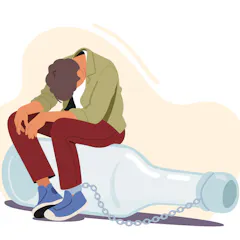
Prescribing alcohol to treat severe alcohol withdrawal symptoms is a rare and unconventional practice in the NHS.

Researchers are uncovering the ways by which dad, mom or both parents drinking can result in fetal alcohol syndrome and other lifelong effects on children.

Unlike other substances, alcohol is often present in our lives. While governments gain revenues from taxes on alcohol sales, the public costs of drinking far outweigh the revenues.

Improved understanding of the molecular mechanisms of addiction can change how researchers and clinicians approach treatments.

Stigmatised people living with HIV often suffer from fear, depression and abuse. It’s sometimes easier to stop a treatment regime than risk being ostracised or assaulted by the community.

The 988 Suicide & Crisis Lifeline is for anyone experiencing suicidal thoughts, emotional distress, substance abuse issues or mental health problems.

Key to diagnosing foetal alcohol syndrome is an assessment of certain facial features. A 3D facial scan is expensive but 2D images may offer a solution.

Alcohol use contributes to over 200 different diseases, injuries, and conditions. It is also a risk factor for gender-based violence and violent crime.

Heavy use of alcohol by caregivers places children at increased risk of serious harm. This burden of alcohol-related maltreatment is similar to traffic deaths caused by others drinking.

Alcohol and drug addiction impacts families as well as the people afflicted. Some First Nations-led centres involve families in their patients’s treatment, with beneficial outcomes.

Recent research shows how the relationship between alcohol consumption, queuing and crowds can lead to violent behaviour in city centres at night.

You might think it’s fine to have a few with friends before heading for a night out, but alcohol-related harms actually increase with pre-drinking.

An analysis shows that Black students at more racially segregated schools have a greater tendency to turn to the bottle.
Top contributors
-
Adjunct Professor at the National Drug Research Institute (Melbourne based), Curtin University
-
Senior Research Fellow at the Centre for Alcohol Policy Research, La Trobe University
-
Professor and Project Leader, National Drug Research Institute, Curtin University
-
Professor of Health Law, Policy & Management, Boston University
-
Professor / Lead Substance use research group, Glasgow Caledonian University
-
Postdoctoral Research Associate (University of Newcastle), University of Newcastle
-
Professor of Psychology, Texas State University
-
Chief Specialist Scientist in Alcohol, Tobacco and Other Drug Research Unit, South African Medical Research Council
-
Research officer, National Centre for Education and Training on Addiction, Flinders University
-
Professor of Psychology, Rutgers University - Newark
-
Associate Professor , Faculty of Health Sciences, Curtin University
-
Professor of Psychiatry, Monash University
-
Professor of Pharmaceutical Chemistry, Macquarie University
-
Director of the Centre for Alcohol Policy Research, La Trobe University
-
NHMRC R.D. Wright Biomedical Fellow, The University of Queensland


