

Trying to understand how the brain is so good at focusing on one conversation has kept auditory neuroscientists occupied since the 1950s.
Articles on Attention
Displaying 1 - 20 of 74 articles

Despite dire warnings of a ‘postliterate’ generation, data suggests Gen Z is still reading – just in ways many traditional studies fail to capture.

If we do not have to control our attention, we might not.

The ‘doorway effect’ suggests that when information is removed from working memory, it immediately seems to leave consciousness.

Two experts explain why staying focused, especially in our modern world, can be so hard.

Driving is a complex task, neurologically speaking. Two experts explain what driving does to your brain, and how you can stay alert on the road.

As TikTok invests in short-form scripted series, it’s leaning into the same storytelling, advertising and viewing habits that defined television.

Your brain doesn’t run out of space – it runs out of attention. The science of why two people can live the same moment and remember it very differently.
The information your eyes takes in is only half the story.

Research in psychology and cognitive science suggests there are ways to fight back against this and reclaim your attention.

Mindfulness is taught everywhere, from schools to workplaces. But scientists define and measure it in very different ways. Here’s why that matters.

Reading comprehension scores are tanking, and fewer Americans are picking up books. But practicing deep reading can help you process content more carefully and keep you from falling for misinformation.

Help a little bean knit socks while getting your own work done – win, win.

If the content is interesting, motivation can improve sustained attention.
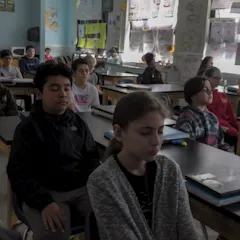
Understanding the nuances of what mindfulness can look like in a classroom can help educators, parents and policymakers decide whether it belongs in their schools.

‘Attention restoration theory’ posits that allowing the mind to wander is important for restoring focus and attention.

A social psychologist recommends ways to connect with others as you move through public spaces – with benefits for your own well-being as well as for the social fabric of your community.

We live in a fast-paced society that subjects us to information overload and high stress. It might be time to embrace the pause.

During scrolling, the brain processes visuals quickly not critically, making it easy to miss details that reveal a fake. As technology advances, slow down, look closer and think critically.

A study of 480,000 Wikipedia users shows how ‘busybodies’, ‘hunters’ and ‘dancers’ follow their curiosity in different ways.
Top contributors
-
Professor of Clinical Neuropsychology, University of Cambridge
-
Professor of Computational Media, University of California, Santa Cruz
-
Postdoctoral Research Associate, Cognitive Neuroscience, University of Cambridge
-
Lecturer in Psychology, Arden University
-
Associate Professor, Department of Philosophy, University of Birmingham
-
PhD in Cognitive Science, Dalhousie University
-
Assistant professor, University of Chicago
-
Senior lecturer, Sheffield Hallam University
-
Professor of Business Administration, Harvard University
-
Associate Professor, University of California, Berkeley
-
Loughborough University
-
Professor in Cognition and Neuroscience, University of East London
-
Ph.D. Candidate in English, The University of Texas at Austin
-
Director, First Year Learning Initiative at University College and Professor of Psychological Sciences, Northern Arizona University
-
Professor in Psychology, University of Florida


