

Millions of Americans rely on this network of federally funded health clinics for their primary care.
Articles on Safety net
Displaying 41 - 60 of 182 articles

Nearly a quarter of US households struggle to pay their energy bills at the same time as America’s social safety nets, including home heat aid, are disappearing.

As the government shutdown wore on in October, calls began surging, signaling that Americans are very concerned about paying their bills and feeding their families.

Nearly 60% of Americans enrolled in the Supplemental Nutrition Assistance Program are either children under 18 or adults who are 60 or older.

Starting Nov. 1, 2025, Supplemental Nutrition Assistance Program benefits will stop being distributed in Pennsylvania due to the federal government shutdown, which began Oct. 1.

Federal funding cuts are destabilizing many food pantries, homeless shelters, mental health clinics and other nonprofits, threatening the services they provide.

In general, people are moving to safer homes after disasters, but the vast majority are selling, meaning someone else is now taking on that risk. Buyout programs can help.
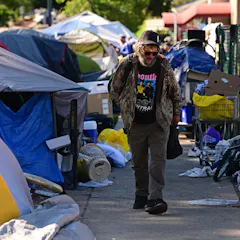
Homelessness is solvable through affordable and supportive housing. Hospitals should be part of the solution.

There are few, if any, alternative sources of food insecurity data that don’t rely on the survey the government is ending.

The Senior Community Service Employment Program helps older Americans balance their checkbooks, enjoy better health and engage more with their own communities.
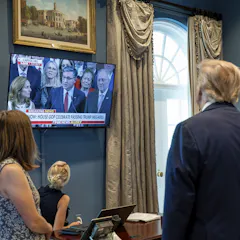
The measure enables broad tax cuts that disproportionately favor wealthy households while forcing its costs on the most economically vulnerable Americans.

The government, because it takes the lead in implementing official policies, is in a unique position to collect and store sensitive data collected over long periods of time.

The biggest changes will be to the Medicaid program, which currently covers more than 78 million people. And Congress may cut health care spending further.

Work requirements will expand and exemptions from them will recede. How much states have to pay will be tied to the prevalence of mistakes, not fraud.

A provision in the big legislative package and a related Supreme Court ruling mark the culmination of a strategy to defund the health care provider that was in full swing by 2007.

Medicaid improves access to care for low-wage workers who cannot survive on bare-bone benefits offered by their employers.
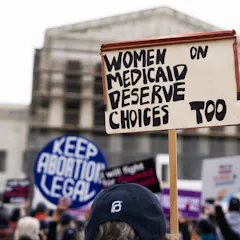
The ruling limits the rights of Medicaid patients to choose their own health care provider. It could have consequences far beyond South Carolina.

All told, more than 16 million Americans could become uninsured, reversing major progress seen since the Affordable Care Act’s passage in 2010.

The typical worker on the verge of retirement is due roughly $412,000 in this under-the-radar wealth.

Past experience suggests that adding work requirements to Medicaid will strip health services from millions of American without increasing employment.
Top contributors
-
Associate Professor of Political Science, University of Richmond
-
Professor of Law, University of Virginia
-
Distinguished Professor of Sociology and Public Policy, UMass Amherst
-
Associate Professor of Public Health, The Ohio State University
-
Professor of Economics, University of Michigan
-
Venable Professor of Law, University of Baltimore
-
Professor of Law and Energy Policy, University of Pennsylvania
-
Professor of Economics and Director of the Private Enterprise Research Center, Texas A&M University
-
Professor Emeritus of Public affairs and Philanthropic Studies, Indiana University
-
Associate Professor of Social Work, University of Memphis
-
Professor of Gerontology, UMass Boston
-
Senior Research Fellow and Lecturer of Gerontology, UMass Boston
-
Assistant Professor of Social Work, University of North Dakota
-
Executive Associate Director of the Private Enterprise Research Center, Texas A&M University
-
Associate Professor of Agriculture and Human Sciences, North Carolina State University


