

When Arkansas tried to make Medicaid contingent on meeting work requirements, 18,000 low-income Arkansans lost their health insurance, but few of them got jobs.
Articles on Safety net
Displaying 61 - 80 of 182 articles

Society as a whole can benefit from programs that protect kids because the harms experienced in childhood can last a lifetime.

The problem of high energy prices and rising numbers of people unable to afford them isn’t lost on the Trump administration.

When people over 65 lose Medicaid coverage, they stop seeing their doctors for preventive care due to high costs. This in turn leads to worse health outcomes and higher health care costs.

Steps taken to reform Social Security during the Biden and Trump administrations have only made the prospects for a funding crisis more serious.
The court’s decision on whether Medicaid patients can choose their own health care provider could have consequences far beyond South Carolina.

The federal government spent $100 billion on these benefits, which are still sometimes called food stamps, in 2024.
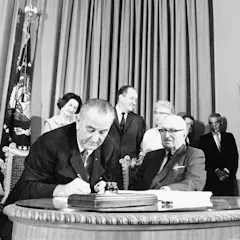
Left out of FDR’s New Deal, the health insurance program for the poor was finally established in 1965.

Two health law scholars explain how the public health insurance program for low-income people and people with disabilities works, and why cutting its cost would be hard to pull off.

Disparaging people who get government benefits to make ends meet, especially if they’re Black, is no longer a recipe for political success in America.

While immigrants without legal authorization make up about 5% of the U.S. workforce, these workers are concentrated in particular industries, including agriculture.

Maintaining a good diet is not cheap or straightforward, especially on a low income.

A scholar who researches how rents increase after disasters is fearful for his own community as he watches it burn and braces for the aftermath.

This unofficial and invisible safety net is widespread and operates at all income levels. But no one knows the actual scale of this web of informal transactions.
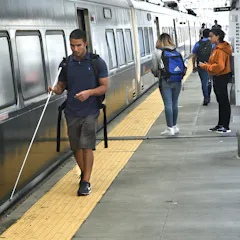
About 1 in 4 of the people with blindness or low vision who were surveyed said they spent less on food to be able to afford expenses associated with their disability.

Signing up for a Medicare plan when you turn 65 − or making changes in subsequent years – means wading through a thicket of consequential choices that can’t always be undone.

Some of these agencies told researchers that their organizations couldn’t afford to pay their workers enough money for them to cover basic living expenses.

Minnesota Gov. and vice presidential contender Tim Walz has championed his state’s free school meals policy.

About 1 in 9 Americans are facing poverty today. But more than half of the people residing in the US will experience poverty at some point in their adult lives.

Michigan’s migrant farmworkers are the backbone of the country’s second-most diverse agricultural economy. Social and labor protections for them fall short.
Top contributors
-
Associate Professor of Political Science, University of Richmond
-
Professor of Law, University of Virginia
-
Distinguished Professor of Sociology and Public Policy, UMass Amherst
-
Associate Professor of Public Health, The Ohio State University
-
Professor of Economics, University of Michigan
-
Venable Professor of Law, University of Baltimore
-
Professor of Law and Energy Policy, University of Pennsylvania
-
Professor of Economics and Director of the Private Enterprise Research Center, Texas A&M University
-
Professor Emeritus of Public affairs and Philanthropic Studies, Indiana University
-
Associate Professor of Social Work, University of Memphis
-
Professor of Gerontology, UMass Boston
-
Senior Research Fellow and Lecturer of Gerontology, UMass Boston
-
Assistant Professor of Social Work, University of North Dakota
-
Executive Associate Director of the Private Enterprise Research Center, Texas A&M University
-
Associate Professor of Agriculture and Human Sciences, North Carolina State University


