
Authentic Greek Salad (Horiatiki)
This post may contain affiliate links.
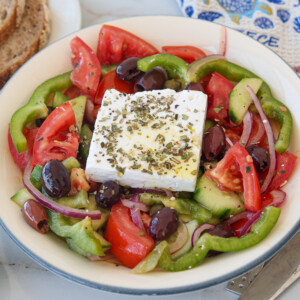
Authentic Greek salad is one of those recipes that proves simple really is best. Made with juicy tomatoes, crunchy cucumbers, green peppers, Kalamata olives, creamy feta, and a simple Greek salad dressing, this classic salad, known in Greece as Horiatiki, lets fresh ingredients do all the work. It’s colorful, refreshing, incredibly easy to make, and perfect for summer lunches, dinners, or as a side for grilled meats.
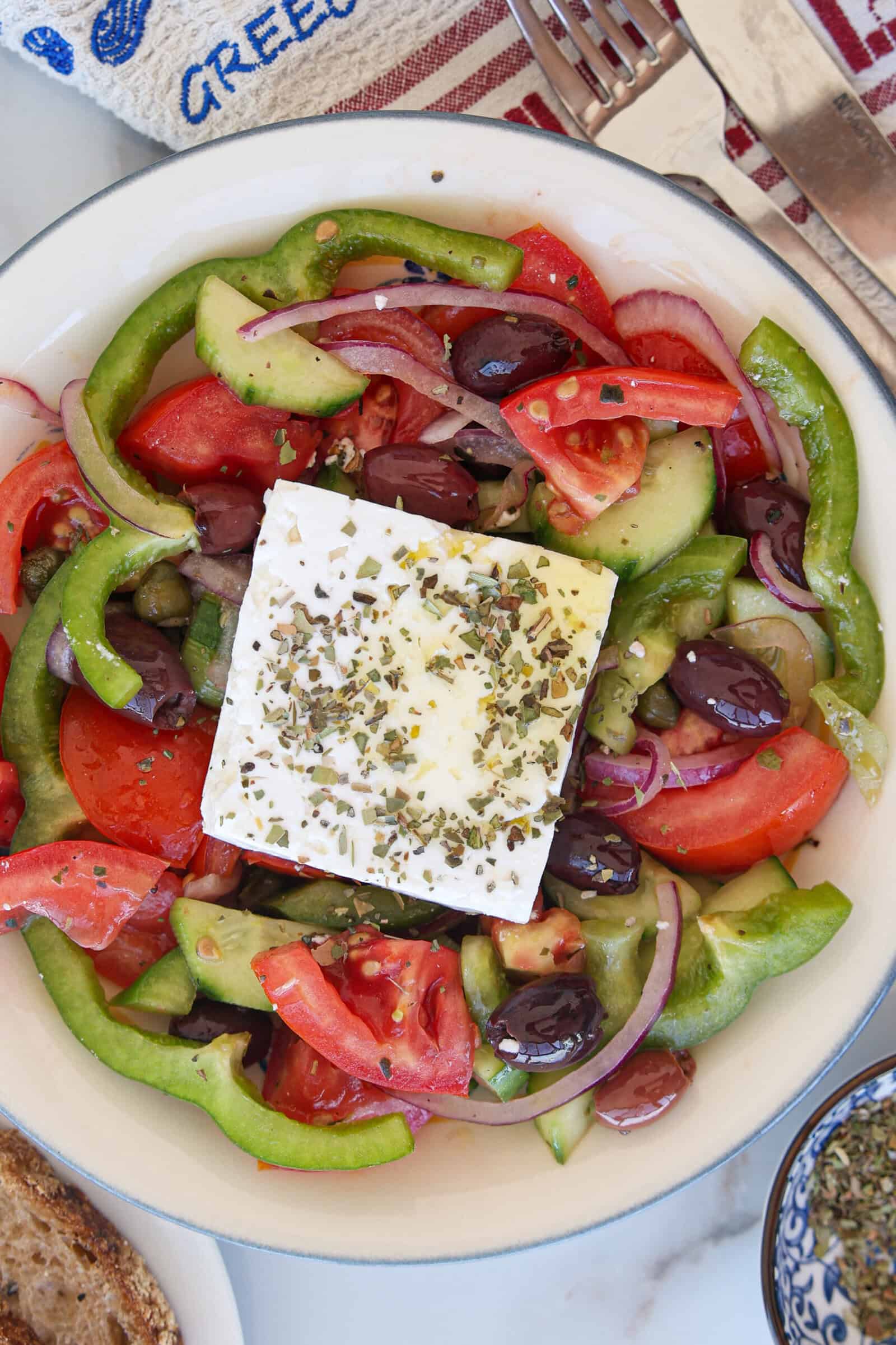
This recipe is extra special because it’s the very first episode of my new YouTube series, David Cooks the World. The idea behind the series is simple: travel to different countries, learn authentic recipes from local chefs and home cooks, then recreate them at home.
For the first episode, I traveled to Greece, explored local markets, joined traditional Greek cooking classes, and learned how to make authentic Horiatiki from the people who prepare it every day. While each region had its own small twists, one thing stayed the same: the recipe relied on fresh, high-quality ingredients and simple techniques. That’s exactly what you’ll find here.
If you’re planning a Greek-inspired meal, you’ll also find plenty of other traditional traditional Greek recipes on the blog.
Why This Greek Salad Tastes Different in Greece
During the Greek cooking classes I joined, every chef emphasized the same idea: authentic Horiatiki is all about simplicity and fresh, high-quality ingredients. Like all great salads, with so few ingredients, the quality of every tomato, cucumber, and piece of feta really shines.
Here’s what makes it truly authentic:
- Fresh ingredients above all: Every Greek chef I cooked with agreed on one thing: the quality of the tomatoes, feta, and olive oil matters far more than adding extra ingredients.
- No lettuce: Traditional Greek salad is made without lettuce. Instead, juicy tomatoes, cucumbers, green peppers, and red onions are the stars.
- A block of feta: Rather than crumbling the cheese, Greeks place a thick block of full-fat feta on top and break it apart while eating.
- Simple dressing: Just extra virgin olive oil, red wine vinegar, dried oregano, salt, and black pepper. Nothing more.
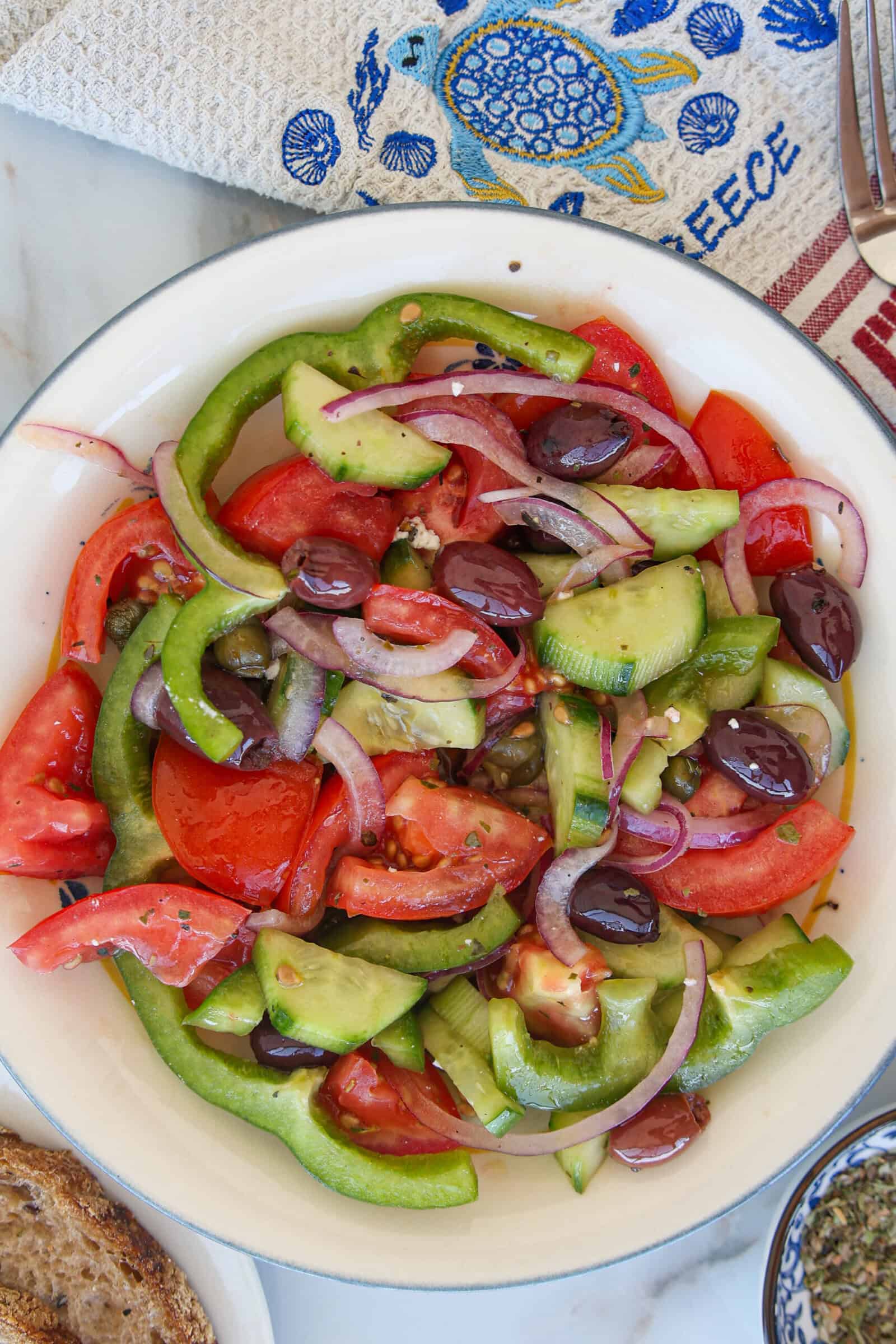
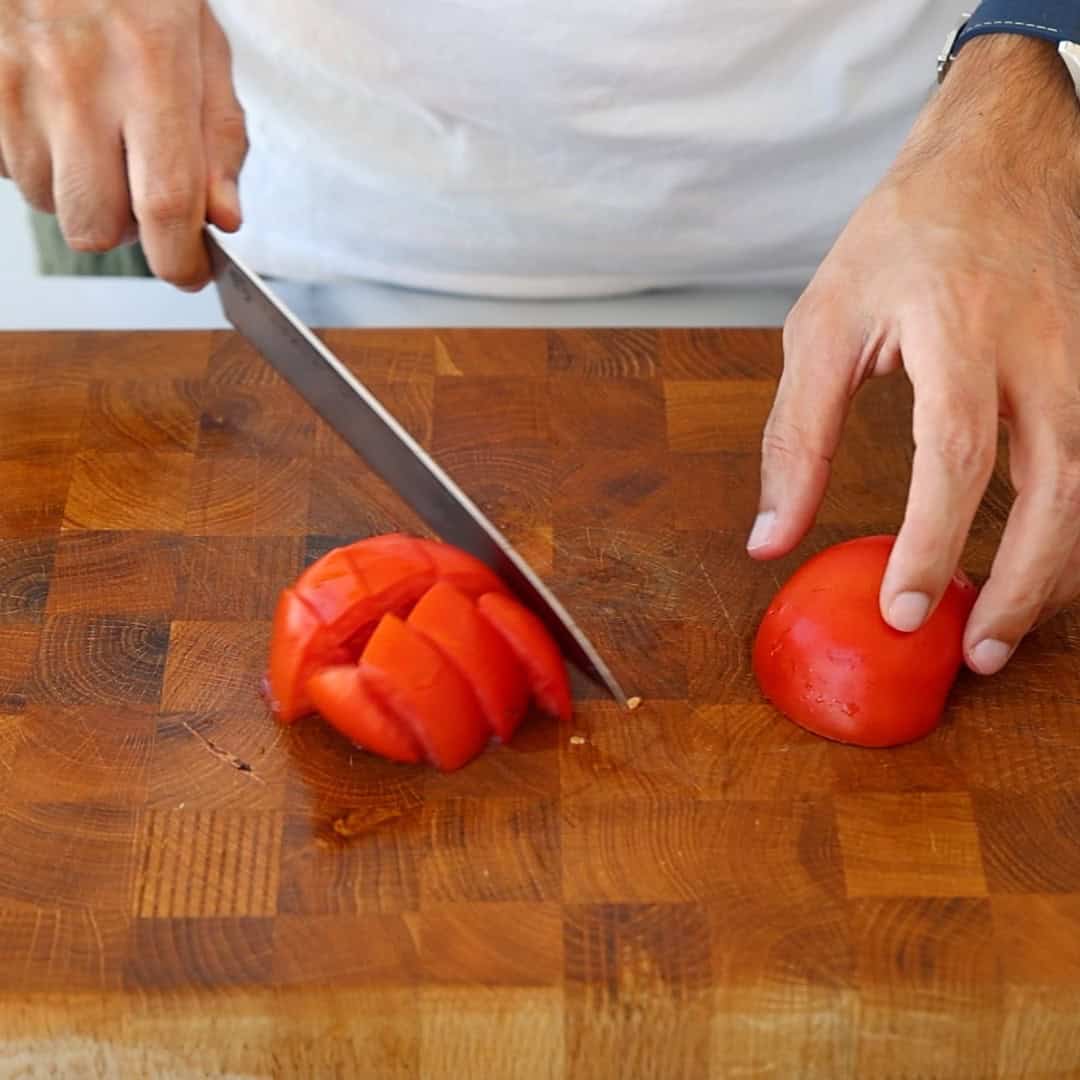
- Big, rustic cuts: Large wedges of tomato and thick slices of cucumber give the salad its signature village-style look and texture.
Ingredients & Substitutions
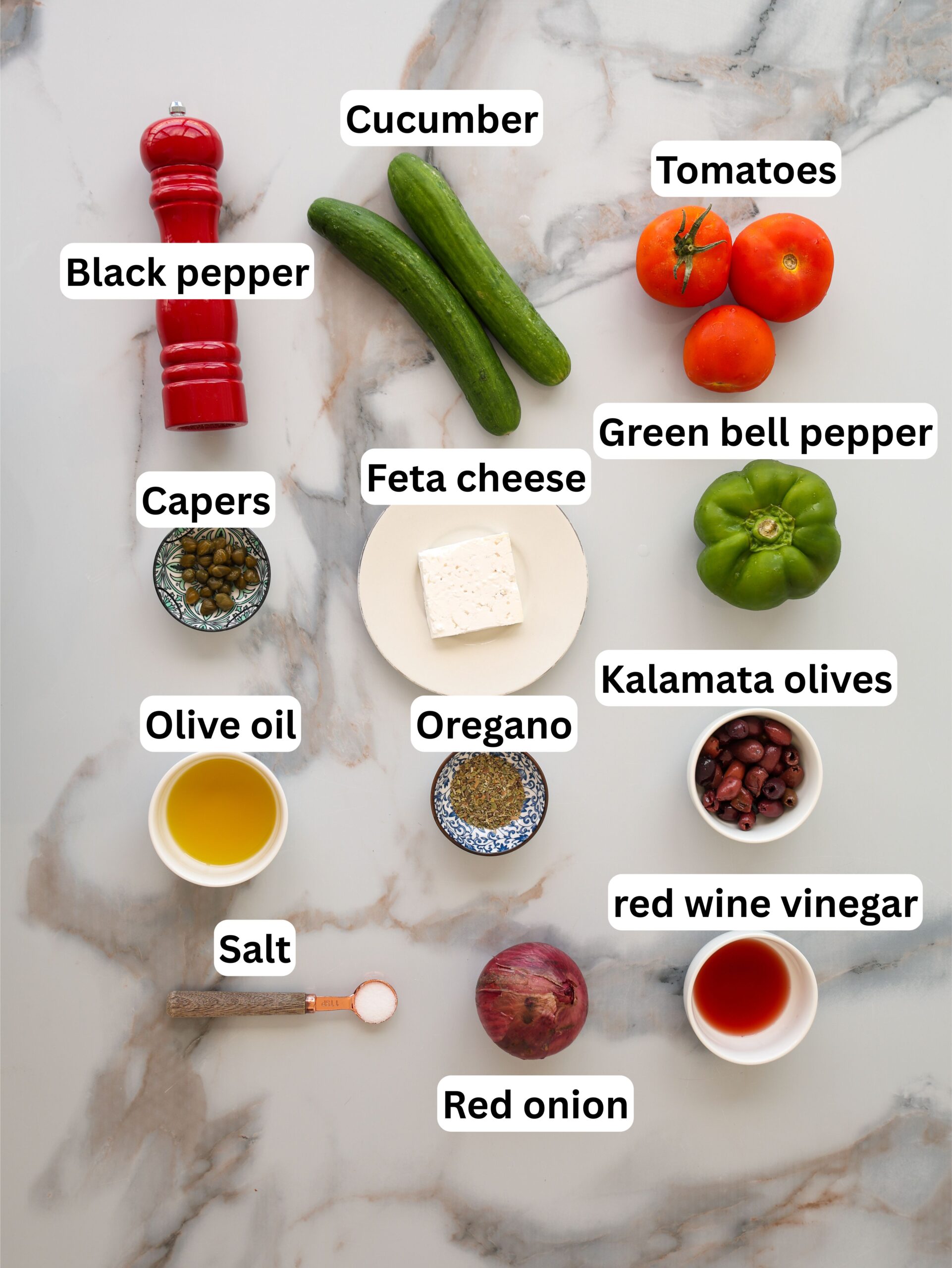
- Tomatoes: Use the ripest, sweetest tomatoes you can find. Vine-ripened tomatoes work beautifully, especially during summer.
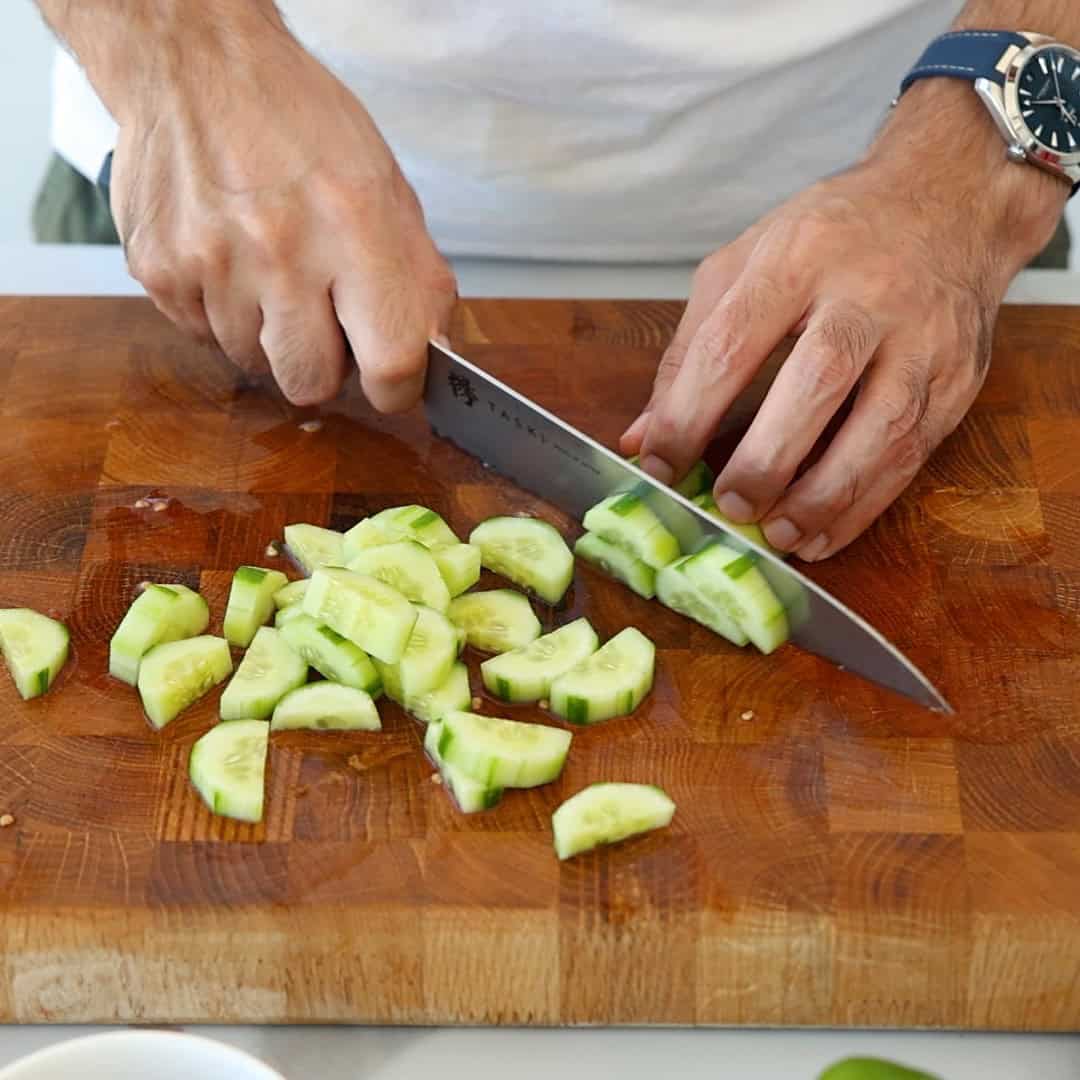
- Cucumber: Traditional Greek salad is usually made with large cucumbers cut into thick half moons. English cucumber or Persian cucumbers both work well.
- Green Bell Pepper: Adds freshness and crunch. Slice it into thin rings instead of diced pieces for the most authentic presentation.
- Red Onion: Thin slices provide just enough sharpness without overpowering the other vegetables. If your onion is particularly strong, soak the slices in cold water for 10 minutes before adding them.
- Kalamata Olives: Use whole Kalamata olives whenever possible. Their rich, fruity flavor is an essential part of authentic Horiatiki.
- Capers (Optional): Whether capers belong in Greek salad depends on where you are in Greece. Many islands, especially in the Cyclades, traditionally include capers, while other regions leave them out completely.
- Feta Cheese: For the best flavor and texture, use a full-fat block of Greek feta cheese, preferably one made from sheep’s milk or a blend of sheep’s and goat’s milk. Avoid pre-crumbled feta if possible, it tends to be drier and less creamy.
- Olive oil: Since the dressing is incredibly simple, good extra virgin olive oil makes a huge difference.
- Red Wine Vinegar: Adds brightness and balances the richness of the olive oil.
- Dried Oregano: Traditional Greek oregano has an incredible aroma, but any good-quality dried oregano works well.
- Salt & Pepper: Keep the seasoning simple. A little salt and freshly ground black pepper are all you need.
How to Make Greek Salad
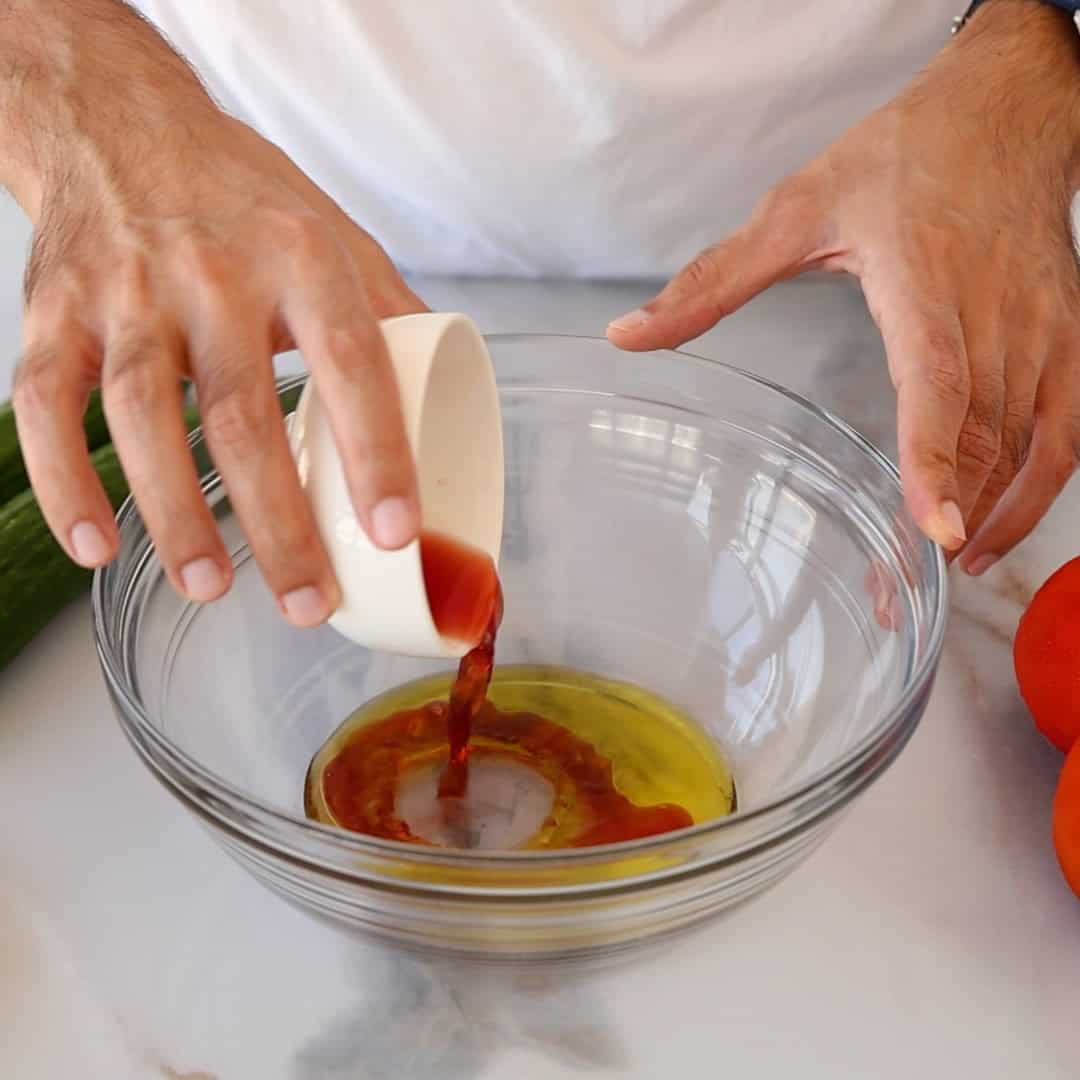
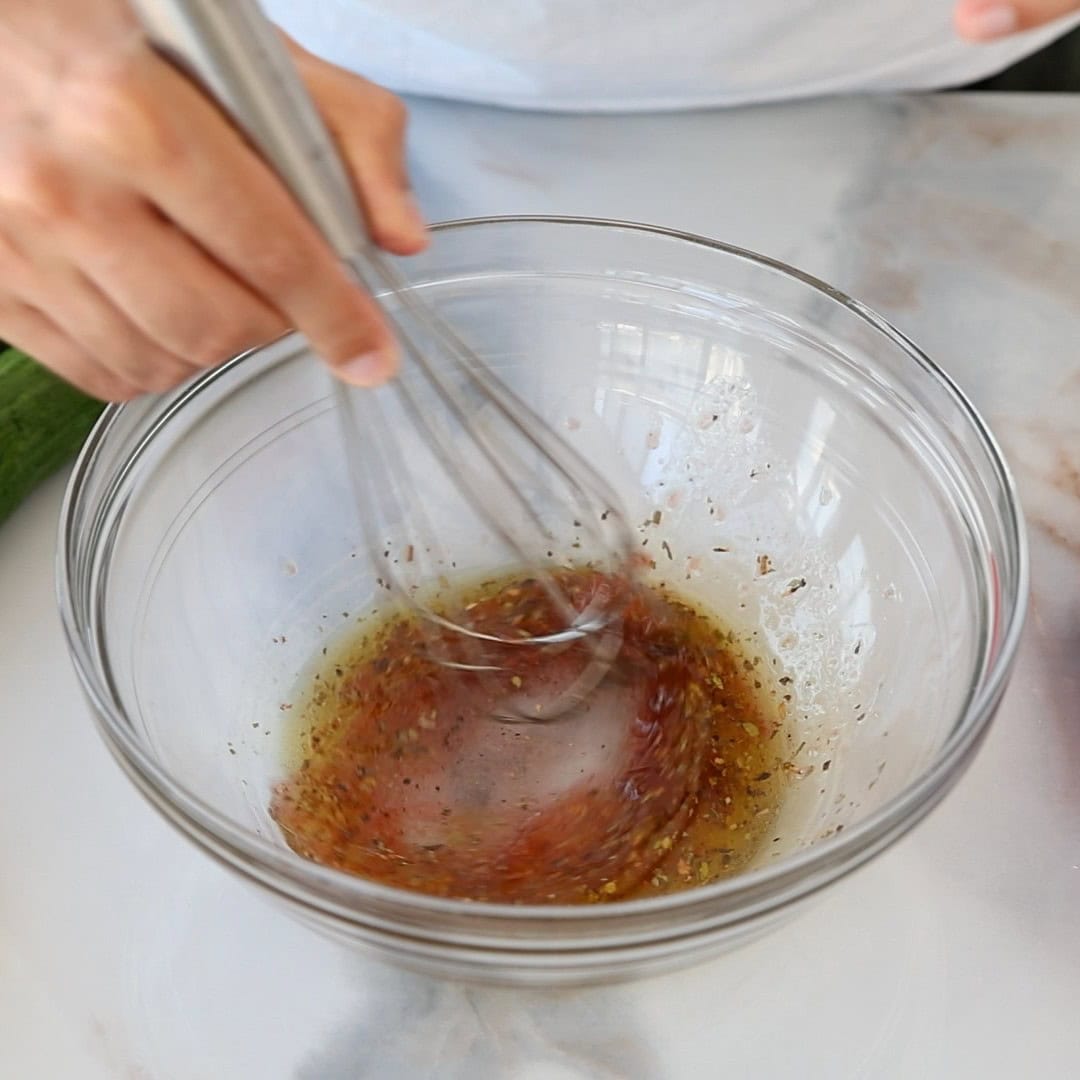
1. Make Greek salad dressing: Whisk together the olive oil, red wine vinegar, oregano, salt, and pepper directly in your serving bowl.
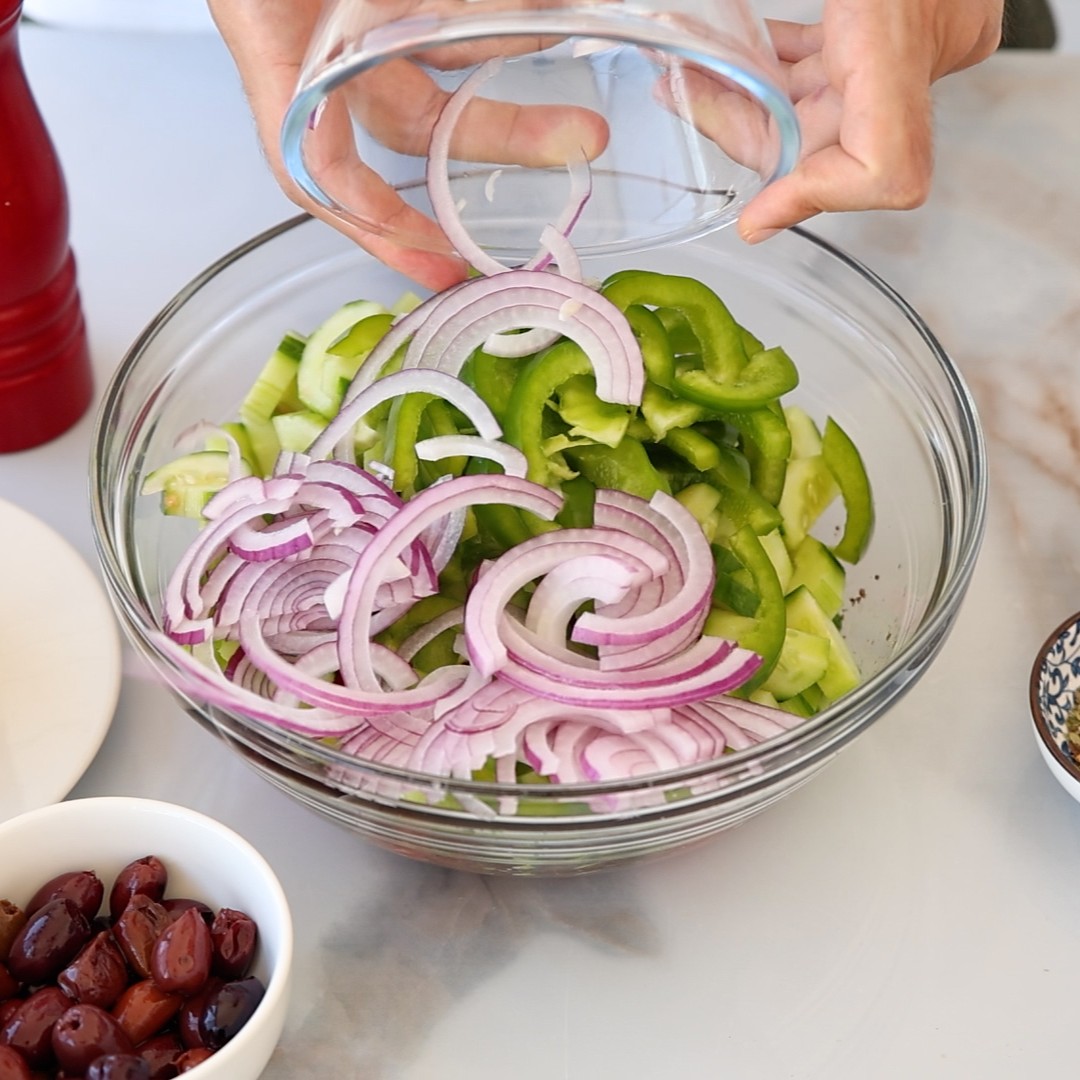
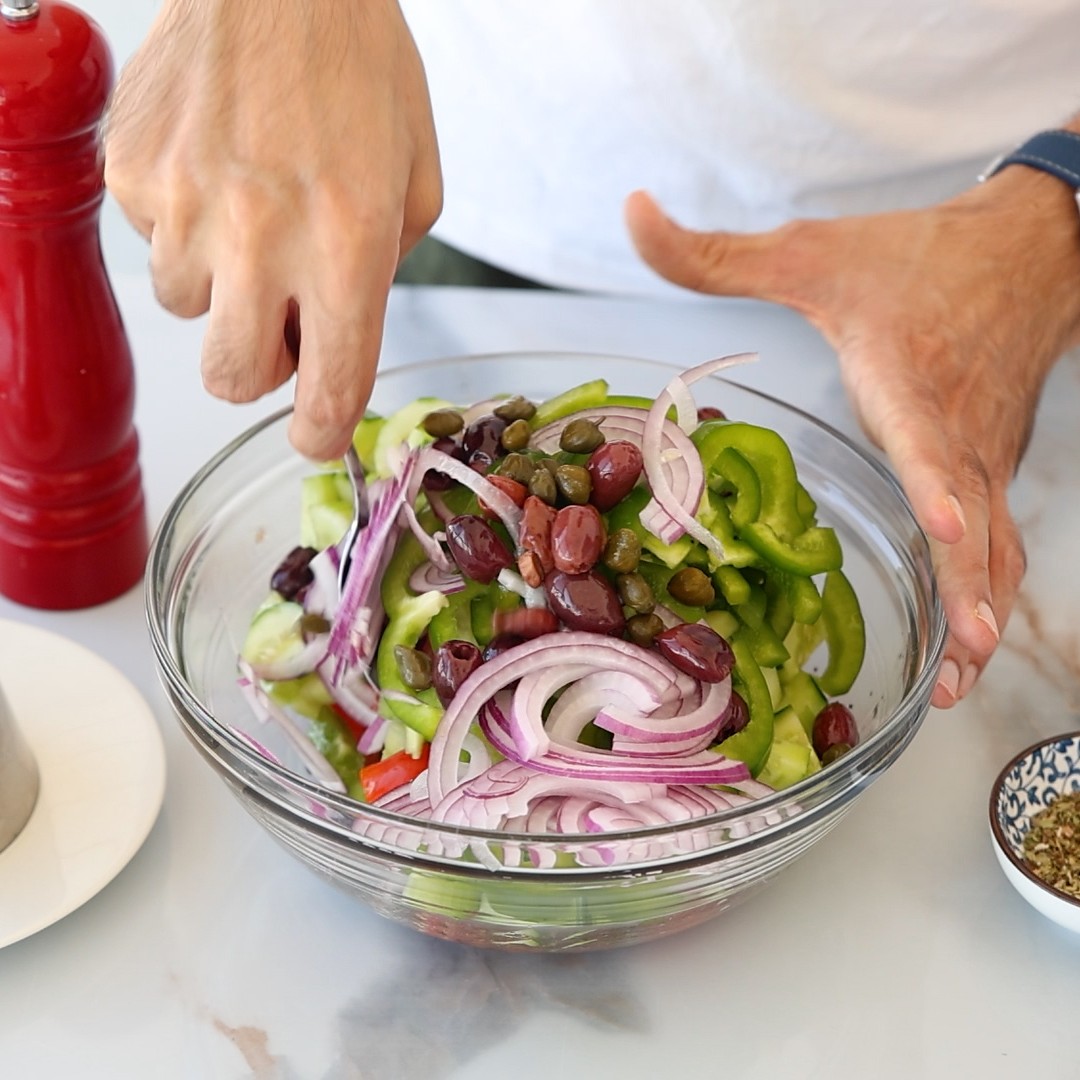
2. Chop and add the veggies: Cut the tomatoes into large wedges, slice the cucumber into thick half-moons, the green pepper into thin rings, and the red onion into thin slices. Add the vegetables, olives, and capers to the bowl, then gently toss until everything is evenly coated with the dressing.
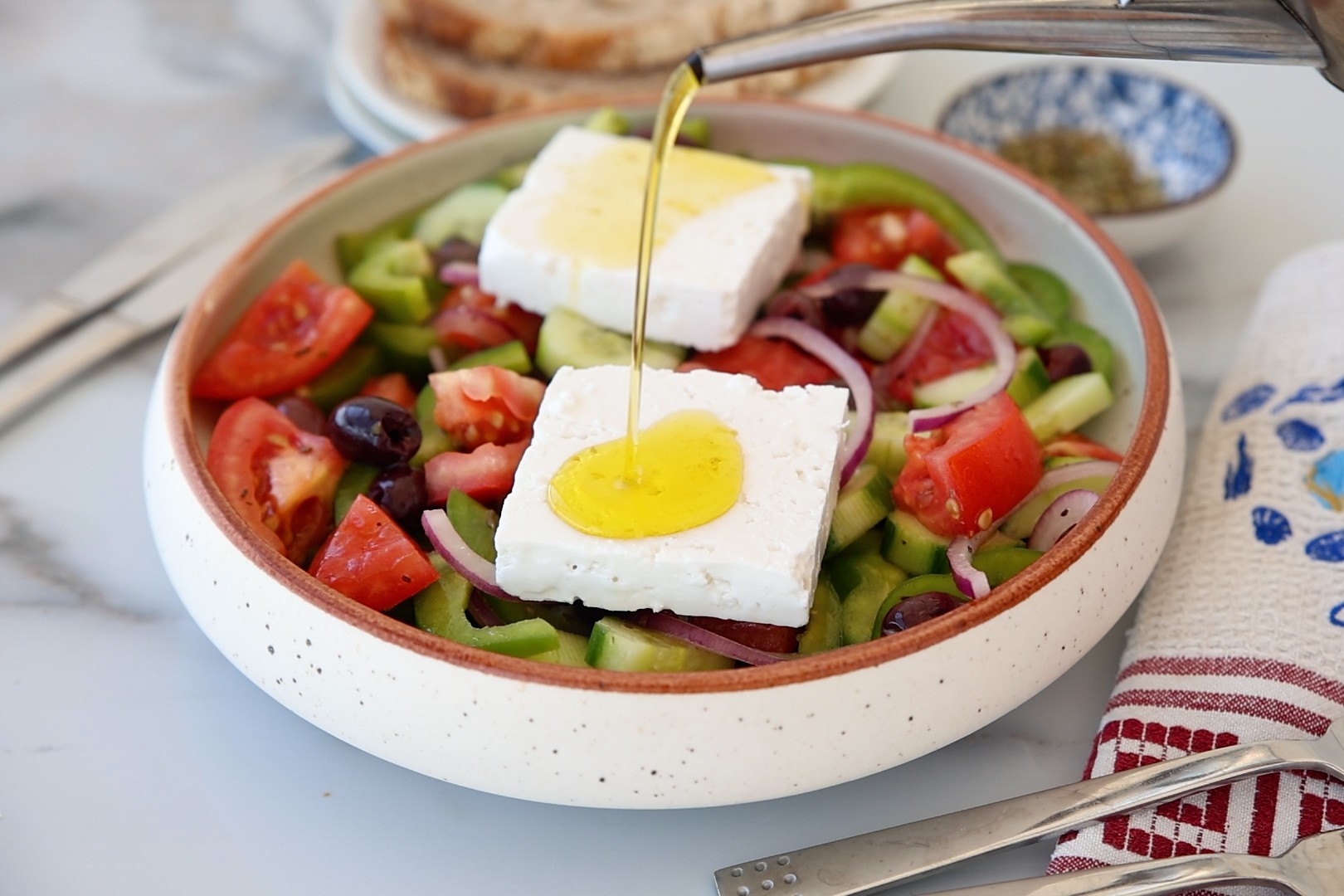
3. Add the feta: Place one block of feta on top. Sprinkle with a little more oregano and drizzle generously with olive oil.
4. Serve: Serve with plenty of crusty bread to soak up the delicious tomato juices and olive oil left at the bottom of the bowl.
Best Greek Salad: Video Recipe
Watch the full video below to see exactly how I learned to make authentic Greek salad while traveling through Greece.
Prefer the written recipe? Scroll down to the recipe card.
I first shared a Greek salad recipe back in 2019, and it turned out to be a huge success, earning over 500,000 views on YouTube. After traveling through Greece and learning from local chefs, I updated the recipe with the authentic techniques you’ll find here.
Cut Everything Big
This is called Horiatiki, which literally means “village salad.”
Unlike many salads that use finely chopped vegetables, authentic Greek salad is intentionally rustic. Large wedges of tomato, thick cucumber slices, and onion strips create better texture while allowing each ingredient to keep its flavor.
Leave the Feta Whole
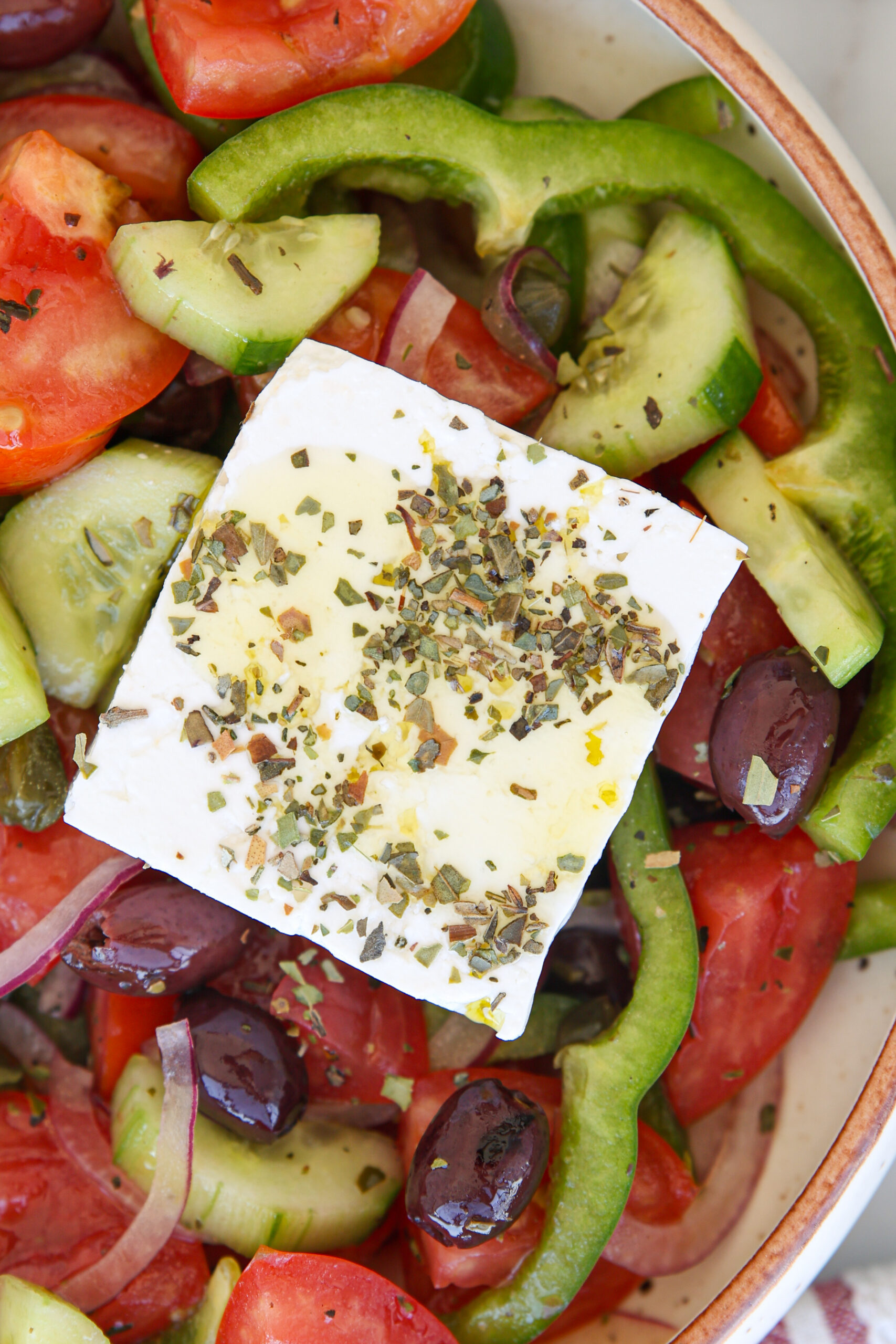
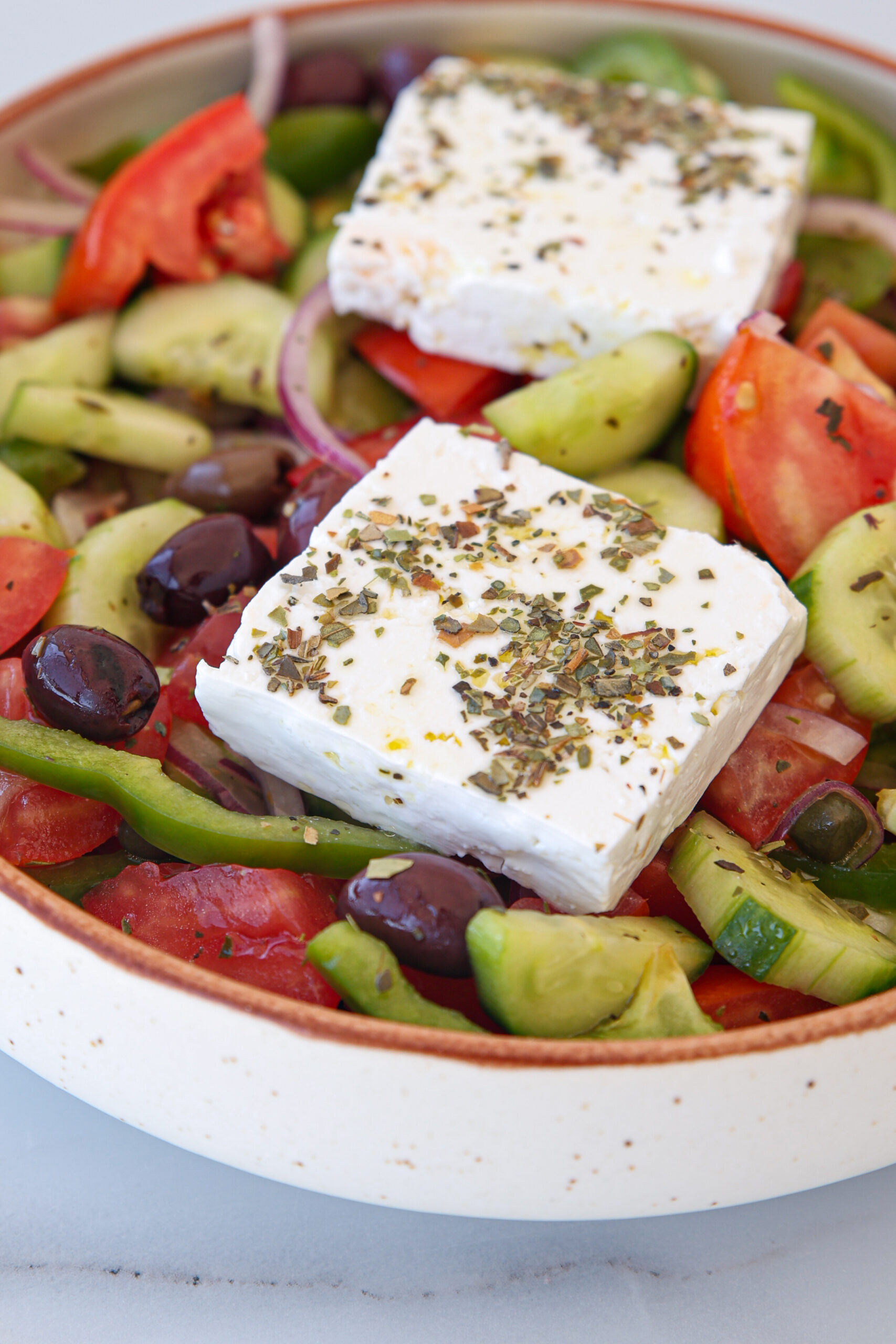
Traditionally, authentic Horiatiki is served with one large block of feta placed on top rather than crumbled over the vegetables. It’s one of the dish’s signature characteristics, but if you prefer, you can also cut the feta into large bite-sized cubes or thick pieces.
Serving Suggestions & Variations
- Make it vegan by replacing the feta with your favorite dairy-free feta alternative.
- Turn it into a meal by serving alongside Chicken Souvlaki, gyros, grilled fish, or Homemade Pita and Tzatziki.
- Add rusks (Dakos-style). Some Greek islands serve the salad over barley rusks for extra crunch.
How to Store Greek Salad
- Best fresh: Greek salad tastes best freshly made, while the vegetables are crisp and the tomatoes are at their juiciest.
- Make ahead: If you’d like to prepare it ahead, chop the vegetables and store them in an airtight container. Keep the dressing and feta separate, then assemble everything just before serving.
- Refrigerate: Store leftovers in the refrigerator for up to 1 day. Over time, the tomatoes will release more juice and the vegetables will soften, so the salad won’t be quite as crisp.
More Easy Salad Recipes
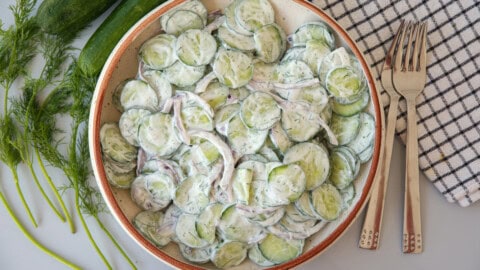
- Creamy Cucumber Salad
- Kale Lentil Salad With Feta & Sweet Potatoes
- Easy Tuna Caesar Salad
- Green Goddess Salad
More Classic Greek Recipes
Greek Salad Recipe
Ingredients
For the salad:
- 4 large (700 g) Tomatoes cut into wedges
- 1 large English cucumber or 2-3 Persian cucumbers, cut into thick half-moons
- 1 Green bell pepper thinly sliced into rings
- ½ Red onion thinly sliced
- ⅓ cup (65 g) Kalamata olives pitted
- 2 tablespoons Capers optional but traditional on many islands
- 1 block (200 g) Feta cheese about 7oz (see recipe notes)
For the dressing:
- 3 tablespoons (45 ml) Olive oil
- 2 tablespoons (30 ml) Red wine Vinegar
- 1 teaspoon Dried oregano
- Salt to taste
- Black pepper to taste
Instructions
- Make the dressing: In a large serving bowl, whisk together the olive oil, red wine vinegar, dried oregano, salt, and black pepper until well combined.
- Prepare the salad: Add the tomatoes, cucumber, red onion, green bell pepper, olives, and capers (if using) to the bowl. Toss gently until everything is evenly coated.
- Finish the salad: Place the block of feta on top of the salad. Sprinkle the feta with a little extra dried oregano, then drizzle another tablespoon or two of extra virgin olive oil over the feta and the salad.
- Serve: Serve immediately with plenty of crusty bread to soak up the flavorful mixture of olive oil and tomato juices left at the bottom of the bowl.
Video
Notes
- Tomatoes: Since tomatoes are the star of this recipe, use the ripest, sweetest ones you can find. Vine-ripened tomatoes are ideal; cherry tomatoes are also a great choice.
- Thick cuts: Don’t chop the vegetables too small. Authentic Greek salad (Horiatiki) is a rustic village salad, so large tomato wedges, thick cucumber slices, and chunky vegetables are traditional.
- Capers: Capers are optional. They’re commonly added to Greek salads on many islands, while other regions leave them out, so both versions are authentic.
- Feta cheese: For the best flavor and texture, use a full-fat block of Greek feta, preferably made from sheep’s milk or a blend of sheep’s and goat’s milk. Avoid pre-crumbled feta if possible, as it’s usually drier and less creamy.
- Make ahead: You can chop the vegetables a few hours in advance and refrigerate them. Prepare the dressing separately, then toss everything together and add the feta just before serving for the freshest texture.
- Storage: Greek salad is best enjoyed fresh. Leftovers can be stored in an airtight container in the refrigerator for up to 1 day, though the vegetables will soften and release more liquid over time.
Nutrition
FAQs
In Greece, it’s called Horiatiki (Χωριάτικη), which translates to “village salad.”
No. Traditional Greek salad contains no lettuce. It’s made with tomatoes, cucumber, onion, green pepper, olives, feta, and olive oil.
Yes, but mainly in certain regions, especially many Greek islands. Other regions don’t include them, so both versions are considered authentic.
For the most authentic flavor, use a full-fat block of Greek feta made from sheep’s milk or a blend of sheep’s and goat’s milk. Avoid pre-crumbled feta whenever possible.





I just watched your video and came here to say thank you for your recipe.
It’s a really easy and simple recipe, but yey, I appreciate your tips.
Thanks , this is my favorite salad
Thanks for recipe. I love Greek salads