Liqueur Cognac
A Cognac Liqueur is a strong but sweet alcoholic berverage, usually enjoyed after a meal as a digestif. Liqueurs have as a base a liquor, on our site that’s Cognac. Sugar is added to the base along with a mix of herbs, fruits, or spices, depending on the desired flavor. ABV ranges from 14 to 22%.
Cognac, sweetened
Liqueur Cognac
15 % vol and up · 100 g/l sugar minimum · Served cold, on ice or shaken
For almost two hundred years the houses of the Charente have used their aged eaux-de-vie as the base of a second product: a liqueur, sweetened and flavoured with bitter orange, pear, coffee, honey or cherry. Grand Marnier is the best known of them, and the region makes many more. Nearly all of them are drunk cold.

Tasting six liqueurs at Maison Fransac
The short version
- A liqueur is legally a spirit of at least 15 % vol carrying at least 100 g of sugar per litre (EU Regulation 2019/787).
- A Cognac liqueur uses aged Cognac as its alcoholic and aromatic base, then adds sugar and a flavour: orange, pear, coffee, honey, cherry, cocoa, vanilla.
- It may not be sold as "Cognac". It may legally carry the name inside a compound term, which is exactly why the label reads Orange Liqueur & Cognac.
- Grand Marnier (1880) is the global benchmark, from 51 % Cognac in Cordon Rouge up to 91 % XXO in Grande Cuvée Révélation.
- Pineau des Charentes is not a liqueur. It is a vin de liqueur, made by mutage, and sits in wine law, not spirits law.
- They are served cold, from the fridge or over plenty of ice.
Bestsellers
Most loved Cognac liqueurs
The bottles our customers reach for most often.
Navarre Makeda Coffee Premium Reggae Liquor
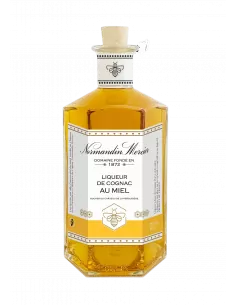
ABK6 Honey Liqueur Cognac
Machenaud Le Citron Liqueur
Machenaud L'Orange Liqueur
Braastad Cream Liqueur of Cognac
Prunier Orange Liqueur
Fransac Bauchant Orange Liqueur
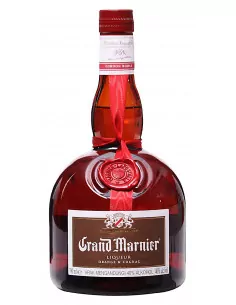
Grand Marnier Cordon Rouge Liqueur
Grand Marnier Cuvée du Centenaire 100th Anniversary Edition Liqueur Cognac
The definition
What actually makes it a liqueur
The category is defined by sugar, not by the base spirit.
Under EU Regulation 2019/787 a liqueur is a spirit drink with a minimum strength of 15 % vol that contains at least 100 grams of sweetening products per litre, expressed as invert sugar. That sugar threshold is what decides the category. Whether the alcohol underneath is neutral spirit, a fruit distillate or a well aged Cognac is, legally speaking, not the deciding factor.
Two stricter sub-classes sit inside it. A crème de … must carry at least 250 g/l, and a crème de cassis more than 400 g/l. In France the DGCCRF enforces composition and labelling, and French excise law now refers directly to the EU definitions rather than running a parallel national one.
The BNIC has a narrower role here. It controls the authenticity and AOC conformity of the Cognac component. The finished liqueur, as a category, falls under general EU spirits regulation. That split explains the labelling convention: the European Commission's own guidance on compound terms uses Grand Marnier Liqueur (Orange liqueur & Cognac) as its worked example of permitted practice.
| Category | Legal basis | Min. ABV | Min. sugar | Role of Cognac |
|---|---|---|---|---|
| Liqueur | EU 2019/787 | 15 % vol | 100 g/l | May be the alcoholic base and the aromatic backbone |
| Crème de … | EU 2019/787 | 15 % vol | 250 g/l | Possible, not required |
| Crème de cassis | EU 2019/787 | 15 % vol | >400 g/l | Not defining |
| Vin de liqueur | Wine / AOC law | product specific | product specific | Pineau: mutage with Cognac eau-de-vie |
| Aromatised wine | EU 251/2014 | by sub-category | not applicable | Not a defining component |
Sources: EU Regulation 2019/787, European Commission notice on compound terms, DGCCRF, BNIC.


Four flavours at Maison Audry, Moka Café au Cognac from Rumeau et Fils, André Petit with his own range, Machenaud Le Cassis on a terrace, and the line-up at Maison Fransac.
The method
How a Cognac liqueur is built
Grand Marnier calls it their alchemy, and the broad steps are public even if the exact ratios are not. Bitter orange peels are quality-checked at the Château de Bourg-Charente. The albedo, the white pith, is separated from the zest. The zest is then macerated in neutral alcohol for up to eight days and slowly distilled until only the purest orange essence remains.
In parallel the Cognac component is double distilled and matured in oak from Tronçais and Limousin. The master blender then assembles the two, and the finished liqueur rests before bottling.
Other houses work differently. Where Grand Marnier distils an essence, producers like François Peyrot lean on infusion and natural fruit aromatics, and Maison Brillet blends pear eaux-de-vie straight into Cognac. In each case the Cognac is the aged, aromatic base of the liqueur rather than the finished product.
Honestly stated: exact recipes, blend ratios, resting times and sugar content in g/l are not published by most of these houses. Where a figure below is not officially specified, we say so rather than guess.
Step by step
How it is actually done, at Maison Machenaud
Maison Machenaud, in Le Pouyaud, makes its liqueurs the artisanal way, and describes its Le Citron like this: "Cette liqueur artisanale est issue de la maceration d'ecorce de citrons de Corse, avec le jus des citrons et une infusion de verveine du jardin; le tout assemble avec une eau-de-vie de vin produite dans notre distillerie." Their own note adds that more than 200 kilos of lemons were zested for it. The five steps below follow that run, and they map onto most craft liqueurs of the region.

Step 1
The fruit arrives
Crates of Corsican lemons, variety Primo Fiore, delivered whole with the leaves still on. For a single run of Le Citron the team zested more than 200 kilos of them by hand.

Step 2
The Cognac base
The base is a wine distillate rather than neutral spirit, which is where the Cognac character in the finished liqueur comes from.

Step 3
Maceration and infusion
Zest, juice and, here, an infusion of verbena from the garden are left to macerate. The oils in the peel carry most of the aroma, which is why the zest is separated from the bitter white pith.

Step 4
Assembly and bottling
The macerate is assembled with the eau-de-vie and sweetened past the legal 100 grams per litre, then rested and bottled on site, in small batches on a single line.

Step 5
The finished liqueur
Le Citron leaves at 20 % vol, labelled by hand. Bright and sharp, with the wine spirit carrying it. Keep it in the fridge and serve it cold.
Photographs: Maison Machenaud, Le Pouyaud. Shop the result: Machenaud Le Citron and Machenaud L'Orange.
The house
Grand Marnier, orange and Cognac since 1880
The story starts in 1827, when Jean-Baptiste Lapostolle set up a distillery for fine fruit liqueurs at Neauphle-le-Château. In 1876 his granddaughter Julia Lapostolle married the wine merchant Louis-Alexandre Marnier, and the Maison Marnier-Lapostolle was born.
In 1880 Louis-Alexandre created the liqueur that still carries the house: aged Cognac married with the essence of Caribbean bitter orange. It was first sold as Curaçao Marnier. Brand tradition credits the hotelier César Ritz with suggesting the grander name it has carried ever since.
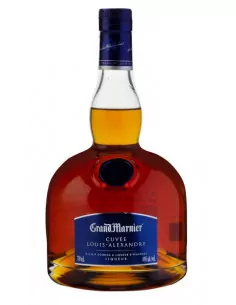
The silhouette followed in 1892, a bottle shape protected as a trademark and drawn from the outline of a Cognac pot still. Then came the prestige tier: the Cuvée du Centenaire in 1927 for the house's hundredth year, and Cuvée Louis-Alexandre in 1977, a more Cognac-forward tribute to the founder. Since 2016 the brand has belonged to the Campari Group.
Cordon Rouge is 51 % Cognac, and the range runs up to 91 % in Grande Cuvée Révélation. Like the rest of the category it is served cold, over ice or in a Sidecar or Margarita.
Compare the Grand Marnier cuvées·All Grand Marnier bottlings·Other orange liqueurs from the region
The collection
The Grand Marnier cuvées
The range is best read through one number: how much Cognac is in the bottle. See the full Grand Marnier range.
| Cuvée | Since | Cognac share | ABV | Cognac type and ageing |
|---|---|---|---|---|
| Cordon Rouge | 1880 | 51 % | 40 % vol | Cognac from the region, no age statement. The recipe the house says is unchanged since founding. |
| Cuvée Louis-Alexandre | 1977 | 82 % | 40 % vol | VSOP, minimum four years for the youngest Cognac. |
| Cuvée du Centenaire | 1927 | not specified | 40 % vol | XO, mainly Grande and Petite Champagne, Tronçais oak at Bourg-Charente. |
| Grande Cuvée Révélation | not applicable | 91 % | 40 % vol | XXO, 68 eaux-de-vie exclusively from Grande Champagne, minimum 14 years. Only a dash of orange essence. |
| Grande Cuvée Quintessence | annual | 82 % | 40 % vol | Hors d'âge reserves up to 70 years, 11 casks plus old demijohns. Around 1,000 bottles a year. |
Sugar content in g/l is not officially published for any of the cuvées.
Grand Marnier Cordon Rouge Liqueur
Grand Marnier Cuvée Louis Alexandre Liqueur Cognac
Grand Marnier Cuvée du Centenaire 100th Anniversary Edition Liqueur Cognac
Grand Marnier Quintessence Limited Edition Liqueur
The classic
Orange liqueurs
Bitter orange and Cognac is the region's signature pairing, and nearly every house has its own reading of it.
Prunier Orange Liqueur
Fransac Bauchant Orange Liqueur
Machenaud L'Orange Liqueur
Orchard and hedgerow
Pear, cherry and berry
Pear is the great Charentais alternative to orange. Maison Brillet uses roughly eighteen pears for every 700 ml bottle.
Machenaud Le Citron Liqueur
Machenaud Le Cassis Liqueur
Fransac Pear Liqueur
Fransac Raspberry Liqueur
After dinner
Coffee, honey, cocoa and cream
The after-dinner end of the category, where Cognac meets roasted, sweet and creamy flavours. Serve these the coldest of all.

Navarre Makeda Coffee Premium Reggae Liquor
ABK6 Honey Liqueur Cognac
Braastad Cream Liqueur of Cognac
Fransac Chocolate Liqueur
Fransac Coffee Liqueur
Fransac Mint & Chocolate Liqueur
Meukow Xpresso Liquor Cognac
700ml - Shipped from France
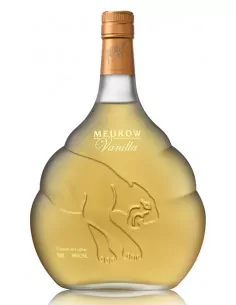
Meukow Vanilla Liqueur Cognac
700ml - Shipped from France
From the community
What people say about their liqueurs
Reviews left on the shop by customers who bought the bottle. Each one is scored out of 100 across five tasting criteria.

Community review
Grand Marnier Cuvée Louis Alexandre
“This Louis Alexander is exquisite; the consistency of the liquid itself is much more like cognac… In my view, it is so good I would not use it to mix with anything, it should only be enjoyed neat.”Joseph R.

Community review
Navarre Makeda Coffee Liqueur
“The funky tropical notes from his two younger cognacs are present underneath the sweet chocolate, vanilla, and coffee flavors… Sit back, relax, and take your time with it.”Ian S.

Community review
Belle de Brillet
“I love the well-balanced taste of the cognac, pear preserve, and hint of oak. The aroma carries the same ingredients plus slight floral note.”Donald D.

Community review
Prunier Orange Liqueur
“A strong orange-flavored liqueur with a hint of cognac. Perfect as an aperitif before a meal…”Peep P.

Community review
Grand Marnier Cuvée 150th Anniversary
“I’ve had just about every level of Grand Marnier that they’ve produced. And this is my favorite. Smooth, long, finishing, with the classic orange, Grand Marnier flavor.”William W.

Community review
Meukow Amaretto Liqueur
“We visited Meukow distillery… I have had it five years, I can’t seem to want to take the last sip. It’s absolutely the best amaretto I’ve ever tasted.”Wendy B.

Community review
Grand Marnier Cuvée Louis Alexandre
“I have had this bottle for about 15 years. Have always enjoyed the red label. But this Louis Alexander is so aromatic filled and smooth.”Belinda W.

Community review
Courvoisier Gold Liqueur
“A fun, flashy luxury liqueur, great for special occasions, gifting, or impressing guests more than for deep cognac connoisseur tasting.”Leroy F.
Beyond Grand Marnier
The other houses of the region
Only a handful of Charente houses make liqueurs, and several of them use Cognac deliberately as a carrier and a structural backbone.
Maison Fransac
Roullet-Fransac, Cognac · from 1838In the 1970s the house launched Bauchant, still one of the very few orange liqueurs made in the region itself. The recipe pairs VS and VSOP Cognacs with a blend of several orange varieties, giving fresh citrus over honey and butterscotch. The range now runs to pear, coffee, raspberry and chocolate too.
Maison Brillet
Graves-Saint-Amant · from 1656Belle de Brillet, created in 1985 by Jean-Louis Brillet, is the house's signature. Officially just pear eaux-de-vie, Cognac, water and vanilla sugar from fresh Bourbon and Madagascar vanilla. No neutral alcohol, no added flavourings, no caramel, and roughly eighteen pears per 700 ml. 30 % vol.
Merlet
Saint-Sauvant · distilling since 1850The family launched its Crème de Cassis de Saintonge in 1983, the first outing of the Merlet name. The modern C² range pairs their work as distiller and liquoriste with Cognac: C² Café, C² Citron and C² Cassis, each at 33 % vol and built with the bar in mind.
François Peyrot
Grande Champagne · since 1956Cognacs, Pineaux and liqueurs under one roof. The liqueur range was developed from 1970 and now runs to thirteen liqueurs au cognac, including orange, mandarin, coffee, rose and chestnut. The flagship Poire Williams uses 14 kg of pears per bottle.
Meukow
Cognac town centre · from 1862Founded after the brothers Auguste-Christophe and Gustav Meukow set up their trading house in Cognac. Alongside the Cognacs sit Xpresso, all roasted coffee, burnt oak, dark chocolate and bitter orange, and Vanilla, balancing a long Cognac against a forceful vanilla.
Godet
La Rochelle · family since 1588One of the oldest Cognac families of all, and an unusually playful one in the liqueur field. Peardise builds a pear liqueur on their Cognac, and O de Poire takes the same fruit in a lighter, fresher direction. Both sit closer to the aperitif end than the classic digestif.
A distinction worth keeping. Producers like Peyrot and Brillet often make Cognac, Pineau and liqueurs side by side, but the three sit in different legal worlds. Pineau des Charentes is not a liqueur. It is a vin de liqueur, produced by mutage, three parts fresh grape must stopped with one part young Cognac, and it belongs to wine law. Browse Pineau des Charentes separately.
Where they are
The houses on the map
The houses whose liqueurs are on this page, placed on the cognac crus. Click a pin to open the brand.
Serving
How to drink them
These are liqueurs first, and liqueurs are drunk cold. Keep the bottle in the fridge, and the sweeter and creamier ones in the freezer if you have room. Pour into a small glass straight from the cold, or over plenty of ice. The chill holds the sugar back and keeps the fruit and the peel sharp. At room temperature the same liqueur reads heavy and syrupy.
Cream, coffee and chocolate bottlings want the most chill of all. Citrus and fruit liqueurs also work long: ice, a tall glass and a splash of sparkling water or tonic.
The cocktail side is where the orange liqueurs earn their reputation. They were the original curaçao in a great many classics, and swapping a plain triple sec for a Cognac-based liqueur adds weight and length.
Pineau des Charentes, if you have a bottle alongside, is a different proposition again: served chilled as an aperitif, and very good with light seafood or a soft cheese.
Sidecar
- 4 cl Cognac
- 2 cl orange liqueur
- 2 cl lemon juice
Shake hard with ice, strain into a chilled coupe. The Cognac liqueur does the work a triple sec cannot.
Grand Margarita
- 4 cl tequila
- 2 cl orange liqueur
- 2 cl lime juice
- 1 cl sugar syrup
Shake, strain into a salt-rimmed glass. Richer and rounder than the standard build.
Pineau Royale
- 3 cl Pineau des Charentes
- 9 cl sparkling wine
- Grapefruit zest
Build in a flute, express the zest over the top. An aperitif, not a digestif.


From the archive
A century of Grand Marnier advertising
Three pieces from the poster and magazine archive, from the 1889 Exposition Universelle to the American press campaigns of the late twentieth century.


The label archive
Vintage liqueur labels
Original printer's labels from the liqueur houses of Cognac and the Charente, alongside the great French distilleries whose branch networks reached into Cognac itself. Blackberry, guignolet, crème de cacao, kirsch, prunelle, peppermint: a reminder of how broad the output once was.


Good to know
Frequently asked questions
No. Cognac is an AOC eau-de-vie with nothing added. A Cognac liqueur takes that aged spirit and sweetens and flavours it, which moves it into a different legal category. It cannot be sold as Cognac, though it may carry the word inside a compound term such as Orange Liqueur and Cognac.
Under EU Regulation 2019/787 a liqueur needs at least 100 grams of sweetening products per litre, expressed as invert sugar, and a minimum strength of 15 % vol. A creme de needs at least 250 g/l, and a creme de cassis more than 400 g/l.
It depends on the cuvee. Cordon Rouge is 51 % Cognac. Cuvee Louis-Alexandre rises to 82 % VSOP. Grande Cuvee Revelation goes to 91 % XXO, built from 68 eaux-de-vie from Grande Champagne with a minimum of 14 years.
No, and this is a common mix-up. Pineau is a vin de liqueur made by mutage, stopping fresh grape must with young Cognac eau-de-vie. It sits under wine and AOC law rather than the EU spirits regulation, and it received its appellation in 1945.
Longer than wine, less indefinitely than Cognac. The sugar and the alcohol both preserve it, but once opened the aromatics soften over time. Keep it upright, sealed and away from light, and it will drink well for a year or more. Cream-based expressions are the exception and should be refrigerated and finished sooner.
If you want the reference point, Grand Marnier Cordon Rouge. If you want to see what the region does beyond orange, Belle de Brillet for pear or a Merlet C2 for the bar. If you want the Cognac itself to dominate, go up the range to Cuvee Louis-Alexandre or Revelation.
Keep exploring
More from the Charente
The same eaux-de-vie that go into these liqueurs are bottled on their own too. Follow the thread back to the Cognac itself, or sideways into the region's fortified wine.
The full cellar
Browse every Cognac liqueur
Every Cognac liqueur we can sell you right now, across the whole category. Sort it below, or use the filters on the category list for brand, flavour and price.