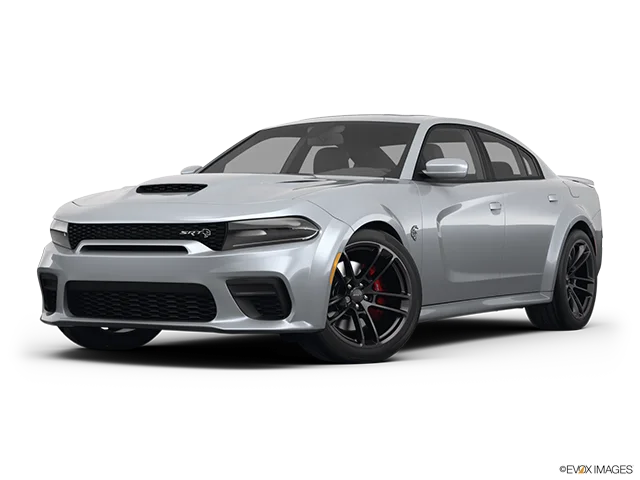
Brothers John and Horace Dodge were born in Michigan, but in 1899 they moved to nearby Windsor, Ontario to manufacture bicycles, and then precision parts for companies entering the new business of making cars. Moving back to the U.S., they eventually caught Henry Ford’s eye, and he offered them a share in his new company if they would exclusively make engines for him. When Ford introduced his famous Model T, the Dodge brothers made almost all of it except the body.
In 1914, they sold …
Brothers John and Horace Dodge were born in Michigan, but in 1899 they moved to nearby Windsor, Ontario to manufacture bicycles, and then precision parts for companies entering the new business of making cars. Moving back to the U.S., they eventually caught Henry Ford’s eye, and he offered them a share in his new company if they would exclusively make engines for him. When Ford introduced his famous Model T, the Dodge brothers made almost all of it except the body.
In 1914, they sold their share in Ford and used that money to develop their own cars, which were very successful; but both brothers died of influenza in 1920. Their widows sold the company to bankers, and in 1928 it was then purchased by Walter Chrysler, who had founded his Chrysler Corporation three years before. Dodge had also been selling engines to an automaker named Graham, which used them to build trucks. Dodge first sold the trucks through its dealers and then bought Graham and made the trucks itself. Many decades later, the truck division would be renamed Ram.
The Chrysler Corporation got into performance in the 1960s and 1970s, and Dodge was part of that as it moved its powerful new V8 engines from the racetrack to the showroom, producing such memorable models as the Charger, Coronet, and Daytona. It began offering smaller cars in the 1970s as consumer tastes changed, but sales fell and eventually put Chrysler in serious trouble. Company president Lee Iacocca negotiated a controversial US$1.5-billion federal government loan guarantee and then oversaw the creation of the compact, front-wheel-drive (FWD) “K-Car,” including the Dodge Aries, 400, and 600. That platform also went under the all-new 1984 Dodge Caravan and Plymouth Voyager minivans. On the strength of those, the company paid back the loans seven years early.
But the automaker still had its ups and downs, and in 1998 it joined with Mercedes-Benz to create DaimlerChrysler, which gave Chrysler much-needed cash and Benz more access to the North American market. The partnership only lasted until 2007, but the technologies shared between the German and American companies produced the “LX” rear-wheel-drive platform that created the full-size Dodge Charger, Magnum, and Challenger, and the Chrysler 300. These turned out to be very popular, bringing performance back to a mainstream audience that was primarily buying smaller FWD cars; and all were built exclusively in Ontario for North American buyers. The partnership also created the V6 “Pentastar” engine, which is still used today.
Chrysler’s brands then experienced difficult ownership under an investment firm, before becoming part of auto corporation Stellantis in 2021. That produced the now-discontinued Dodge Hornet, a twin to the Alfa Romeo Tonale that included a plug-in hybrid (PHEV), but Stellantis’ European leadership put a damper on the V8 engines popular with North Americans. With the eventual loss of that leader, and with more autonomy given to those in charge of the brands over here, performance returned. Dodge currently offers gas and electric versions of its Charger, and the Durango SUV that can go as high as 710 horsepower when equipped with its available supercharged Hemi V8 Hellcat. New models, possibly including a compact SUV or hatchback, are planned for introduction in the near future.
Dodge reliability
It’s said Dodge actually came up with the term “dependability” for its advertising in 1914, but how it fares today depends on where you’re looking. In 2025, Consumer Reports ranked it 28th out of 31 brands overall, and 15th out of 17 mainstream brands; and on both lists with an overall score of 55/100, including 2/5 for reliability. JD Power didn’t include Dodge in its 2026 U.S. Vehicle Dependability Study due to insufficient criteria, but gave the 2026 Durango a “Great” score of 83/100 for Quality & Reliability, based on feedback from owners.


 Score
Score