

South Africa shouldn’t settle for a future in which millions who are willing and able to work go hungry while the country waits for the formal sector to grow.
University of the Witwatersrand

The University of the Witwatersrand, Johannesburg, also known as Wits University, is a leading, internationally-ranked, research-intensive university located in Johannesburg, South Africa, the economic heartland of Africa. Committed to academic and research excellence and social justice, Wits generates high level scarce skills for a globally competitive world, while addressing local social and economic development. At the forefront of a changing society, Wits is a social leader, dedicated to advancing the public good.
Wits is known for its work in deep level mining, science, health sciences, accountancy, law, governance, and the humanities, amongst others. It houses five faculties which comprise 34 schools. Wits offers approximately 3 600 courses to about 32 500 full-time students, of whom about a third are postgraduate and 55% are female. Almost 65% of all doctoral candidates and about half of all enrolments are in the Science, Engineering and Technology fields. Wits has developed about 130 000 graduates in its 93 years of existence. It has a proud record in that about 87% of all publications are in accredited international journals.
Links
Articles
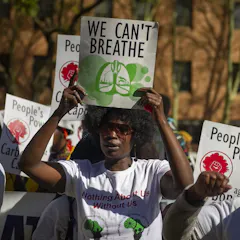
Une affaire historique devant la Cour africaine questionne les obligations des États en matière de droits humains et de lutte contre le changement climatique.
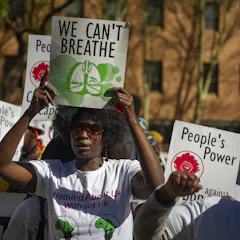
A landmark climate case before the African Court asks what African states must do to protect human rights, phase out fossil fuels, and tackle climate change.

Palaeontologists have got a clearer picture of where turtles fit in the animal kingdom, thanks to analysis of a southern African fossil.

Not really knowing how much fuel your country needs is a problem.
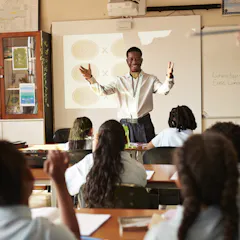
Teachers’ past experiences of bullying shape how they might understand or respond to learner behaviour.

Most genetic studies focus on people from European ancestry. But Africa has the richest diversity and must be included in genetic databases.
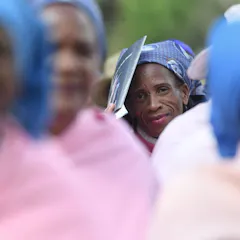
Botswana has significantly expanded income support for older people but it’s left them without the care they need.
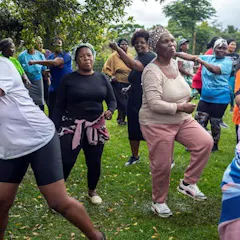
On n'a pas besoin d'un programme d'entraînement rigide pour faire de l'exercice.

Reforms to skills training could repeat the mistakes of the past 30 years.

The incident is being treated as an embarrassment. It’s something more serious: a failure of the very standards the revised policy must uphold.

Un scan de haute précision d’un embryon fossilisé de thérapside révèle l’œuf le plus ancien attribué à un ancêtre des mammifères.
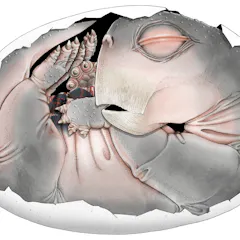
A detailed scan of a fossil therapsid embryo reveals the oldest egg belonging to a mammalian ancestor.

The Infrastructure Fund’s architecture undermines the expectation of full autonomy from political and executive meddling.
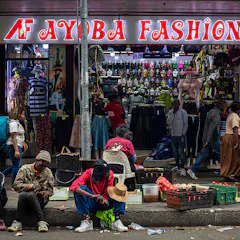
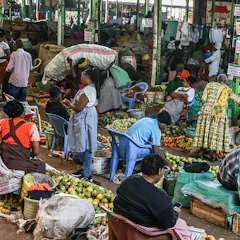
Traders in the informal economy need a supportive ecosystem so they can move beyond survival and contribute to local growth and development.
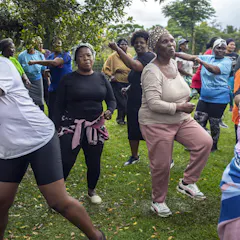
People don’t need a strict workout schedule to get moving.

What if harsh environments don’t stress animals at all? Research on South Africa’s striped mice shows survival can depend on conserving energy, not fighting back.

South Africa is proposing to extend labour and social protections to platform workers.
The universal fear is the effect the rise in prices is having on fuel, a staple commodity in every one of the countries for ordinary people as well as industries.
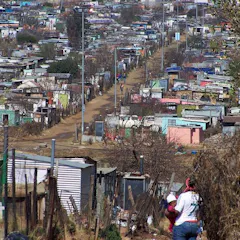
Housing policy should take note of what a home really means to people.
Authors
-
Senior Lecturer, Africa Energy Leadership Centre, University of the Witwatersrand
-
Senior Researcher in Public Health, University of the Witwatersrand
-
Director of Research, Université de Strasbourg; University of the Witwatersrand
-
Lecturer, University of the Witwatersrand
-
Research Manager at MRC/Wits Agincourt Research Unit, University of the Witwatersrand
-
Pro Vice-Chancellor, Climate, Sustainability and Inequality and Director, Southern Centre for Inequality Studies, University of the Witwatersrand
-
Head of Transplant Surgery at the Wits Donald Gordon Medical Centre, and Academic Head of Transplantation, University of the Witwatersrand
-
Visiting Researcher at Sydney Brenner Institute for Molecular Bioscience, University of the Witwatersrand
-
Reader in Population and Public Health, MRC/Wits Rural Public Health and Health Transitions Research Unit, School of Public Health, University of the Witwatersrand
-
Visiting Research Fellow, University of the Witwatersrand
-
Associate professor, University of the Witwatersrand
-
Lecturer, University of the Witwatersrand
-
Senior Lecturer in the School of Animal, Plant and Environmental Sciences, University of the Witwatersrand
-
Lecturer, Department of Physiology, University of the Witwatersrand
-
Associate Professor and CLM Assistant Dean of Research, University of the Witwatersrand


